
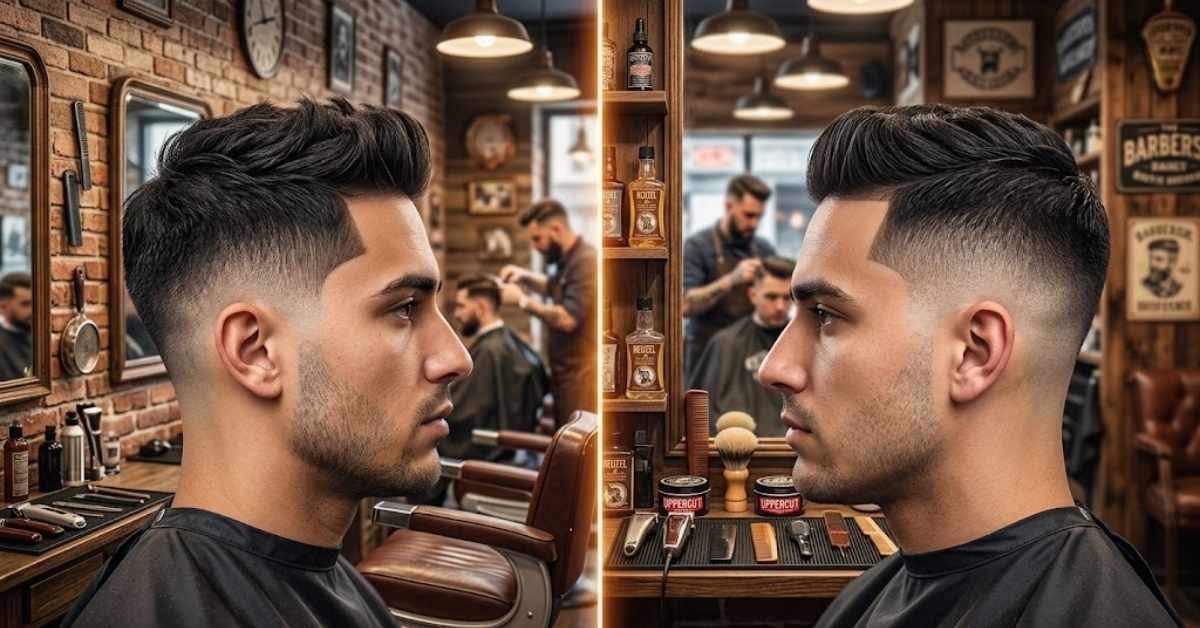

Choosing between a taper fade vs low fade can be confusing because both haircuts create clean, blended sides. The biggest difference is not simply how short the hair becomes. It is where the blend is placed, how much of the sides are affected, and how much contrast you want.
A taper fade usually concentrates the blend around the temples, sideburns, and neckline, leaving more weight through the sides. A low fade carries the fading farther across the lower sides and back, creating a more noticeable transition. The exact terminology can vary from one barber to another, so knowing what to ask for is just as important as knowing the haircut name.
What Is a Taper Fade?
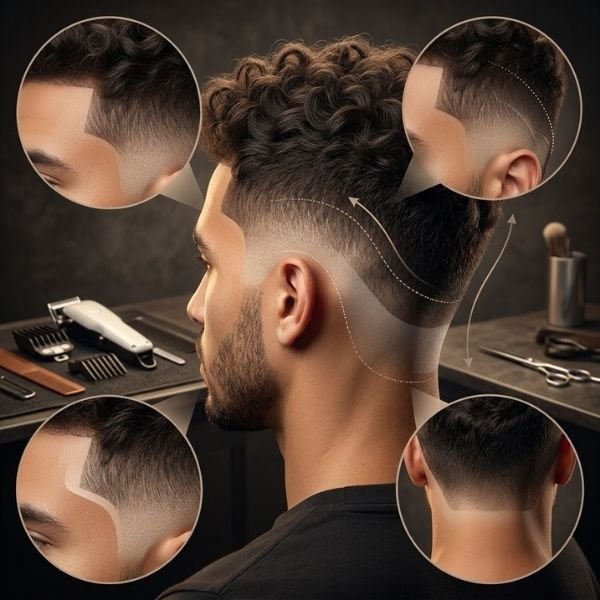
A taper fade gradually reduces hair length around selected areas, especially the temples, sideburns, and neckline. The sides generally retain more weight than they would with a full fade.
The result is clean without completely changing the silhouette of the head. Depending on the barber and the requested finish, the shortest section can be a visible clipper length, very short stubble, or even skin.
That last point matters. A taper fade does not automatically mean a specific guard number or skin finish. If you want the shortest area to remain visible, say so. If you want it down to the skin, specifically request a skin or bald taper.
A taper fade works with many hairstyles, including:
- Textured crops
- Crew cuts
- Quiffs
- Comb overs
- Curly tops
- Waves
- Longer hairstyles
- Buzz cuts
- Braids and locs
The top haircut and the taper are separate decisions. Your barber can preserve the top length while changing only the perimeter.
What Is a Low Fade?
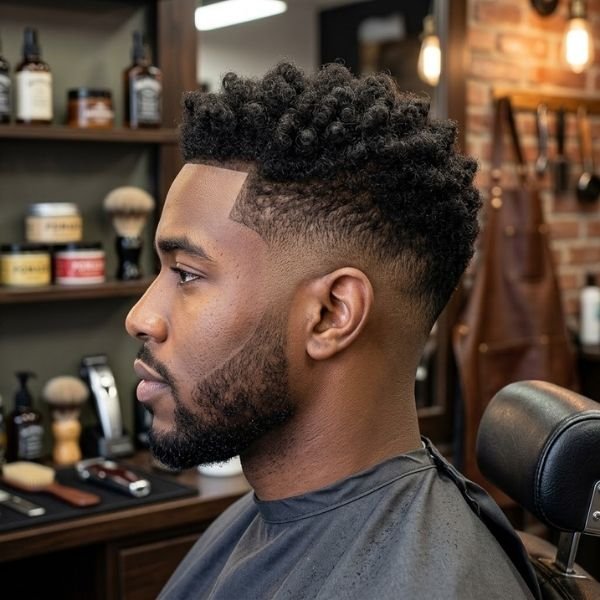
A low fade is a fade whose transition begins low on the head, usually around the area above the ears and lower back of the head.
Unlike a traditional taper, a low fade generally affects more of the side area. The shortest section can reach very close to the skin or completely to the skin, depending on the requested finish.
This produces a stronger contrast between the longer hair above and the shorter lower sides.
A low fade is often paired with:
- Textured crops
- Curly hairstyles
- Waves
- Pompadours
- Comb overs
- Crew cuts
- Faux hawks
- Short quiffs
The important word is low. It describes the position of the fade, not necessarily the shortest guard.
Taper Fade vs Low Fade: What’s the Real Difference?
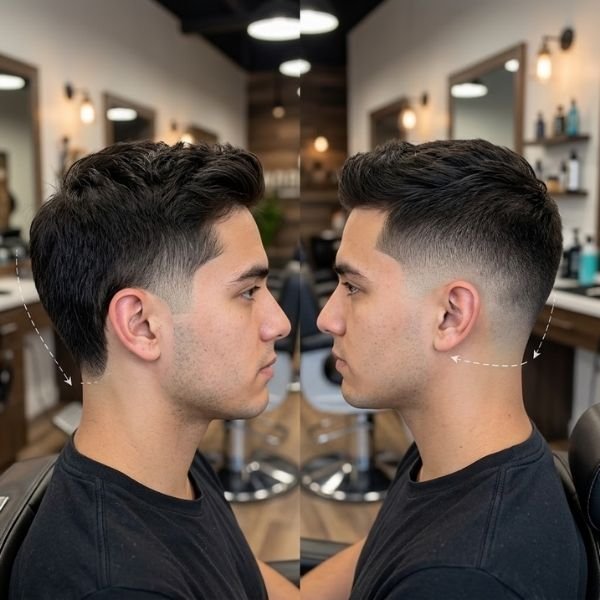
The simplest explanation is this:
A taper fade usually keeps the blend localized around the perimeter, while a low fade carries the transition across more of the lower sides and back.
However, barber terminology is not perfectly standardized. Some shops use “taper fade” for a very short taper, while others use it for a localized fade that may reach the skin. That is why specifying the details is more reliable than saying only “taper fade.”
Fade Height and Placement
A low fade sits low on the sides and back, close to the ears and neckline.
A taper fade is more concentrated around specific perimeter areas such as the temples, sideburns, and nape.
Think of placement as where the shortest section appears.
Blending Style
A taper normally preserves more side weight and creates a softer visual transition.
A low fade can create a more visible gradient because more of the lower side is reduced.
Neither is automatically better. The difference is the amount of hair removed and the resulting contrast.
Face Shape Fit
Face shape can influence how much side volume looks balanced.
- Round faces: Keeping some height on top and controlling excess side bulk can create a more elongated appearance.
- Oval faces: Most taper and fade placements can be adapted successfully.
- Square faces: A clean taper can emphasize the natural structure of the face.
- Long faces: Keeping reasonable side weight can help avoid making the face appear even longer.
- Heart shaped faces: A softer taper can help maintain balance around the temples and jaw.
Your head shape matters too. A skilled barber can adjust the blend around the natural contours of your skull.
Hair Type
Both styles can work with straight, wavy, curly, and coily hair.
Curly and coily hair can make the transition look especially textured because the natural curl pattern interacts with the fade. Straight hair can make blending lines and changes in density more visually obvious.
Very thick hair may need more weight removed to create the desired shape. Fine hair may benefit from a softer transition so the sides do not appear overly thin.
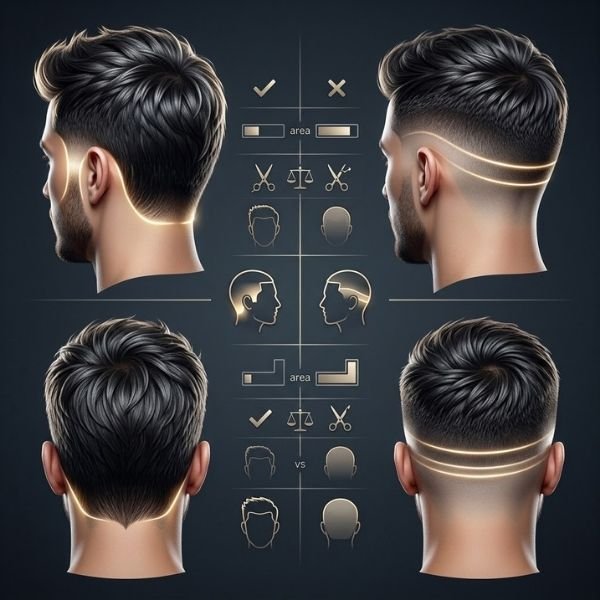
Taper Fade vs Low Fade at a Glance: Comparison Table
| Feature | Taper Fade | Low Fade |
| Main area | Temples, sideburns, neckline | Lower sides and back |
| Side weight | More retained | More removed |
| Contrast | Low to medium | Medium, depending on finish |
| Skin exposure | Optional | Optional, but common |
| Overall appearance | Softer and natural | More defined |
| Top length | Highly flexible | Highly flexible |
| Best starting point | Subtle perimeter cleanup | Visible fade effect |
A Simple Example
Imagine two people with the same haircut on top.
Person A asks for a taper fade. The barber keeps most of the side weight and tightens the temples, sideburns, and neckline.
Person B asks for a low fade. The barber creates a wider transition through the lower sides and back.
From the front, the two cuts may look surprisingly similar. From the side or back, the difference becomes easier to see.
Why People Mix Them Up
The confusion happens because both cuts use gradual blending and can start around similar areas.
There is also no universal naming system used by every barber. A “low taper fade” may be described differently depending on the shop, barber, or region. Current barber guides specifically recommend confirming the placement and shortest length rather than relying only on the haircut name.
Read More: Mid Taper Fade Afro: 25 Best Styles, Tips, and a Full Tutorial
Taper Fade vs Temp Fade: How Are They Different?
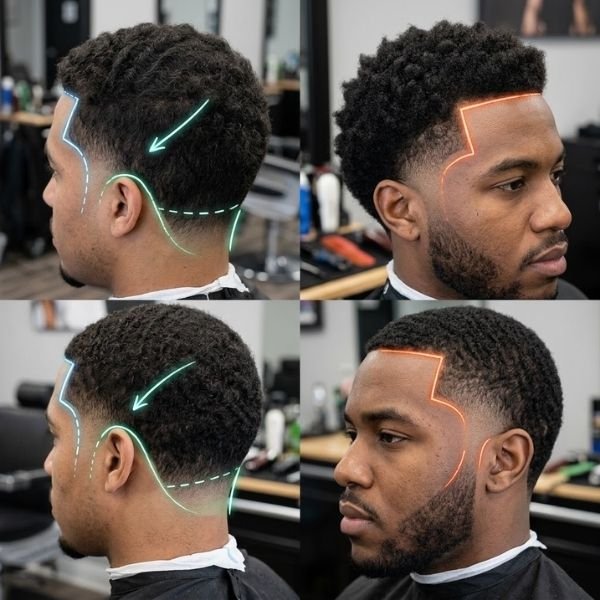
A temp fade, short for temple fade, focuses primarily around the temples.
The taper fade can also include the temple area, but normally extends to the sideburns and neckline as part of the overall perimeter treatment.
A temp fade is particularly noticeable around the temple hairline and can be paired with sharp lineups or curly and textured tops.
If you want the temple area cleaned up while keeping most of the rest of the sides intact, ask specifically for a temple fade.
Taper Fade vs Drop Fade: What Sets Them Apart?
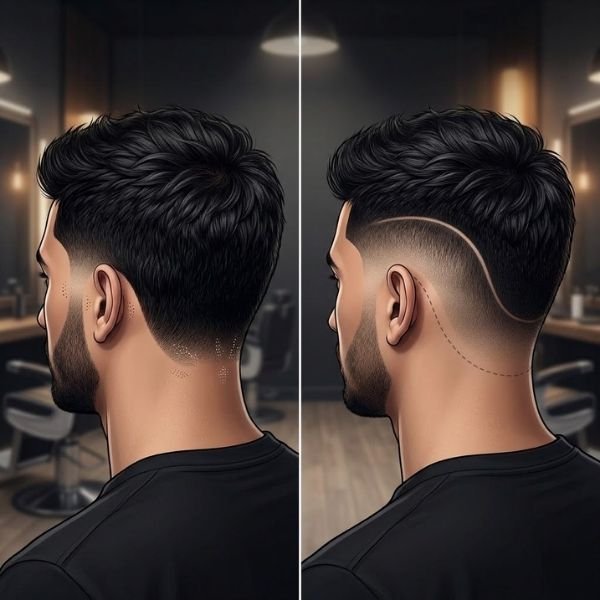
A drop fade gets its name from the way the fade line drops lower toward the back of the head.
Instead of maintaining a roughly level transition, the blend follows the shape of the skull and dips toward the nape.
A taper fade is usually more localized around the perimeter. A drop fade changes the contour of the fade across the sides and back.
Mid Taper vs Mid Taper Fade: Clearing Up the Confusion
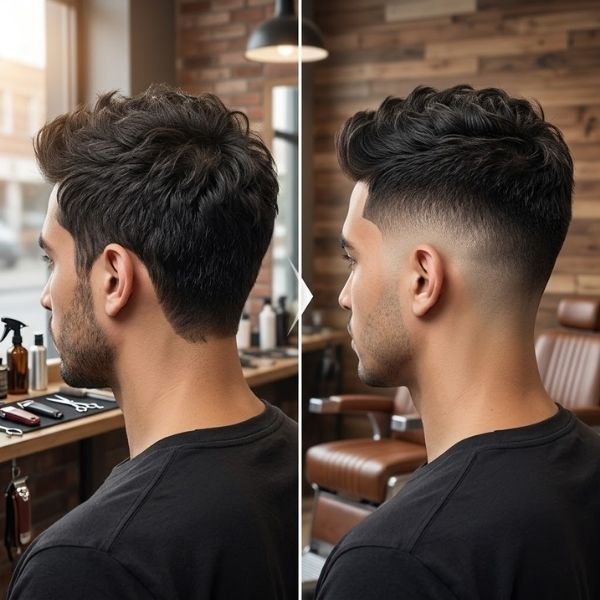
“Mid taper” and “mid taper fade” are often used to describe essentially the same general concept.
The word mid refers to the placement of the blend rather than the guard number. A mid taper generally sits higher than a low taper but lower than a high taper.
The exact location varies because every head shape is different, and barbers do not always use the terminology identically. A reference photo is therefore more precise than relying on the phrase alone.
Temple Fade vs Taper Fade: A Closer Look
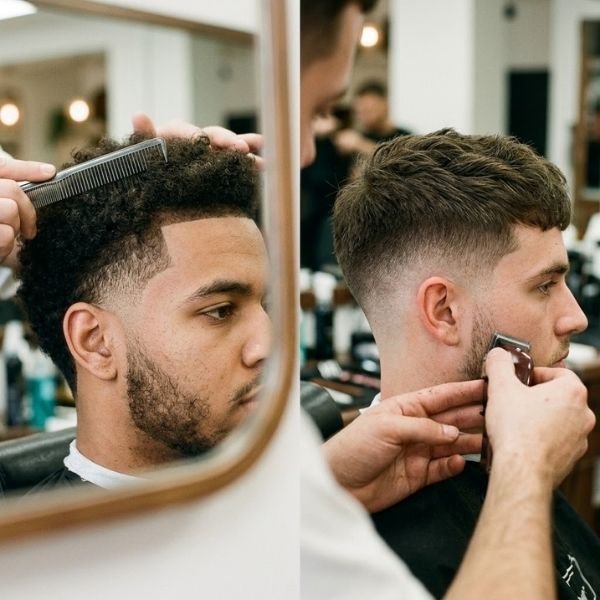
A temple fade concentrates the transition around the temple area.
A taper fade generally treats more of the perimeter, especially the temples, sideburns, and neckline.
If your priority is a defined temple shape while keeping the rest of the sides fuller, a temple fade may communicate your goal more accurately.
Bald Fade vs Taper Fade: Which One Goes Shorter?
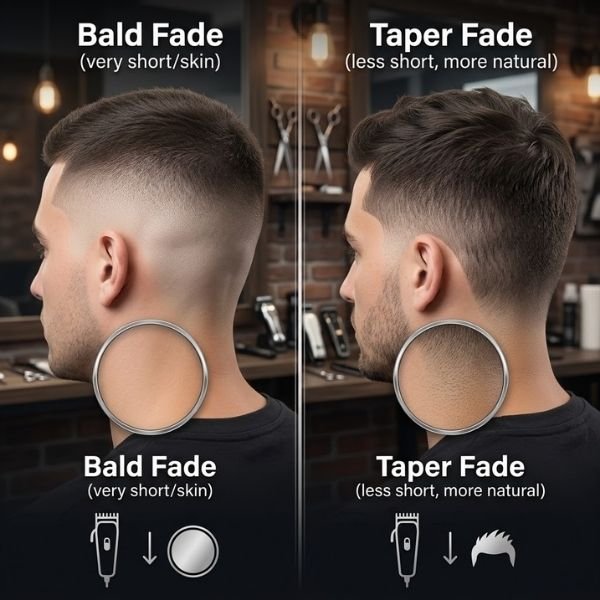
A bald fade goes down to bare skin at its shortest point.
A taper fade does not have to reach the skin. It can stop at a short clipper length or stubble, although a barber can create a skin taper when specifically requested.
So if your priority is maximum skin exposure, say bald fade or skin fade rather than simply asking for a taper.
Skin Fade vs Taper Fade: Is There a Real Difference?
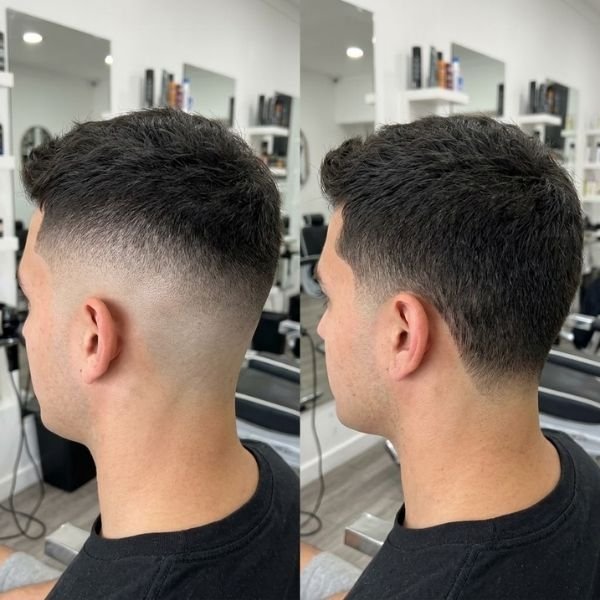
Yes.
A skin fade finishes at bare scalp and then blends upward into longer hair.
A taper fade focuses on gradually reducing the perimeter and may leave visible hair at its shortest point.
The amount of skin exposure is one of the clearest practical differences between the two.
Taper Fade vs Mid Fade: Understanding the Levels
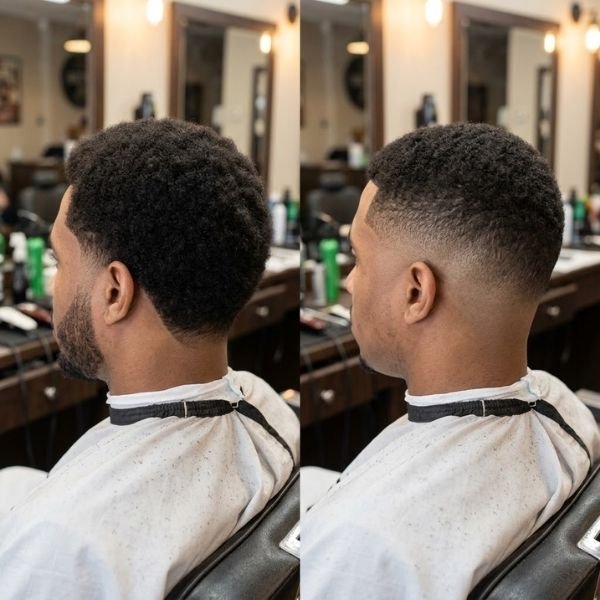
A mid fade begins higher than a low fade and usually affects a larger portion of the sides.
A taper fade is more localized around the perimeter.
The terms “low,” “mid,” and “high” describe fade placement. They do not automatically tell you whether the lowest point is skin, stubble, or a clipper guard.
Old School Fade Names You Might Still Hear
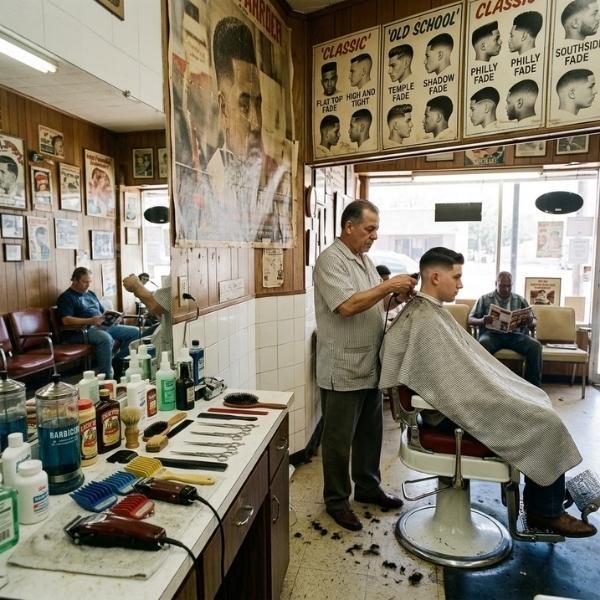
Some traditional haircut terminology varies between regions and barbershops.
You may hear terms such as:
- Regular fade
- Classic taper
- Business taper
- Low taper
- High taper
- Zero fade
- Skin fade
- Bald fade
- Temple fade
- Shadow fade
If a barber uses a term you do not recognize, ask what the shortest point will look like and where the blend will begin.
Read More: Low Taper Fade Short Hair: Best Styles to Try & Mistakes to Avoid
Soft Blend Fades: The Shadow Style Explained
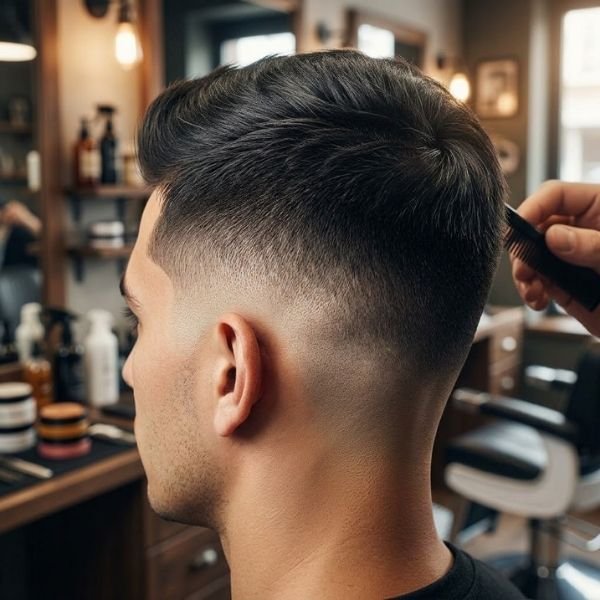
A shadow fade leaves a soft, dark appearance at the shortest section instead of creating a completely bald finish.
The result is less stark than a skin fade because some visible hair remains.
Shadow fades are useful when you want a clean transition without maximum scalp exposure.
They can also be easier to wear during grow out because the contrast is less extreme.
What Does a “Regular Fade” Really Mean?
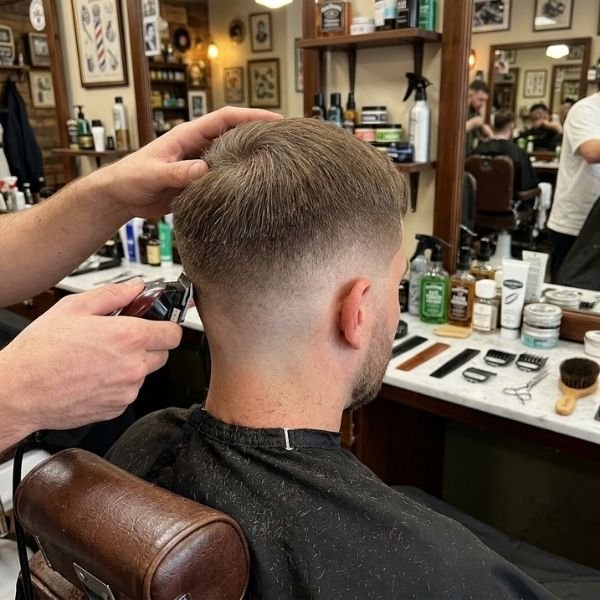
“Regular fade” is not a precise technical haircut name.
Different people may use it to mean a basic fade without a specific height, design, or specialty finish. Because of that ambiguity, tell your barber whether you want a low, mid, or high transition and whether the shortest section should be a guard length, shadow, or skin.
Taper Fade Low Fade: The Short Version
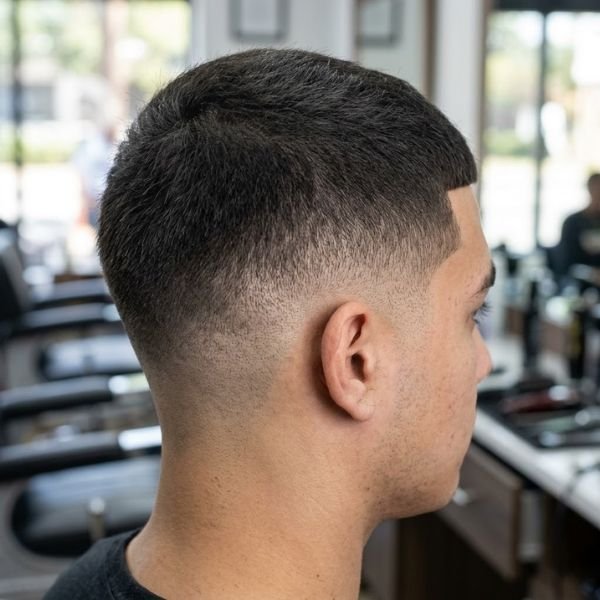
If you only remember five things, remember these:
- Taper fade: More localized around the temples, sideburns, and neckline.
- Low fade: Fades across more of the lower sides and back.
- Skin fade: Reaches bare skin.
- Shadow fade: Leaves a visible dark shadow at the shortest point.
- Low taper fade: A low positioned taper that combines low placement with a softer perimeter treatment.
The exact result depends on how your barber interprets the terminology, so describe the finish as well as the name.
How to Choose Between Taper Fade and Low Fade
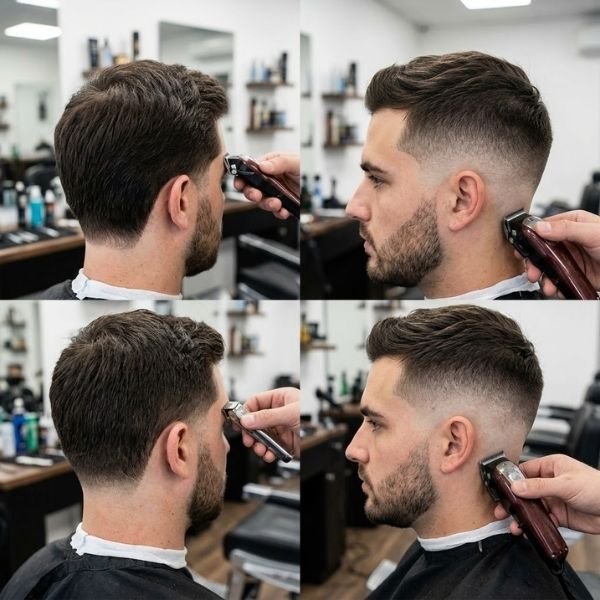
Think About Your Face Shape
Choose the amount of side volume that balances your facial proportions.
If you have a longer face, keeping more side weight may help maintain visual balance. If you have a rounder face, reducing excess side bulk while adding controlled height on top can create a longer visual profile.
Think About Your Hair Type
Straight hair can make the fade transition highly visible.
Curly and coily hair can create a softer, textured appearance around the blend.
Thick hair may require more debulking, while fine hair often benefits from preserving enough density to avoid an overly thin appearance.
Think About Your Lifestyle
For a workplace or setting where understated grooming is preferred, a softer taper can be easier to wear.
If you prefer a sharper, more defined haircut, a low fade gives you a more noticeable transition without moving immediately into a high fade.
Think About Upkeep Time
A very short fade can reveal regrowth sooner because the contrast between short and long hair becomes visible quickly.
A softer taper can often remain visually acceptable for longer as it grows out.
Your hair growth rate also matters, so there is no single maintenance schedule that works for everyone.
Think About Your Age and Setting
There is no strict age limit for either style.
Instead, consider the environment where you spend most of your time. A subtle taper can work well with conservative styling, while a sharper low fade can be adapted to both casual and professional looks depending on the top and finish.
Taper Fade or Low Fade Tutorial: How to Ask Your Barber Step by Step
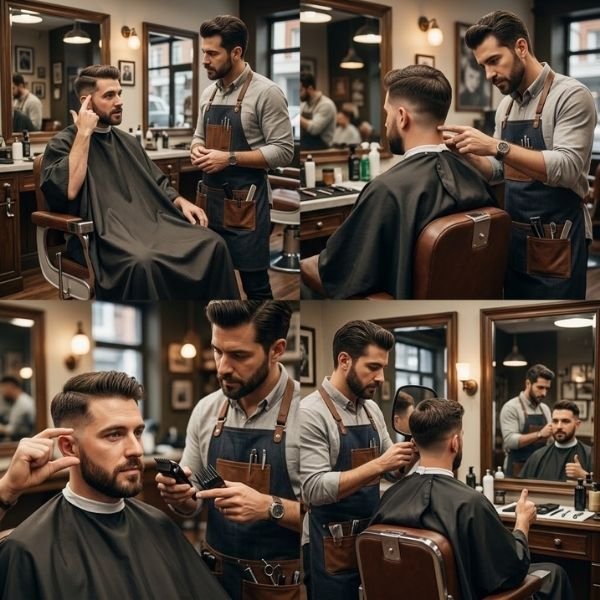
Step 1: Pick Your Base Style
Start with either:
“I want a taper fade with more weight left on the sides.”
or
“I want a low fade that blends across the lower sides and back.”
Step 2: Choose Your Guard Number
Do not assume the barber knows how short you mean.
You can ask for a #1, #2, #3, shadow finish, or skin finish depending on your preference.
Remember that guard numbers can vary slightly by clipper system, so the visual result matters more than the number alone.
Step 3: Decide on Top Length
Tell your barber what you want on top.
For example:
- Short textured crop
- Medium length
- Crew cut
- Curly top
- Long fringe
- Comb over
- Quiff
The fade does not determine the top hairstyle.
Step 4: Add Extra Details
Specify whether you want:
- A natural neckline
- A boxed neckline
- A sharp lineup
- Natural sideburns
- Tapered sideburns
- Beard blending
- A hard part
- A shaved design
Step 5: Bring a Reference Photo
A reference photo is one of the easiest ways to remove ambiguity.
Bring a side profile whenever possible because it clearly shows fade height, side weight, and the shape of the transition. Current barber guides recommend photos because terminology can vary between shops.
Step 6: Communicate During the Cut
If the barber is unsure about the length, confirm before the clippers go shorter.
You can say:
“Please keep the sides fuller.”
or:
“I want the shortest section visible, not completely bald.”
Clear communication is better than trying to correct the haircut after too much hair has already been removed.
Step 7: Set a Follow-Up Schedule
Most people can expect a fade or taper to lose its freshly cut appearance as the hair grows.
A common starting point is around 2 to 4 weeks, but your ideal schedule depends on growth speed, hairstyle, and how sharp you want the perimeter to remain.
Maintenance Tips for Both Styles
Keep your haircut looking clean with a simple routine:
- Wash and condition according to your hair type.
- Avoid excessive product buildup around the faded areas.
- Use a light styling product if needed.
- Brush or style the top according to its texture.
- Clean the neckline between professional cuts only if you know how to do it safely.
- Book a refresh before the blend becomes difficult to recognize.
- Tell your barber what you liked or disliked about the previous cut.
If you want the haircut to maintain its original shape, regular professional touch ups are more reliable than trying to recreate the fade yourself.
Which One Should You Get? The Final Decision
Choose a taper fade if you want more side weight, a softer perimeter, and a haircut that does not make the fade itself the main feature.
Choose a low fade if you want a more visible transition across the lower sides and back while keeping the fade relatively low.
If you are still unsure, tell your barber three things:
- How much side weight you want.
- How short the lowest section should be.
- Where you want the transition to begin.
Those three details are often more useful than simply saying “taper” or “fade.” Modern barber guides increasingly emphasize that placement and shortest length should be specified separately because haircut terminology is not completely standardized.
Frequently Asked Questions
Is a taper fade the same as a low fade?
No. A taper fade usually concentrates the blend around the perimeter, while a low fade generally carries the transition across more of the lower sides and back.
Which lasts longer, a taper or low fade?
A softer taper can look less noticeable as it grows out, while a very short low fade may show regrowth sooner.
Can a taper fade reach the skin?
Yes. A barber can create a skin taper, but you should specifically request a skin or bald finish if you want bare scalp.
Is a low fade good for curly hair?
Yes. Curly hair can create strong texture around a low fade, while the top remains full and defined.
Is a taper fade good for straight hair?
Yes. Straight hair can show the taper clearly, especially when the barber creates a smooth, controlled blend.
What is a low taper fade?
A low taper fade places the taper low around the ears, sideburns, and neckline while keeping the transition relatively soft.
What is the difference between a taper and a taper fade?
The terms overlap in everyday barber language, but a taper fade generally describes a more blended and defined taper around the perimeter.
What is a skin fade?
A skin fade removes the hair down to bare scalp at the shortest part before blending into longer hair.
What does a shadow fade mean?
A shadow fade leaves visible short hair at the base, creating a darker shadow instead of exposing completely bare skin.
How often should I get a taper fade?
Many people refresh a taper every 2 to 4 weeks, although the ideal timing depends on hair growth and how sharp you want the haircut to remain.
Should I bring a picture to the barber?
Yes. A side profile is especially useful because it shows the fade height, side weight, and transition more clearly than a front-facing photo.
Final Thoughts
The taper fade vs low fade decision becomes much easier once you stop thinking only about haircut names.A taper fade generally keeps more weight and concentrates the blend around the perimeter. A low fade creates a broader transition across the lower sides and back. The shortest length, fade height, top style, and neckline are separate choices.
For the most predictable result, show your barber a reference photo and explain exactly how much side weight you want, where the blend should sit, and whether you want a guard length, shadow, or skin finish.That approach gives your barber clear information and gives you a much better chance of getting the haircut you actually pictured.


6 thoughts on “Taper Fade vs Low Fade: The Ultimate Guide to a Perfect Cut”