
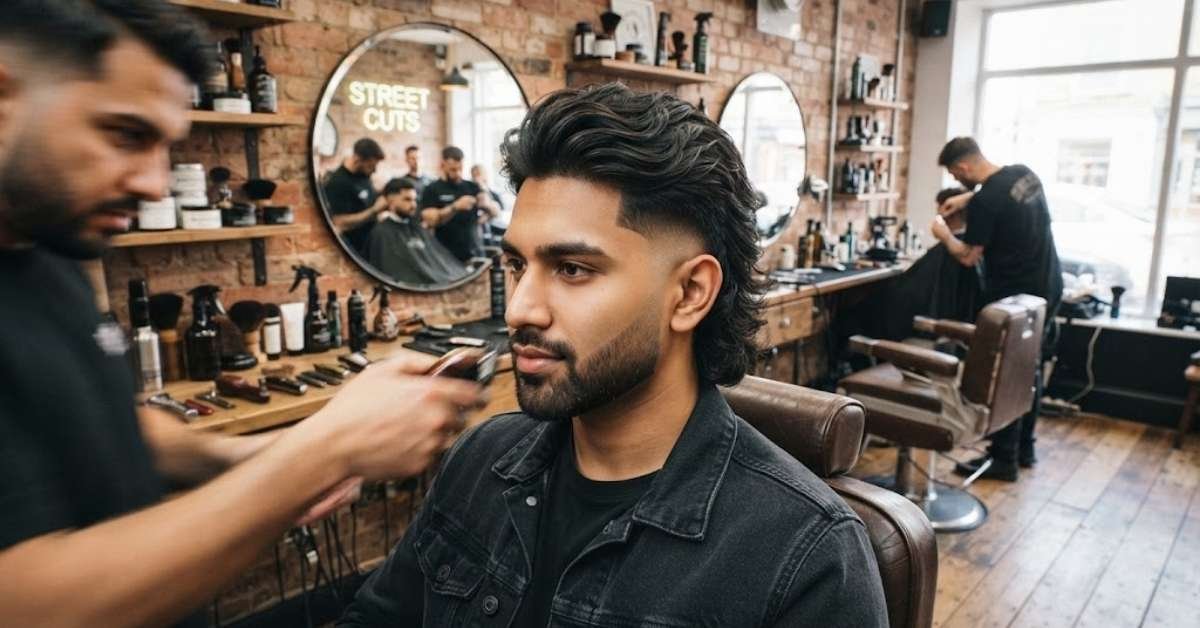

A mid taper fade mullet is a haircut with short, neatly blended sides that start tapering around the mid-temple, paired with longer hair on top and a longer back. It keeps the bold look of a mullet but cleans up the edges, so it works at the office, the gym, and a night out. It is neat, bold, and easy to adapt.
Most men choose it because it sits between a subtle low taper and a high-contrast skin fade. This guide covers every style, hair type, length, face shape, barber script, and upkeep tip you need. You also get a simple trim schedule, so the cut stays sharp instead of growing into a shaggy mess.
What Is a Mid Taper Fade Mullet?
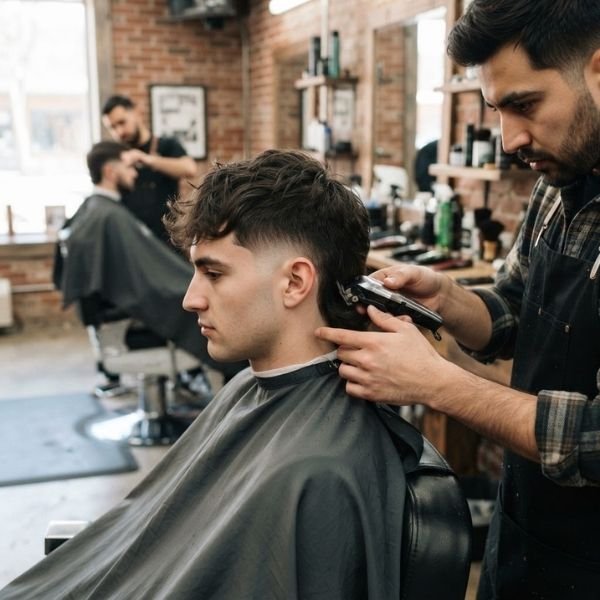
A mid taper fade mullet mixes two ideas. The sides get a taper that begins near the middle of the temple. The top, crown, and back stay longer, which creates the classic mullet shape.
A taper shortens hair gradually and usually leaves some length at the bottom. A fade can go all the way down to bare skin. A mid taper mullet often lands between the two, with a shadow or skin finish depending on what you ask for.
The “mid” part is the starting point. The blend begins about halfway up the sides, so the face stays framed without the harsh contrast of a high fade. The Temple fade entry on Wikipedia lists mid taper as one of the main taper heights, next to low, high, and ice pick tapers.
Every cut in this family has the same four parts:
• Sides: short, blended from the mid-temple down to the sideburns.
• Top: medium length, shaped as a fringe, textured crop, or swept style.
• Back: longer hair that falls over the neck, often called the tail.
• Neckline: a clean or softly tapered edge that finishes the cut.
Why Is the Mid Taper Fade Mullet So Popular?
The modern mullet has moved far from its 1980s image. Today it is softer, cleaner, and easier to wear. Country singer Morgan Wallen is one name that regularly comes up in mullet guides as a style reference.
The mid taper version gets extra attention because it feels balanced. Men who find a skin fade too sharp get a tidy outline without losing the mullet attitude.
Here is why it keeps winning over barbers and clients:
• Balanced contrast: the taper sits halfway, so it looks bold but not extreme.
• Flexible styling: it works with straight, wavy, curly, thick, and fine hair.
• Easy to adjust: you can keep the sides tight or let the back grow out.
• Good from every angle: front, side, and back views all look styled.
• Easy to dress up or down: pair it with a suit or a hoodie.
Barbers also like it as a first mullet. If you want to test the trend, a mid taper lets you keep the sides neat while the length builds at the back.
Mid Taper Fade Mullet Styles to Consider
There is no single way to wear this cut. The top, the texture, and the finish change the whole mood. These are the main versions worth showing your barber.
Classic Mid Taper Fade Mullet
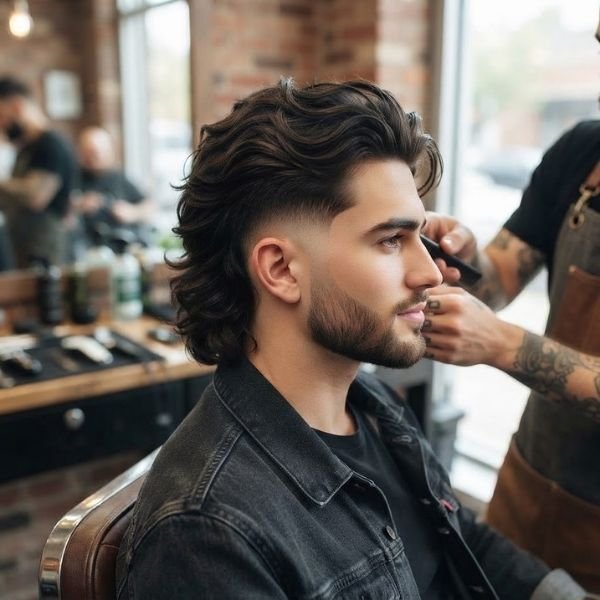
This is the straightforward version. Short tapered sides, a medium top, and a long back that flows into one shape.
It suits men who want the traditional mullet outline with a modern, cleaner edge.
Read More: Taper Fade vs Low Fade: The Ultimate Guide to a Perfect Cut
Modern Mid Taper Fade Mullet
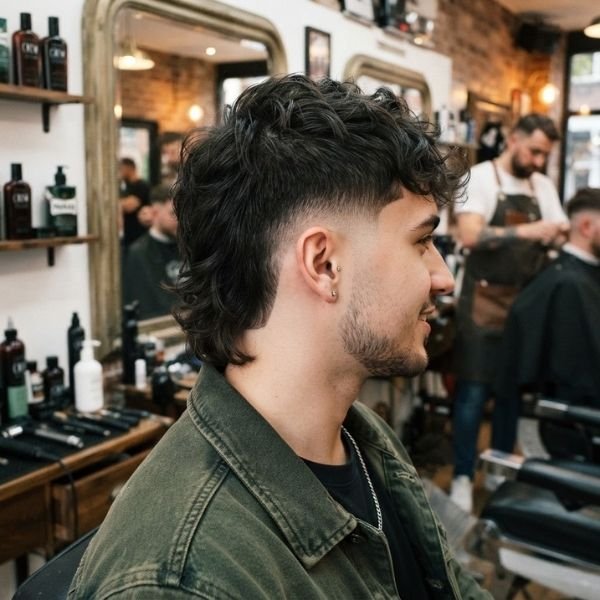
The modern version uses softer layers and lighter weight at the crown. The result looks natural instead of stacked.
Ask for scissor blending between the top and the back so the shape does not form a harsh shelf.
Short Mid Taper Fade Mullet
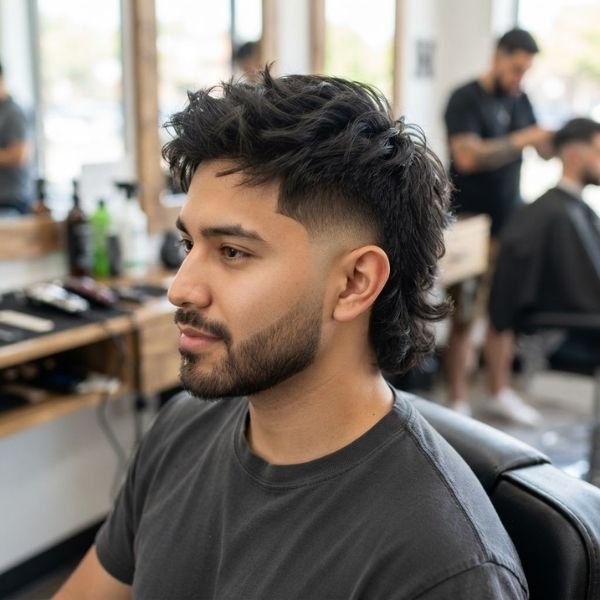
A short mullet keeps the back around the collar line. It is the easiest way to try the style at work or school.
Long Mid Taper Fade Mullet
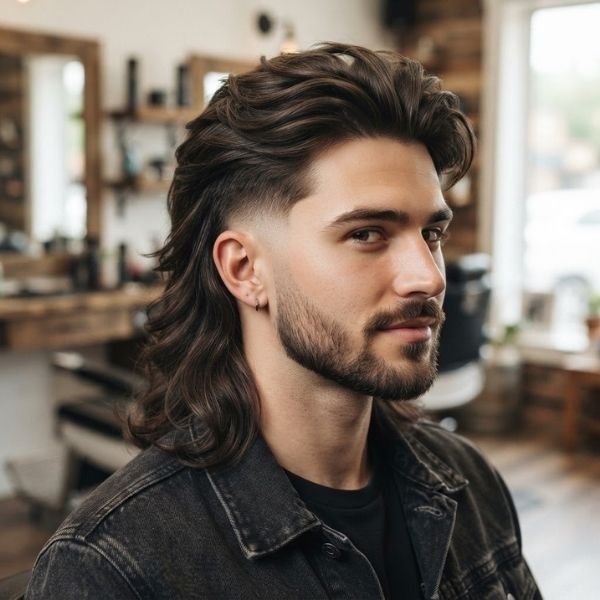
Long versions let the tail reach past the collar and sometimes to the shoulders. The mid taper keeps the sides tidy so the length looks planned.
Textured Mid Taper Fade Mullet
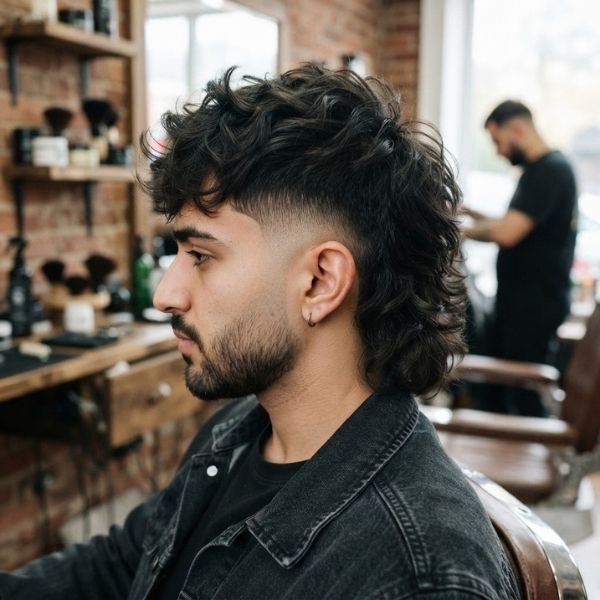
Texture adds movement through choppy layers or point cutting. A matte clay or sea salt spray gives grip and a lived-in finish.
This works especially well on fine or straight hair that needs extra body.
Messy Mid Taper Fade Mullet
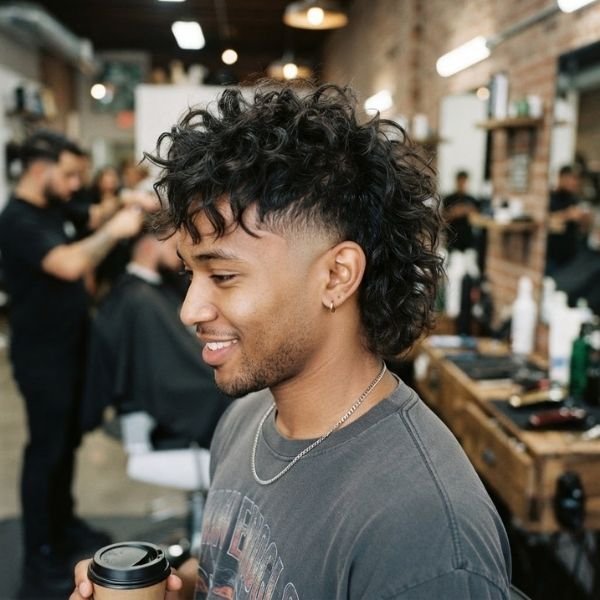
The messy mullet leans into a rough, relaxed shape. Think tousled top and uneven ends with clean tapered sides.
It is a good pick for men who want a wash and go routine without a perfect finish.
Curly Mid Taper Fade Mullet
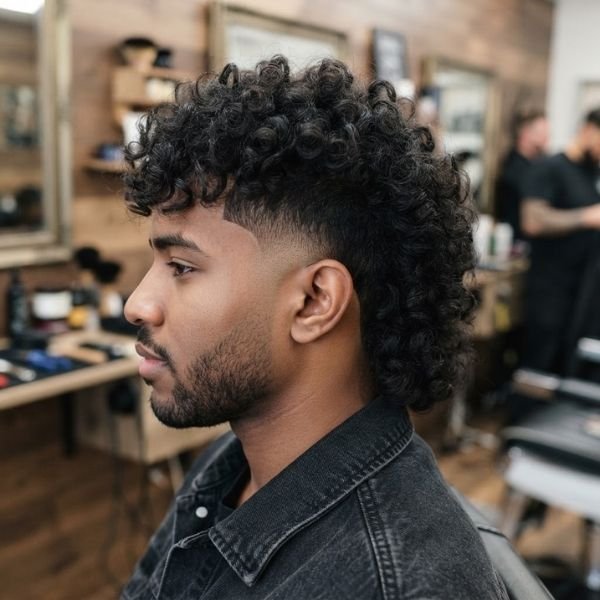
Curls and mullets suit each other well. The tapered sides control volume, while the curly top and back show off the pattern.
Keep the curls moisturized and avoid brushing them dry.
Wavy Mid Taper Fade Mullet
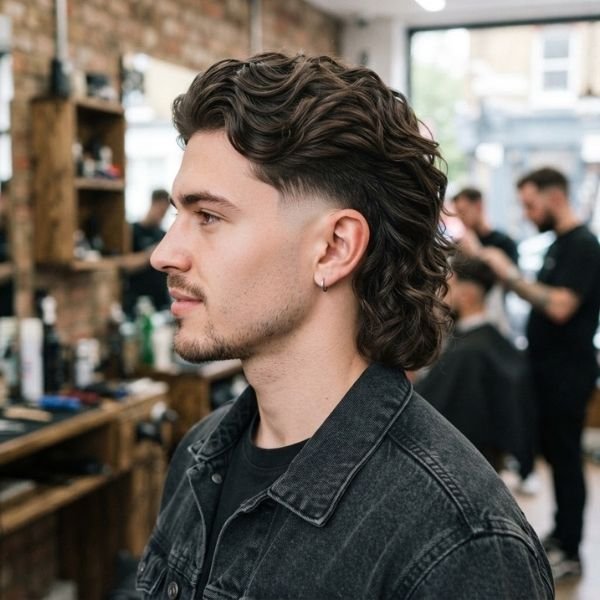
Waves give a natural flow that makes the mullet look soft. A light cream or mousse defines the shape without stiffness.
Mid Taper Fade Mullet With Fringe
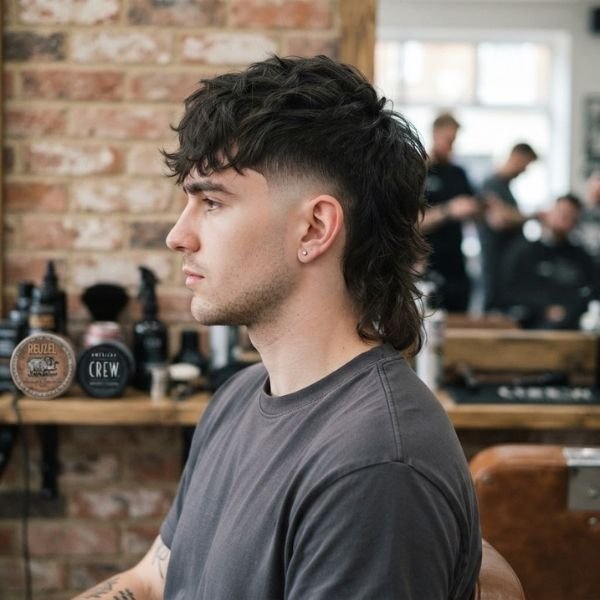
A fringe brings the top forward over the forehead. It can be blunt, side swept, or broken up with texture.
This pairing gives the cut a youthful, structured look and helps balance a high forehead.
Mid Taper Fade Mullet With Textured Top
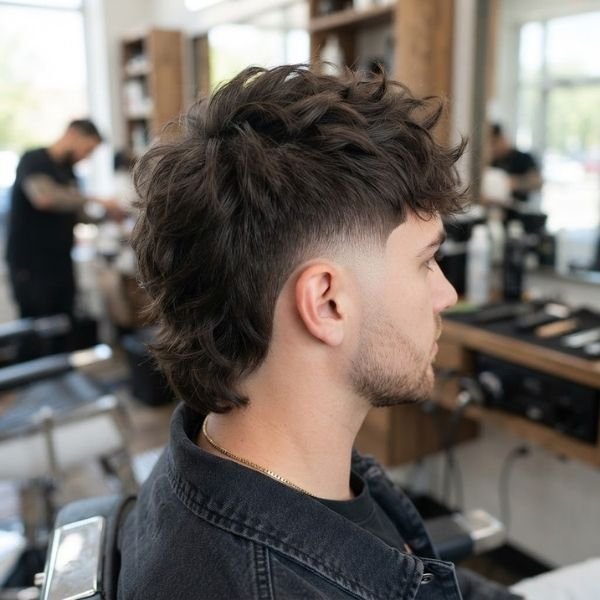
A textured top uses layers to build height and separation. Styled with paste, it gives clear definition against the tight sides.
Mid Taper Fade Mullet With Beard
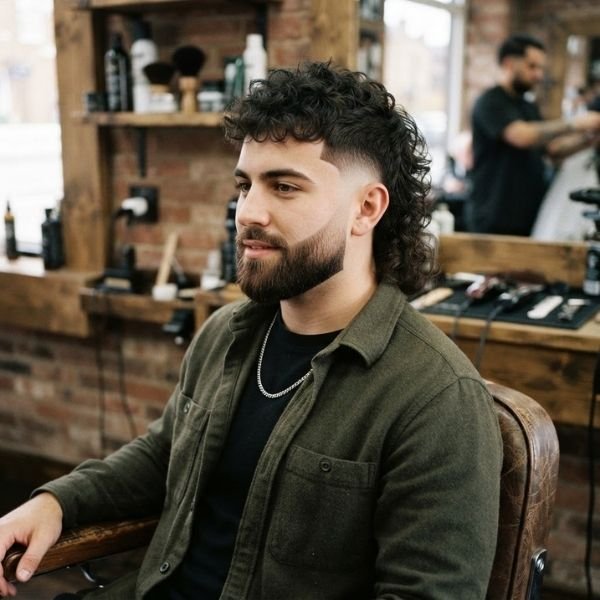
A beard that fades into the sideburns makes the tapered sides look like one smooth piece. Keep the beard line sharp so the face has a clear frame.
A short boxed beard or stubble works best. A very long beard can compete with the mullet.
Read More: Mid Taper Fade Afro: 25 Best Styles, Tips, and a Full Tutorial
Mid Taper Fade Mullet With Design
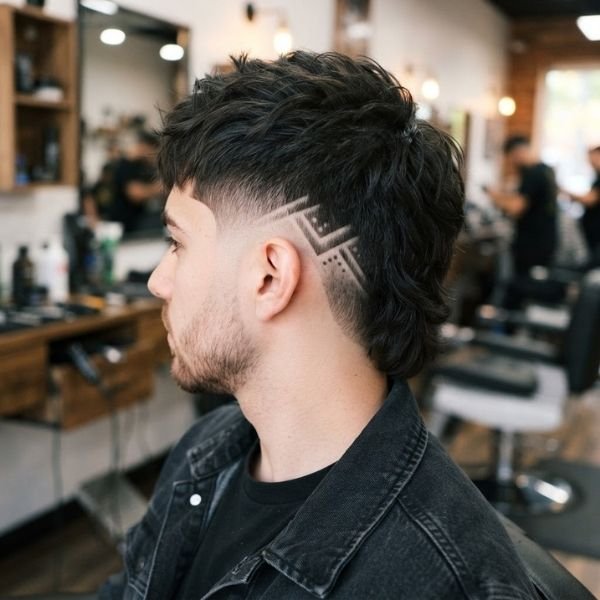
Barbers can add a part line, a razor shape, or fine patterns into the tapered area. Designs work best on short sides with a skin finish.
Keep the design simple, because it grows out fast and needs regular touch ups.
Modern Mullet vs Classic Mullet With a Mid Taper Fade
| Feature | Classic mullet | Modern mullet |
| Sides | Short, often a plain clipper cut | Mid taper blended into the top |
| Top | Short and spiky or flat | Medium length with texture |
| Back | Long and straight | Layered, with soft ends |
| Transition | Abrupt shelf at the crown | Smooth, scissor blended |
| Overall feel | Retro | Clean, current, wearable |
Choosing the Right Mullet Length
| Length | Back length (approx.) | Best for | Typical trim cycle |
| Short | Around collar line | Work, school, first timers | Every 3 to 4 weeks |
| Medium | About 4 to 6 inches | Most men and most hair types | Every 3 to 4 weeks |
| Long | Past the collar | Bold, creative looks | Tapered sides every 2 to 3 weeks |
Short Mullet
A short mullet is subtle. From the front it looks like a regular taper, and the length only shows from behind.
Medium Mullet
This is the sweet spot for most people. The back covers the neck, and the top has enough length to style in several ways.
A medium mullet balances attitude and practicality.
Long Mullet
A long mullet is a statement. The contrast between tidy sides and flowing length is dramatic.
It needs healthy hair and regular trims of the ends to avoid split ends and a stringy look.
Mid Taper Fade Mullet for Different Hair Types
Your hair type decides how the shape sits and how much styling you need. Tell your barber about it before the cut starts.
Straight Hair
Straight hair shows clean lines, so the taper looks sharp. It can fall flat, so ask for texture through the top and use a light powder or paste for lift.
Wavy Hair
Wavy hair is the easiest to work with. The natural bend gives the mullet movement without much effort. A little cream keeps the frizz in check.
Curly Hair
Curly hair needs extra length on top and back because curls shrink when dry. Ask your barber to cut it dry or with the curls defined for a more accurate shape.
Thick Hair
Thick hair benefits from the tapered sides because they remove bulk. Ask for internal layering through the back so the mullet does not look like a heavy block.
Fine Hair
Fine hair should keep more weight on top. Ask your barber to avoid over thinning, and use sea salt spray or volumizing powder for the body.
How to Style a Mid Taper Fade Mullet
Styling takes about five minutes once you know the steps. Follow this order for a reliable result.
1. Wash with a light shampoo. Skip heavy products that weigh down the top.
2. Towel dry gently. Rough rubbing causes frizz, especially in the back.
3. Apply a prep product. Use sea salt spray for texture or a leaf in cream for waves and curls.
4. Blow dry the top. Use medium heat and lift the roots with your fingers.
5. Add a finishing product. Matte clay for texture, paste for definition, or cream for softness.
6. Shape the back. Smooth or scrunch the tail depending on your hair type.
Pea sized amounts of product go a long way. Add more only if the hair still looks flat.
How to Ask Your Barber for a Mid Taper Fade Mullet
Clear instructions prevent a bad cut. Barbers recommend describing the sides, top, and back separately, and the barber guides from Taper Trends and others follow the same method.
Use this simple script as a starting point:
“I would like a mullet with a mid taper fade. Start the taper around the mid-temple, finish with a shadow (or skin) at the bottom, keep medium length on top for a textured fringe, and leave the back about 4 inches long. Please blend the crown so there is no shelf.”
Then run through this checklist before the clippers start:
• Bring photos: show the front, side, and back views.
• Name the fade finish: shadow or skin.
• Describe the top: fringe, swept, curly, or messy.
• Set the back length: use inches, not just “long”.
• Mention your hair type: curly, wavy, straight, thick, or fine.
• Ask about upkeep: how often to return to keep the lines clean.
Speak up during the cut if something looks off. It is much easier to adjust halfway than after the haircut is finished.
Read More: Low Taper Fade Short Hair: Best Styles to Try & Mistakes to Avoid
How to Choose a Mid Taper Fade Mullet for Your Face Shape
Face shape helps decide how tall the top should be and how long the back should run. Use these matches as a guide, not a rule.
• Oval: almost any version works, including long and textured styles.
• Round: add height on top and keep the sides tight to create length.
• Square: soft layers and a textured fringe soften a strong jawline.
• Oblong: choose a fringe and avoid too much height on top.
• Heart: try a side swept top with a medium back to balance the chin.
A good barber can fine tune the shape for your face. If you are unsure, start with a medium length and adjust at the next visit.
How to Maintain a Mid Taper Fade Mullet
Maintenance is the part most guides skip, and it decides whether the cut looks fresh or messy. The tapered sides grow out first, so they need the most attention.
• Tapered sides: refresh every 2 to 3 weeks for a sharp line, or every 4 to 5 weeks for a softer look.
• Top and back: trim the ends every 6 to 8 weeks to prevent split ends.
• Neckline: ask for a clean up at every visit, because the back is where tapers fall apart first.
• Washing: use a gentle shampoo two to four times a week and condition the ends.
• Scalp care: keep the scalp clean so the skin around the taper stays healthy.
If you want to grow the mullet longer, leave the back alone and ask the barber to soften the sides rather than keep a hard line. That way the sides catch up with the length.
Mid Taper Fade Mullet vs Other Taper Mullet Styles
| Style | Where it starts | Contrast | Best for |
| Low taper mullet | Just above the ears | Low | First timers, conservative offices |
| Mid taper fade mullet | Mid-temple | Medium | Most men, versatile styling |
| High taper mullet | High on the temple | High | Strong, sharp looks |
| Burst fade mullet | Curves around the ear | High | Thick or curly hair |
| Skin fade mullet | Down to bare skin | Very high | Statement makers |
Frequently Asked Questions
What is a mid taper fade mullet?
It is a mullet with short sides that taper from the mid-temple, plus longer hair on top and at the back.
Is a mid taper fade good with a mullet?
Yes. It adds a clean outline while keeping the length and flow of the mullet.
What is a modern mullet with a mid taper fade?
It is a softer mullet with blended layers and a tapered side, designed to look neat and natural instead of retro.
Can you get a short mullet with a mid taper fade?
Yes. Keep the back near the collar line for a subtle version that suits work and school.
Can a mid taper fade mullet work with curly hair?
Yes. The taper controls volume at the sides while the curls on top and back show off the pattern.
Is a mid taper fade mullet good for straight hair?
Yes. Straight hair shows the taper clearly, but it needs texture and light product to avoid looking flat.
How long should the back be for a mid taper fade mullet?
Most men go for about 4 to 6 inches. Short versions sit at the collar, and long versions go past it.
How do you style a mid taper fade mullet?
Blow dry the top, add clay or cream, and shape the back with your fingers. It takes about five minutes.
How often should a mid taper fade mullet be trimmed?
Every 2 to 4 weeks for the sides, and every 6 to 8 weeks for the ends of the top and back.
Final Thoughts
The mid taper mullet is one of the most practical ways to wear a mullet today. It gives you clean sides, plenty of length where it matters, and enough variety to suit almost any hair type or face shape.
Pick a length you can live with, bring clear photos, and book regular sidewall cleanups. With the right barber and a short styling routine, this cut looks sharp every day.


1 thought on “Mid Taper Fade Mullet: Best Modern Styles, Hair Types & Styling Ideas”