


Asymmetrical bangs are fringes cut at an angle or with uneven lengths, so one side sits shorter, longer, or heavier than the other. They suit most face shapes when the slant matches your features and hair texture. Round faces gain length from a deep diagonal, square faces get softer corners from a wispy lean, and heart shapes get balance from a longer sweep across the forehead.
This guide covers 30 ideas, grouped by length and cut, from micro fringes to long diagonals on bobs, pixies, shags, and curls. You will also find face shape advice, exact words to use with your stylist, upkeep tips, and honest cases where this fringe is the wrong call.
Micro and Baby Asymmetrical Bangs
Micro and baby fringes sit high on the forehead, so the angle is the star. Because the cut is short, every millimeter shows, which makes a precise stylist important.
1. Micro Fringe with a Hard Diagonal Line

A micro fringe sits well above the brows. A hard diagonal line takes it from very short on one side to slightly longer on the other, and the result looks graphic and deliberate.
Ask for a sharp, clean angle and part the hair on the shorter side. A flat iron and a light serum keep the edge crisp.
2. Baby Bangs on a Soft Slant for Round Faces

Baby bangs end near the hairline. A soft slant keeps them from looking like a straight shelf, and the tilt adds visual length to a round face.
Keep the shorter side near the temple and let the longer side graze the opposite brow. Point cutting softens the line.
3. Choppy Micro Fringe on Thick Hair

Thick hair gives a micro fringe weight and attitude. Choppy, uneven pieces break up the density so the bangs look piecey instead of heavy.
Ask your stylist to texturize with a razor or point cut and to remove bulk from underneath. A little texture paste adds separation.
4. Sliced Baby Fringe with a Cropped Pixie
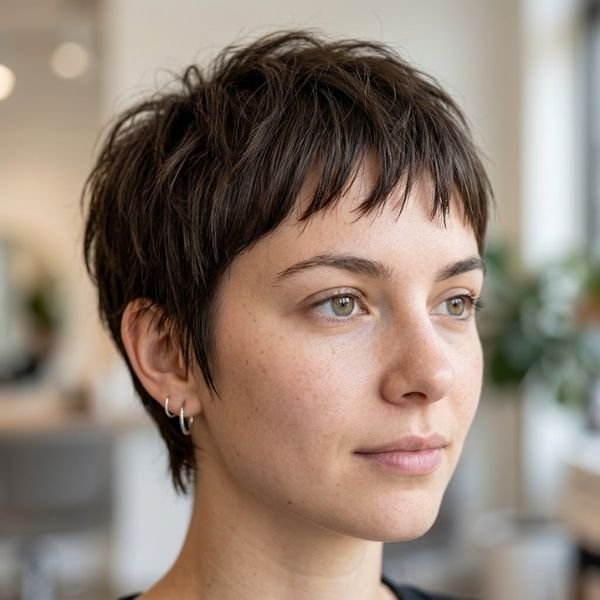
A baby fringe sliced on a diagonal pairs well with a cropped pixie. The cut shows off the forehead and cheekbones, and it reads bold and clean.
Keep the sides and nape short, and let one side of the fringe run a little longer. A matte pomade holds the slice in place.
5. Angled Micro Bangs on a Blunt Bob
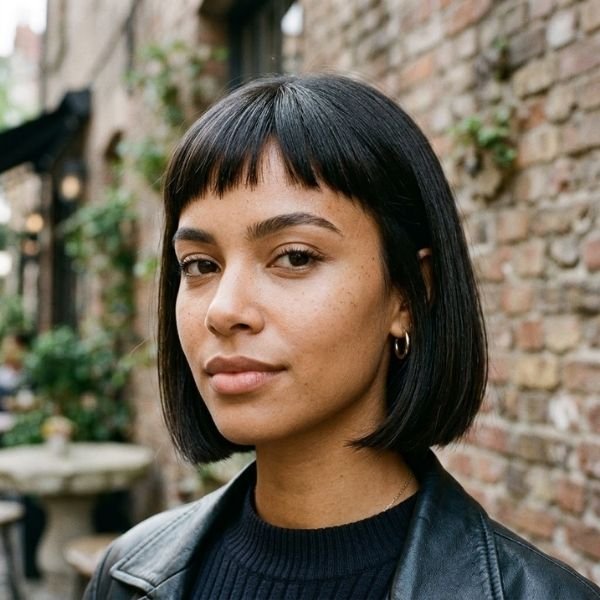
A blunt bob has a heavy, single length hem, and angled micro bangs add contrast. The sharp line on top echoes the sharp line at the jaw.
This pairing works best on straight, fine to medium hair. Run a flat iron over the bangs to keep the cut glassy.
6. Copper Micro Fringe with an Off-Center Slant

Copper color turns a short slanted fringe into the focal point. Warm tones pull the eye to the cut, so small flaws in the line show up fast.
Red tones fade quickly. Use a color safe shampoo, rinse with cooler water, and book regular glosses.
Soft and Wispy Asymmetrical Bangs
7. Wispy Diagonal Fringe with Curtain Softness

This fringe parts lightly near the center and falls on a slant. It borrows the airy feel of curtain bangs and frames the eyes without a heavy line.
Ask for long, feathery ends that blend into the sides. A round brush adds gentle movement.
8. See-Through Slanted Bangs

See through bangs use a thin layer of hair, so a bit of forehead shows. Cut on a slant, they add depth without covering your face.
Tell your stylist you want about a third of the usual density. Less hair on the skin also feels cooler in hot weather.
9. Feathered Slant on Fine Hair
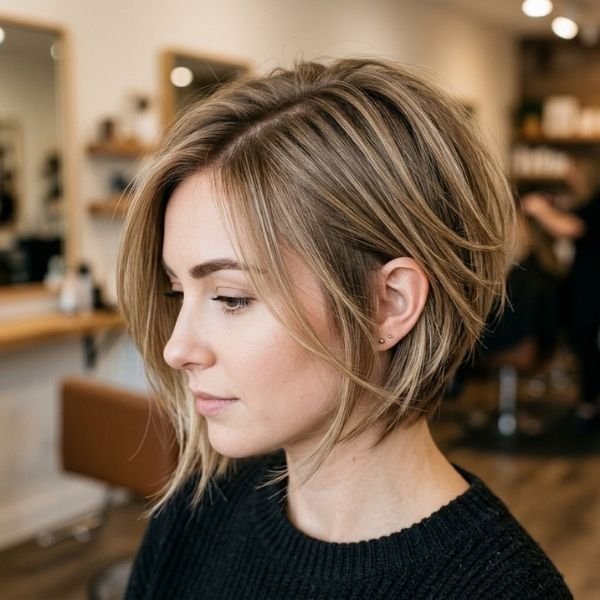
Fine hair can look flat under a full fringe. A feathered slant uses fewer strands and tapered ends, so it looks light and full of movement.
Skip heavy oils. A volumizing mousse at the roots and a quick blow dry give lift.
10. Airy Angled Bangs with Long Layers
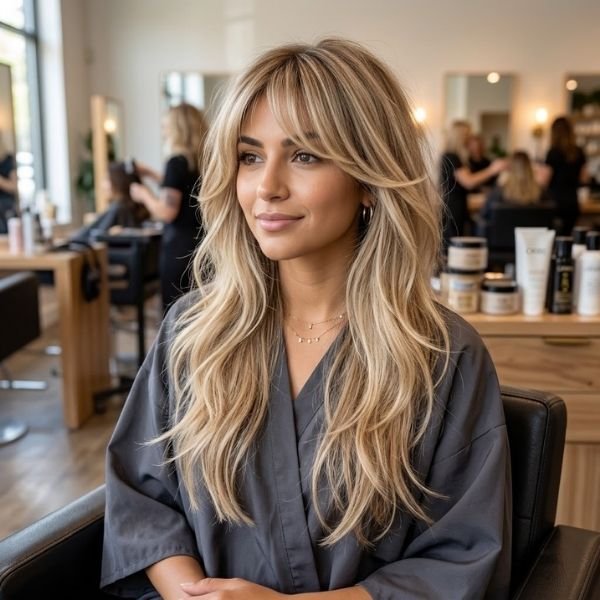
Angled bangs that melt into long layers make the whole cut look connected. The fringe becomes the start of the layers instead of a separate piece.
Ask your stylist to cut the layers first and blend the bangs into them. Loose waves from a large barrel curling iron finish the look.
11. Soft Asymmetrical Fringe on Wavy Hair

Waves give a soft fringe natural bounce. The uneven length also hides the way waves shrink and shift through the day.
Cut it slightly longer than you want, since waves spring up once dry. Scrunch in a light cream and diffuse.
12. Brunette Wispy Fringe with a Subtle Lean

A subtle lean means the fringe tilts only a few degrees. On brunette hair the effect looks quiet, polished, and easy to wear to the office.
Add a gloss for shine, since dark hair shows the slanted line clearly when it is smooth. Dry shampoo handles midday oil.
Long Diagonal and Side-Sweeping Styles
13. Jaw-Grazing Diagonal Fringe

The fringe starts near the brow on one side and slides down to graze the jawline on the other. It creates a long diagonal that stretches the face.
This cut needs length to work. Ask your stylist to leave the long side uncut until you both see the shape.
14. Long Angled Bangs Blended into Face-Framing Layers
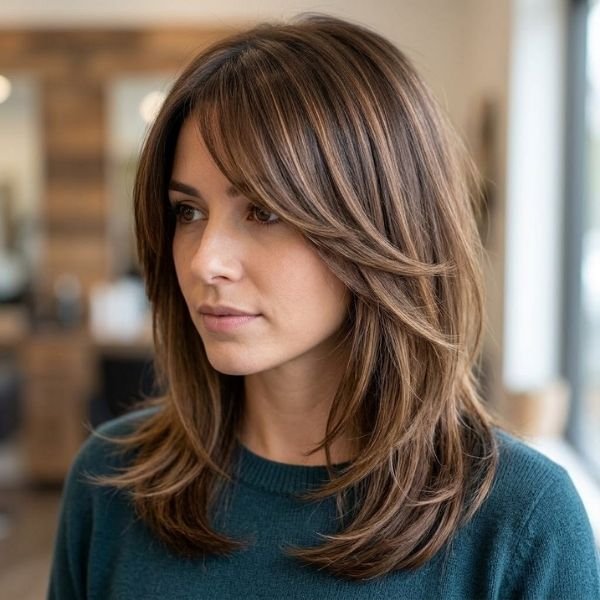
Long angled bangs that merge with face-framing layers look softly grown out on purpose. There is no obvious start or end to the fringe.
Ask for the angle to begin at the cheekbone, then turn the ends away from your face with a curling iron.
15. Deep Side-Slant Fringe on Straight Hair

A deep side part pushes the fringe far to one side. On straight hair the slant forms a strong line, and sleek strands show it clearly.
Part your hair the same way every day so the fringe falls into place. A smoothing serum keeps flyaways down.
16. Cheekbone-to-Jaw Angled Bangs

These bangs sweep from the cheekbone toward the jaw, which draws attention to the middle of the face. They give a gentle, natural contour.
Heart and square shapes pair well with this line because it softens the forehead and jaw angles. Ask for a slight curve, not a straight cut.
17. Long Slanted Fringe with Balayage

Balayage paints lighter pieces by hand, and a long slanted fringe shows them off. The lighter ends catch the light as the fringe moves.
Ask your colorist to keep the brightest pieces near the fringe ends. Plan regular toner refreshes if you go blonde.
18. Eye-Skimming Diagonal on Thick Hair

Thick hair holds a long diagonal fringe well, so it stays smooth and does not split. The ends skim the eyes for a moody frame.
Ask for internal thinning so the fringe does not feel heavy. Trim often, because eye grazing length gets in the way fast.
Asymmetrical Bangs with Bobs and Pixies
19. French Bob with an Angled Micro Fringe

The French bob sits around the chin or just above it. An angled micro fringe adds a Parisian edge, and together they look short, neat, and cool.
Keep the bob slightly messy and the fringe sharp. A light texture spray stops the shape from looking stiff.
20. Asymmetrical Bob with Matching Slanted Bangs

When the bob runs longer on one side, slanted bangs that tilt the same way repeat the shape. The cut looks planned from top to bottom.
Ask your stylist to match the angles so the fringe leads the eye toward the longer side of the bob.
21. Pixie with a Long Diagonal Fringe

A pixie keeps the sides and back short while a long diagonal fringe sweeps over the forehead. The stylist advice site All Things Hair treats the pixie as a go to asymmetrical cut.
Ask for very short sides and back, with bangs long enough to sweep across the forehead.
22. Chin-Length Bob with a Soft Off-Center Fringe

A chin length bob with a soft off center fringe feels friendly and easy. The fringe falls to one side without a hard line.
A small amount of cream and an air dry give a relaxed finish.
23. Bixie with Choppy Angled Bangs

A bixie blends a bob and a pixie, with short layers at the crown and some length at the nape. Choppy, angled bangs add movement on top.
Ask for razored layers and keep the fringe uneven. Texture spray gives the choppy finish.
24. Sleek Lob with a Precision Diagonal Fringe

A lob, short for long bob, sits near the collarbone. A precision diagonal fringe keeps it polished, so it suits work and formal settings.
Blow dry smooth with a paddle brush and finish with a shine serum. This look is best on straight or slightly wavy hair.
Curly, Textured, and Statement Versions
25. Curly Asymmetrical Fringe Cut Dry

Curls shrink as they dry, so cutting a curly fringe dry shows its true length and shape. The slanted line follows each curl pattern.
Look for a stylist with curly cutting experience. Ask them to cut curl by curl, not in one flat line.
26. Shag with a Slanted Fringe

A shag has choppy layers all over, and a slanted fringe fits right in. The whole cut looks lived in and a little rock and roll.
Ask for the fringe to blend into the shorter crown layers. Sea salt spray and a quick scrunch work well.
27. Razor-Cut Fringe on a Wolf Cut

The wolf cut mixes shag layers with a mullet shape. A razor cut fringe with an angle gives wispy, broken ends that match the rest of the cut.
Razor cutting works best on hair that is not dry or damaged. Keep strands hydrated with a leave in conditioner.
28. Platinum Angled Fringe as the Focal Point
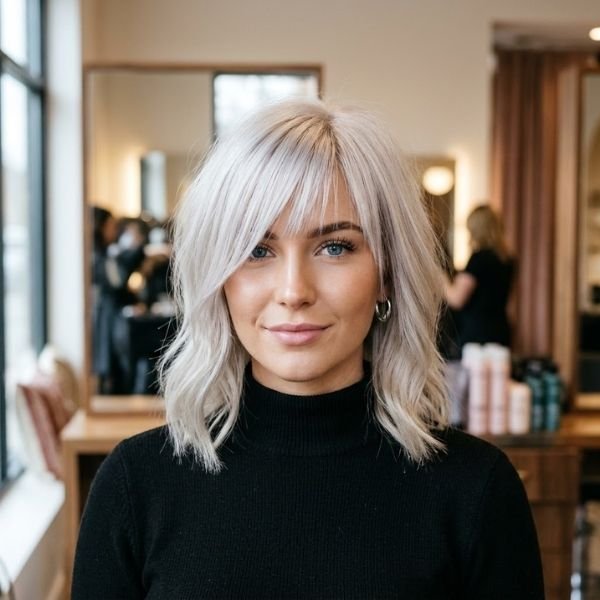
Platinum hair pulls attention to the fringe. An angled line against pale color looks bold and almost graphic.
Bleaching weakens strands, so ask about bond building treatments and use purple shampoo to hold the tone.
29. Thick Blunt Fringe with a Stepped Angle

A stepped angle cuts the blunt fringe in small steps, so it climbs from one side to the other. The look is dense and architectural.
This style needs thick, healthy hair and a skilled stylist, since blunt lines show every mistake. Plan on frequent trims.
30. Disconnected Fringe with an Undercut Pixie
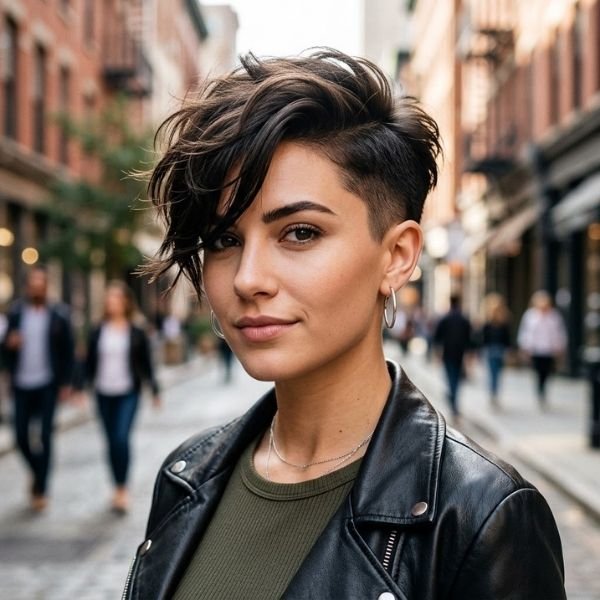
A disconnected fringe stays long on top while the sides are shaved or cut very short with no blending in between. The angled fringe falls over the undercut.
This is the boldest idea on the list. Talk through a grow out plan before you commit.
How to Choose Asymmetrical Bangs for Your Face Shape
Face shape sets the starting point. As TODAY reports from stylist advice, your face shape can steer which kind of bangs you pick. A slant also stretches the face, so the angle matters most.
| Face shape | Best asymmetrical bangs | Why it works |
| Round | Deep diagonal or soft slanted fringe | The angle adds vertical length |
| Oval | Almost any slant, including micro | Balanced proportions handle short and long |
| Square | Wispy or feathered slant ending near the cheekbone | Softens the forehead and jaw corners |
| Heart | Long side sweep that reaches the jaw | Balances a narrow chin and a wide forehead |
| Oblong | Shorter fringe that stops at the brow | Avoids stretching an already long face |
| Diamond | Soft slanted fringe with face-framing layers | Balances wide cheekbones |
Beyond face shape, check these four things before you book:
• Hair texture: straight hair shows the angle clearly, while curls need a dry cut.
• Cowlicks: a strong cowlick at the front can push the fringe the wrong way.
• Forehead height: a small forehead suits longer, softer fringes.
• Hair density: thin hair at the front may not support a heavy fringe.
What to Tell Your Stylist
Clear words prevent most fringe regrets. Photos help, but describing the cut helps more.
1. Bring two or three photos and point out what you like about the angle.
2. Say which side you want shorter and where the shortest point should land, such as the temple or the brow.
3. Explain how you part your hair every day. The advice at All Things Hair is to part it the way you wear it most.
4. Ask for point cutting or a razor if you want a soft, wispy edge.
5. Ask for a dry cut if your hair is curly or wavy.
6. Request a plan for the grow out, so the fringe can blend into layers later.
Start longer than you think. A fringe can always be cut shorter, but it cannot be put back.
Maintenance and Styling
Asymmetrical bangs lose their shape quickly because the angle depends on exact lengths. Short versions need a trim every four to six weeks, while longer diagonals can often wait six to eight weeks.
Daily styling takes about five minutes once you learn the direction of your fringe. These habits help:
• Wash the fringe separately in the sink if the rest of your hair is clean.
• Blow dry with a round brush, pulling the fringe in the direction of the slant.
• Use heat protectant before a flat iron or curling iron.
• Keep dry shampoo handy, since fringe touches the forehead and gets oily first.
• Pin the bangs back on bad days. A small clip hides a lot.
Product choice matters too. Fine hair does best with light mousse, while thick or curly hair can take creams and pastes.
When Asymmetrical Bangs Are Not the Right Choice
This fringe is not for everyone, and being honest about that saves time and money. Think twice in these cases:
• You have a strong cowlick or a double crown at the front hairline.
• You want a zero maintenance routine and cannot book regular trims.
• Your hair is very thin at the front and the fringe would look sparse.
• You are growing out a cut and want length soon.
• You dislike daily styling, since the angle needs a few minutes each morning.
If most of these sound like you, face-framing layers give a similar softness with far less upkeep.
FAQ
What is the difference between asymmetrical bangs and side-swept bangs?
Side-swept bangs are brushed to one side, often at an even length. Asymmetrical bangs are cut with uneven lengths or an angle, so the shape is uneven by design.
Do asymmetrical bangs work on curly hair?
Yes. Ask for a dry cut from a stylist who knows curls, so the fringe keeps its shape as it springs up.
How often do asymmetrical bangs need to be trimmed?
Plan on every four to six weeks for short versions and six to eight weeks for longer ones.
Can I cut asymmetrical bangs myself at home?
A tiny trim is possible, but the first angle is hard to get right. Have a professional cut the shape, then touch up only the ends.
Which face shape suits asymmetrical bangs best?
Round, square, and heart shapes gain the most because the slant softens or lengthens the face. Oval faces can wear almost any version.
Will asymmetrical bangs grow out awkwardly?
There is a short awkward stage, but long diagonal versions blend into face-framing layers within a few weeks. Pins and a side part help in between.
Conclusion
Asymmetrical bangs give you control over the shape of your face with one cut. Pick the length that fits your lifestyle, match the angle to your face shape, and give your stylist clear instructions.
Which of the 30 ideas would you try first? Save your favorites, take them to your next appointment, and share this guide with a friend who is considering a fresh fringe.

