


The best pixie cuts for square faces use texture, soft fringe, and off-center shape to blur a strong jawline and wide forehead. A square face has a forehead, cheekbones, and jaw of similar width, with a defined, angular jaw.
A pixie works here when it adds movement on top and curves around the edges. Piece-out crowns, side-swept fringes, deep side parts, and ear-grazing lengths all do that job well. Blunt, severely straight cuts do the opposite. Below are 25 pixie ideas sorted by type, a briefing guide for your stylist, and honest notes on when another cut serves you better.
Textured and Layered Pixies
Texture is the most reliable tool in pixie cuts for square faces. Choppy layers break up straight lines and give the eye soft edges to follow. These seven pixie cuts for square faces all start with layering.
1. Piece-Out Crown Pixie

This cut has choppy, separated pieces across the crown. The broken texture pulls the eye upward and away from the jaw.
Twist small sections with a matte paste. Ask your stylist for point cutting so the ends stay soft.
2. Fine-Hair Volume Pixie

Fine hair can look flat against a strong jaw. Short layers at the crown build lift without adding weight.
Blow-dry the roots upward with a round brush, then finish with a light texturizing spray.
3. Lifted Crown with Jaw-Framing Pieces

Height on top makes the face look longer and less boxy. A few longer pieces near the ears curve toward the cheeks.
Keep those pieces wispy rather than blunt so they soften the jaw instead of outlining it.
4. Tousled Finger-Styled Pixie

This is the low-effort option. The layers are cut so the hair falls into shape when you rake it with your fingers.
It suits wavy hair best, since natural bend adds soft edges without a styling tool.
5. Grow-Friendly Textured Pixie

Stylists cut this version with growing out in mind. Longer layers on top and a gently tapered nape avoid the awkward in-between stage.
You can stretch trims to every six to eight weeks and still keep the shape.
6. Cool-Tone Brunette Layered Pixie

Color changes how a cut reads. Ash or cool brown shades add depth, so the layers show clearly without extra length.
Subtle lowlights add dimension, which makes the texture look softer across angular features.
7. Piecey-Crown Script Pixie

The crown pieces sweep in loose, directional strokes, almost like handwriting across the top. Each strand has its own direction.
Lay them with a pomade. The uneven lines break up the symmetry that makes a square jaw stand out.
Pixies with Soft Fringe
A fringe changes the top third of the face, which matters for pixie cuts for square faces, which is where a square face is often widest. Soft, slanted, or feathered fringes work best. Heavy straight bangs add one more hard line, so skip them.
8. Long Side-Swept Fringe Pixie

A long fringe sweeps across the forehead at a diagonal. The slanted line cuts across the width of a broad forehead.
Ask for it to sit past the eyebrow, then sweep it or tuck it as your day requires.
9. Curtain-Style Pixie Fringe

Curtain fringe parts in the middle and falls to each side. The curved split frames the cheekbones and balances the jaw.
It looks best when the top section stays slightly longer than the sides.
10. Wispy Brow-Grazing Fringe

These feathered bangs just touch the brows. Their see-through texture softens the forehead without a heavy block of hair.
Ask for razor or point cutting. A blunt edge defeats the purpose.
11. Angled Fringe with One-Sided Drop
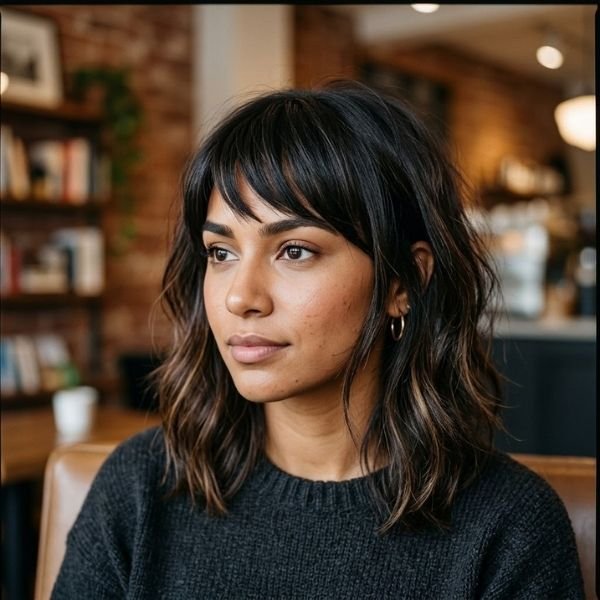
The fringe starts short on one side and drops longer on the other. The angle adds movement across the face.
You get asymmetry without shaving anything off, which makes it a gentle first step.
12. Blow-Dried Curved Fringe
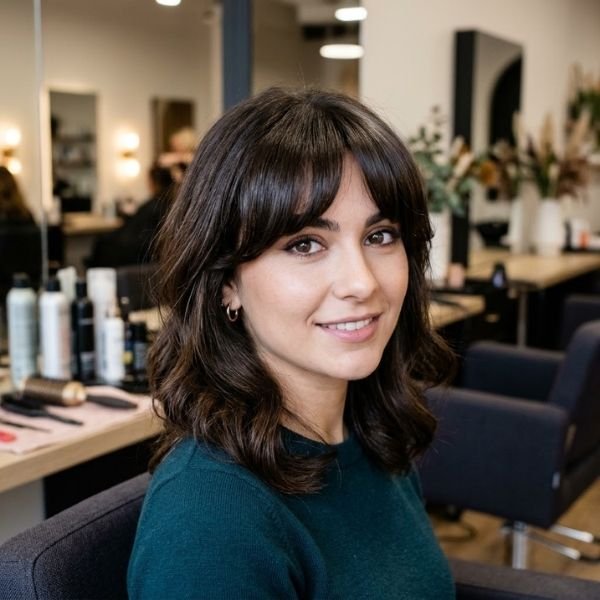
A round brush bends the fringe into a soft arc. Curves are the opposite of the straight lines in a square jaw.
Set the shape with a light-hold spray so the curve lasts through the day.
13. Grow-Out-Ready Side Fringe

This side fringe is cut long enough to grow into side-swept layers. As it lengthens, you can tuck it behind the ear.
It helps if you plan to move toward a bob or a longer cut later.
14. Money-Piece Fringe Pixie
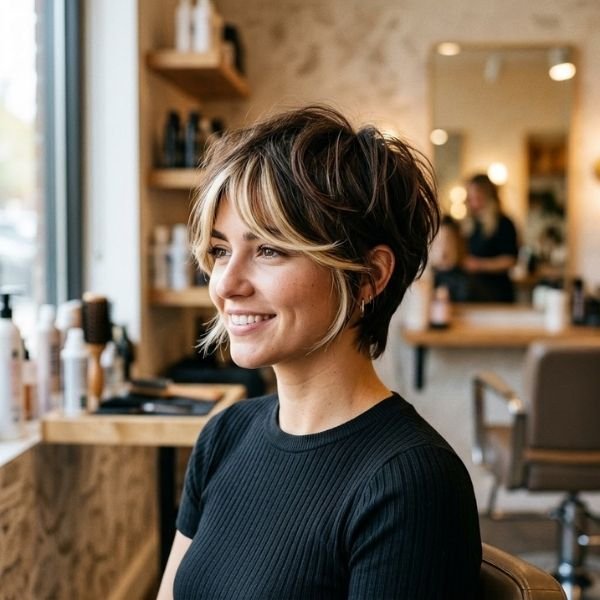
A money piece is a bright, face-framing strand, usually lighter than the rest of your hair. On a fringe, it highlights the front and draws attention to the eyes.
Keep the shade a few steps lighter than your base so it blends instead of striping.
Asymmetrical and Side-Swept Pixies
Asymmetry is a direct answer to a symmetrical, boxy face, so these pixie cuts for square faces lean on it. When one side is longer or the part sits off-center, the eye stops reading the jaw as a perfect rectangle.
15. Classic Deep-Part Asymmetric Pixie
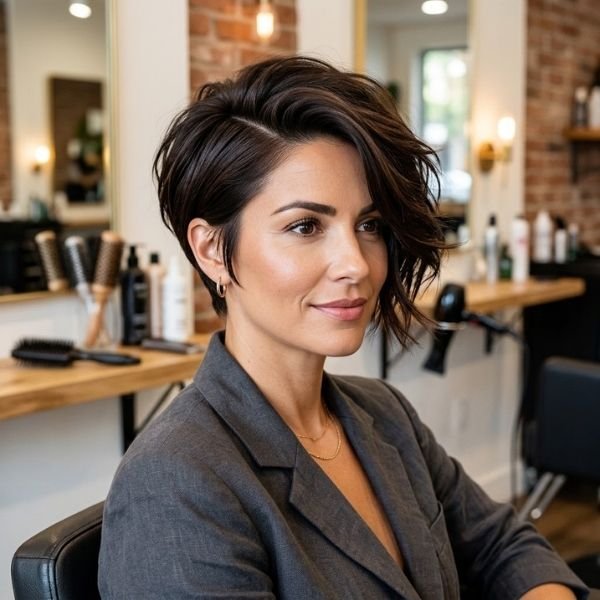
A deep side part puts most of the hair on one side. The off-center line breaks the symmetry of a square face.
Extra length on the heavy side adds sweep across the forehead.
16. Razor-Edged Asymmetric Pixie
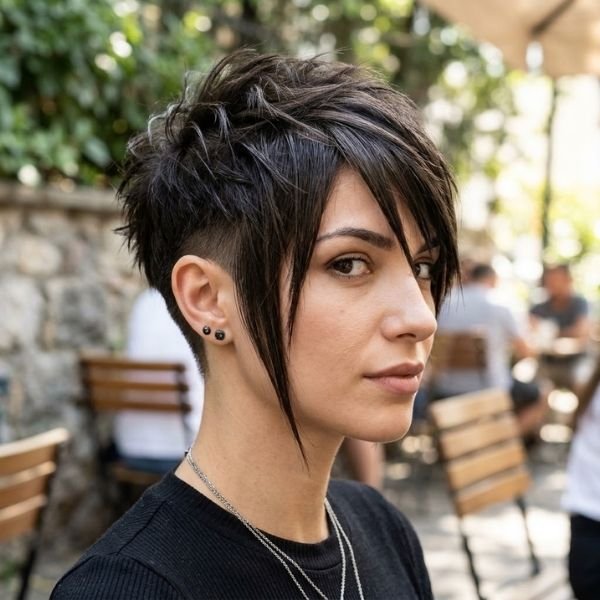
Razor cutting leaves feathered, uneven ends. They feel softer than scissor-blunt edges.
This suits straight to fine hair. Very curly hair may frizz under a razor, so check with your stylist.
17. Wavy-Texture Asymmetric Pixie

Natural or styled waves add curves to an angular shape. Pair them with a longer side for a loose, relaxed effect.
Use a curl cream and diffuse the hair to keep the definition.
18. Cheekbone-Framing Long Side

One side stays long enough to graze the cheekbone. This draws attention to the middle of the face instead of the jaw.
Keep the other side short and neat for contrast.
19. Wax-Defined Side-Swept Pixie
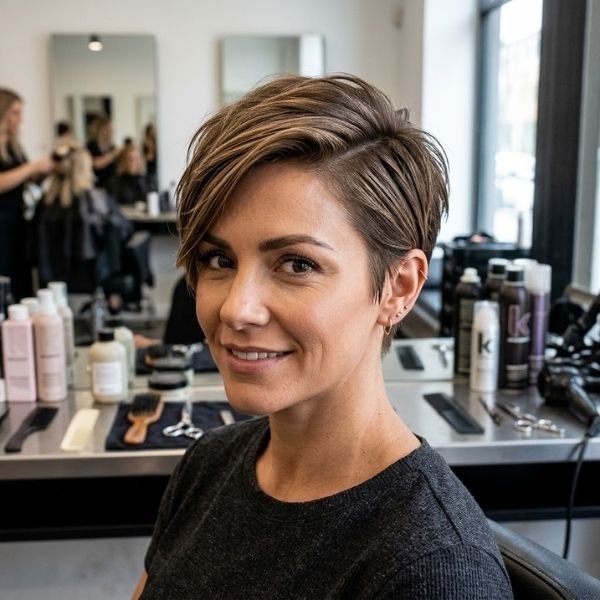
A touch of wax gives the swept side definition and hold. It is a polished option for work or events.
Use a pea-sized amount. Too much turns a soft sweep into a stiff helmet.
20. Undercut-Side Asymmetric Pixie

One side is cut very short while the other stays long. It is the boldest look on this list.
Ask for a soft blend on the short side, not a hard line, and keep the long side wispy.
Longer Pixies and Transition Cuts
Extra length gives you more tools to soften the jaw. These longer pixie cuts for square faces also suit anyone moving between a bob and a short crop.
21. Ear-Grazing Pixie with Tuck Option

The length reaches the ear, so you can tuck it back or let it fall forward. Tucked looks sleek and clean.
Released, it softens the area right above the jaw.
22. Warm-Highlight Long Pixie
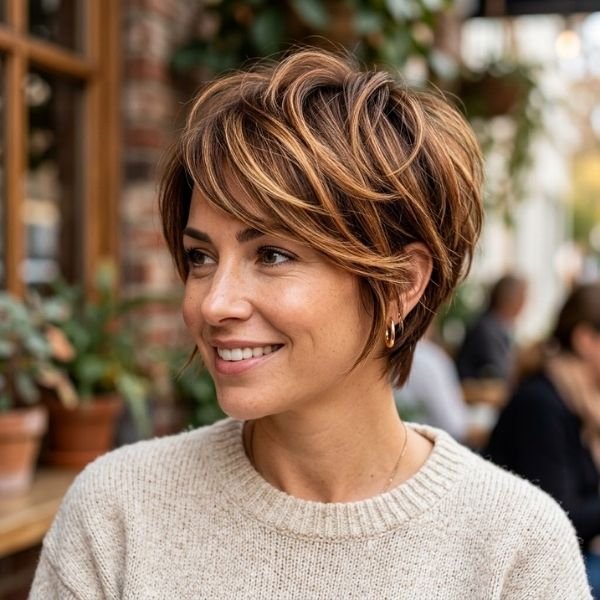
Warm honey or caramel highlights add glow. Light catching the layers makes the cut look soft and dimensional.
Place the highlights through the top and fringe, where the eye lands first.
23. Behind-Ear Styling Pixie
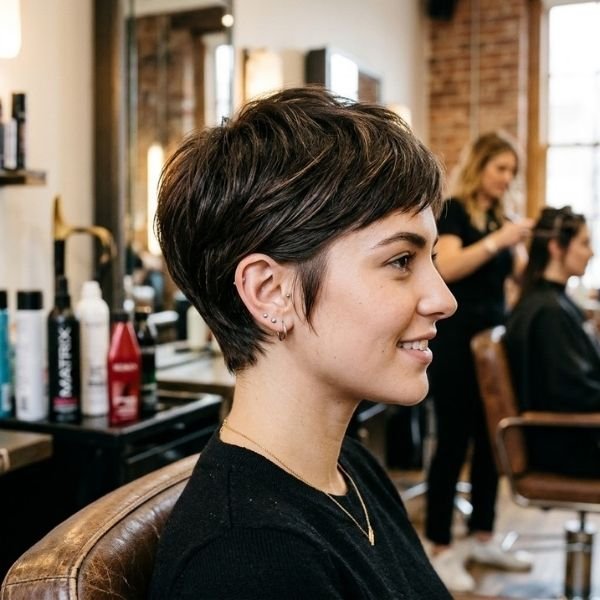
Hair sits behind one ear while the other side falls forward. This lopsided balance breaks up squareness and shows off earrings.
It is quick to style and works on most hair types.
24. Bixie Transition Style

A bixie is a bob and pixie hybrid. It keeps short layers on top and a little more length around the sides and back.
It suits people who want a pixie but feel nervous about going fully short.
25. Graduated Long Pixie

Layers grow progressively longer from the nape to the crown. This stacking creates a rounded silhouette that counters sharp corners.
Add a side-swept fringe and the whole shape looks softer.
What to Tell Your Stylist
Clear words save you from a pixie cut for a square face that looks nothing like your photo. Stylists quoted by outlets such as Who What Wear and The Everygirl stress the same basics: soft edges, texture, and regular upkeep. Use this checklist at your consultation.
1. Bring two or three photos of pixies on square or angular faces, and say which detail you like.
2. Ask for point cutting or razor texturizing so the ends look feathered, not blunt.
3. Request length on top, so the crown has lift and the face looks longer.
4. Decide on the fringe: side-swept, wispy, or curtain. Avoid heavy straight bangs.
5. Ask for a soft nape blend and softly tapered sides instead of a sharp, boxy outline.
6. Talk about your daily routine, so the cut matches the time you really spend styling.
Your hair type also decides which pixie cut for a square face fits best. The table below matches common hair types with the styles from this list.
| Hair type | Pixie to ask for | Why it works |
| Fine | Fine-Hair Volume Pixie or Lifted Crown (#2, #3) | Short layers add lift without weight |
| Thick | Piece-Out Crown or Graduated Long Pixie (#1, #25) | Texturizing removes bulk and prevents a boxy outline |
| Wavy or curly | Wavy-Texture Asymmetric or Curtain Fringe (#17, #9) | Natural bend adds the curves a square jaw needs |
| Straight | Razor-Edged Asymmetric or Long Side-Swept Fringe (#16, #8) | Feathered edges and diagonal lines break up straight lines |
In short, fine hair needs lift, thick hair needs thinning, wavy hair needs its natural curve preserved, and straight hair needs feathered edges. Match your hair type first, then pick the fringe and part that suit your style.
Plan on a trim every four to six weeks for any pixie haircut on a square face. A pixie loses its shape fast, and regular visits keep the balance that softens your jaw.
When a Pixie Is Not the Right Choice for a Square Face
A pixie cut on a square face frames the jaw. It does not hide it. Some situations call for a different cut.
• You want to cover the jawline completely. A layered lob or shoulder-length cut with face-framing pieces does that better.
• You have a strong cowlick at the front hairline. It can fight any fringe and make styling frustrating.
• You cannot commit to salon visits every four to six weeks. An overgrown pixie loses the shape that makes it flattering.
• You dislike having your ears, neck, and jaw exposed. A bixie or long layered cut feels more comfortable.
• You want a blunt, ultra-short crop. Flat, straight lines can make a square face look more square.
If two or more of these apply, start with a longer transition cut such as a bixie. You can always go shorter later.
FAQ
What Pixie Variation Looks Best on a Square Face?
A textured pixie with a side-swept fringe is the safest all-round choice. It softens the jaw and forehead at the same time.
Should a Square Face Get a Pixie with Bangs?
Yes, if the bangs are soft, side-swept, or wispy. Avoid heavy blunt bangs because they add another straight line.
Can Thick Hair Work in a Pixie on a Square Face?
Yes. Ask your stylist to remove weight with layers and texturizing so the cut does not puff into a box shape.
How Often Does a Pixie Need Trimming for a Square Face?
Every four to six weeks keeps the shape sharp. Longer pixies and bixies can stretch to eight weeks.
Will a Pixie Make a Square Face Look More Square?
Only if it is cut blunt, flat, and very short. Texture, fringe, and asymmetry keep the look soft.
Is a Pixie a Good Choice for Older Women with Square Faces?
Yes. A soft, textured pixie with a side fringe flatters mature faces and is easy to maintain.
What Is the Difference Between a Textured Pixie and an Asymmetric Pixie for Square Faces?
A textured pixie softens with choppy layers and lift on top. An asymmetric pixie softens with uneven lengths and an off-center line.
Conclusion
The best pixie cuts for square faces bring softness through texture, fringe, and shape. Texture, fringe, and asymmetry are the three tools that do the work, and longer pixies give you extra room to adjust.
Pick two or three pixie cuts for square faces from the list, save the photos, and use the stylist checklist at your next appointment. Which pixie is on your shortlist? Share it in the comments, and pass this guide to a friend who is thinking about the chop.

