
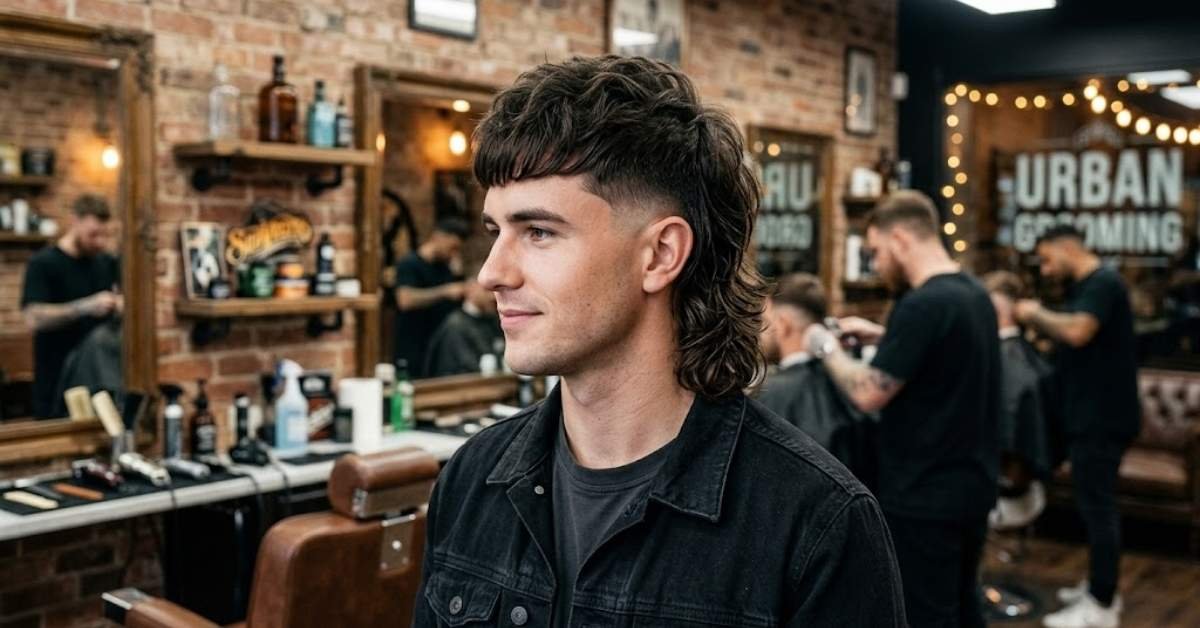

A taper fade mullet is a haircut that pairs a gradual taper on the sides and neckline with longer, textured hair on top and at the back. The sides stay clean and short near the ear and nape, while the crown and back keep their length.
This mix gives you the bold shape of a mullet without the messy, unfinished look of the old version. It works on straight, wavy, curly, and coily hair, and it can be dialed up or down for work, school, or a night out.
This guide covers the main styles, hair type advice, barber scripts, styling steps, upkeep, and honest comparisons, so you can walk into the shop with confidence.
What Is a Taper Fade Mullet?
This cut combines two ideas. The taper cleans and shortens the hair around the temples, ears, and neckline in a soft gradient. The mullet keeps length at the crown and back, so the shape reads short on the sides and longer behind.
The Basic Parts of the Haircut
Every version has the same core pieces. Knowing them makes it easier to talk to your barber.
- Top: Usually 3 to 4 inches, cut with layers or texture.
- Sides: Tapered from a longer length at the top down to a short finish near the ear.
- Neckline: Tapered or faded so the back looks clean, not bulky.
- Back: The mullet length, often 5 to 7 inches, with soft layering.
- Fringe (optional): A textured front that frames the face.
Why This Cut Is So Popular
It gives you contrast without much risk. You get length and personality on top, and a tidy outline that still looks groomed.
Barbers also like it because it adapts to almost any hair type. A low taper can look office friendly, while a high or skin version looks bold and stage ready.
Types of Taper Fade Mullet Styles
Below are the most requested versions. Each one changes the fade height, the finish, or the texture.
Read More: Taper Fade vs Low Fade: The Ultimate Guide to a Perfect Cut
Low Taper Fade Mullet
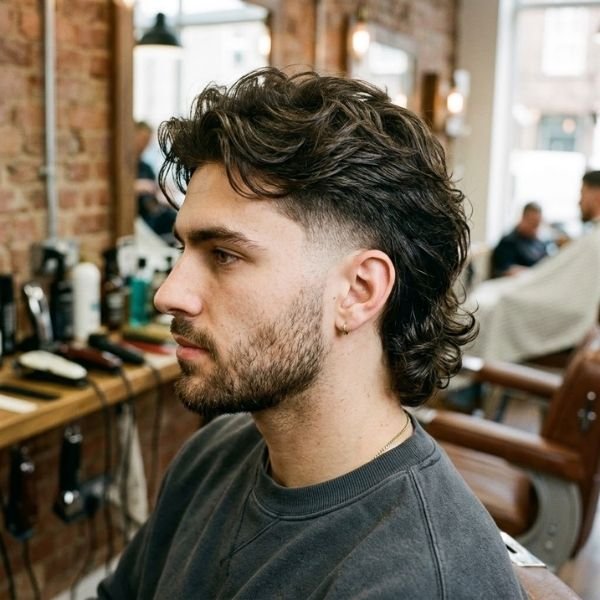
The fade starts low, usually about an inch above the ear. It is the safest pick for a first mullet and the easiest to keep neat at work. Sites like Taper Trends note that it needs a touch up about every 4 to 6 weeks.
Mid Taper Fade Mullet
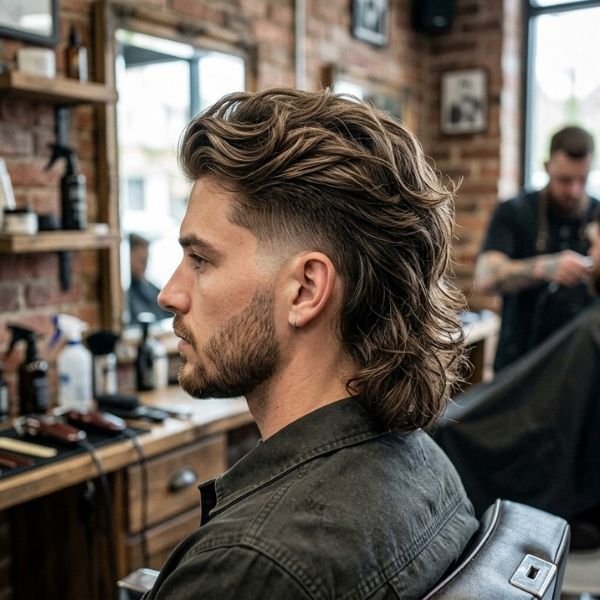
The taper begins around the mid temple and moves down toward the ear and nape. It gives more contrast than a low taper but stays balanced. Many barbers treat it as the default choice for a modern mullet.
High Taper Fade Mullet
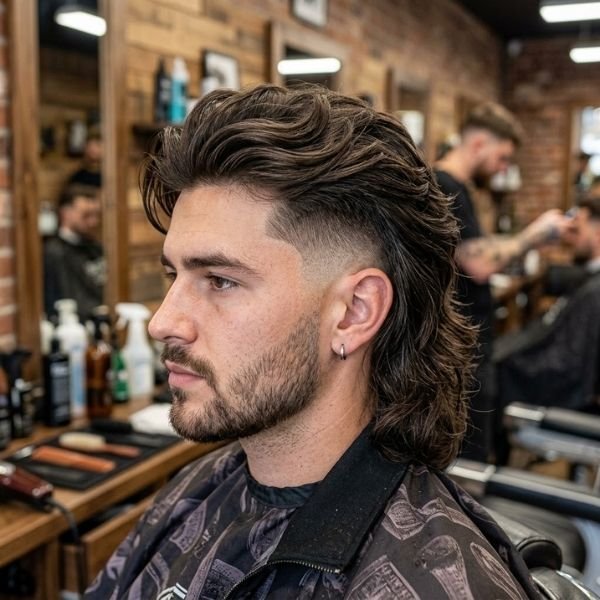
The taper starts high on the sides, closer to the crown. This creates strong contrast between the short sides and long back.
Skin Taper Fade Mullet
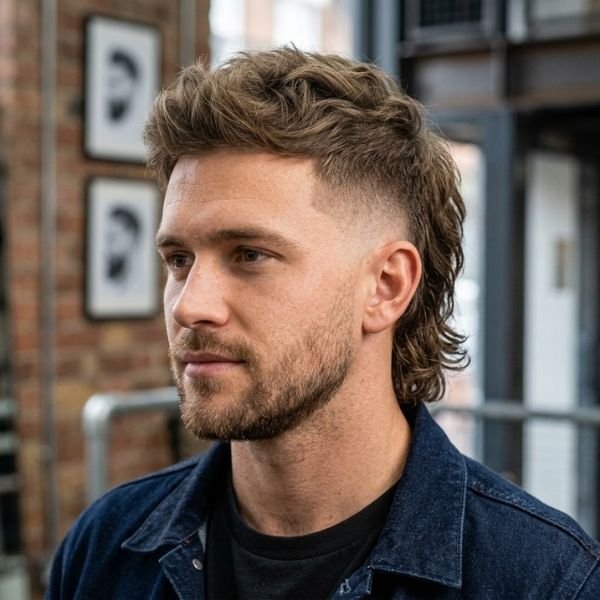
The bottom of the fade goes down to bare skin.
Burst Taper Fade Mullet
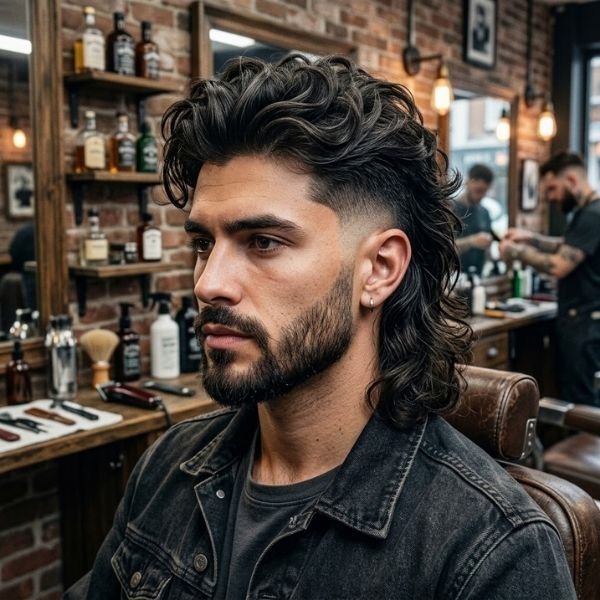
A burst fade curves around the ear in a half circle, leaving more length at the back. It suits mullets well because the curve frames the ear and flows into the longer nape. It is popular on curly and coily hair.
Textured and Fluffy Taper Fade Mullet
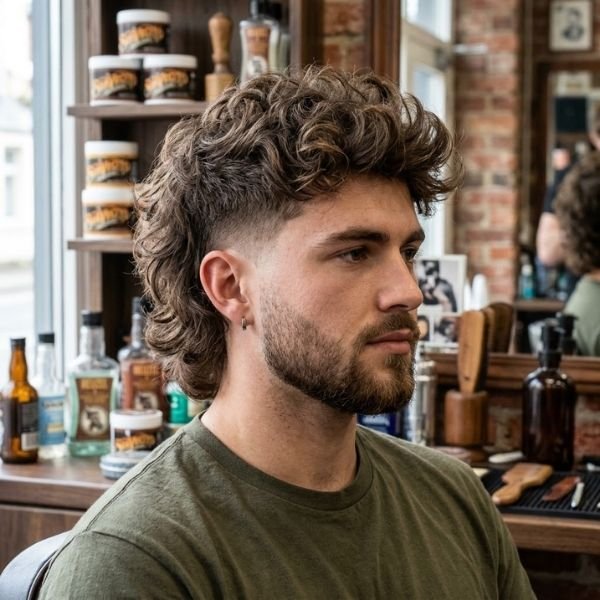
Here the top and back are cut with choppy layers, then styled with a light paste or sea salt spray. The result is soft, airy, and full of movement.
Messy Taper Fade Mullet
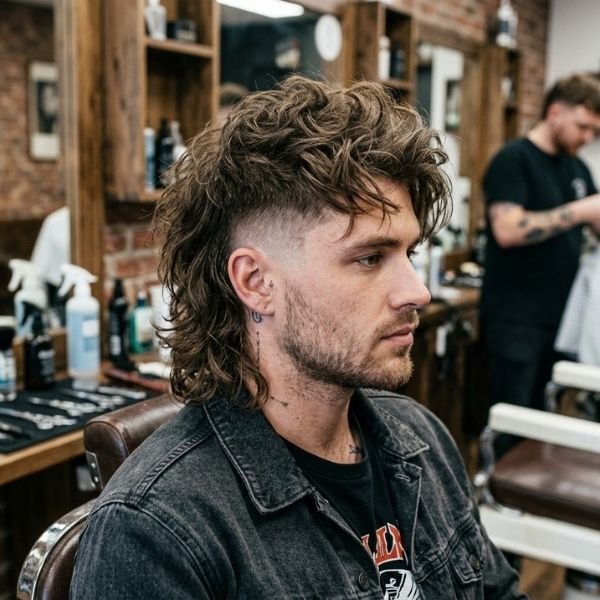
This version leans into a tousled, undone shape. The taper keeps the sides tidy so the mess looks intentional.
Disconnected Taper Fade Mullet
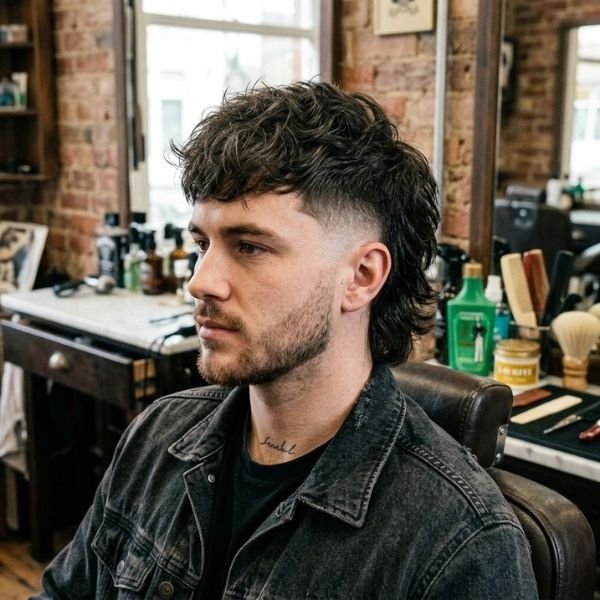
The sides are cut short and the top and back stay long, with little or no blending between them.
Shag Mullet Taper Fade
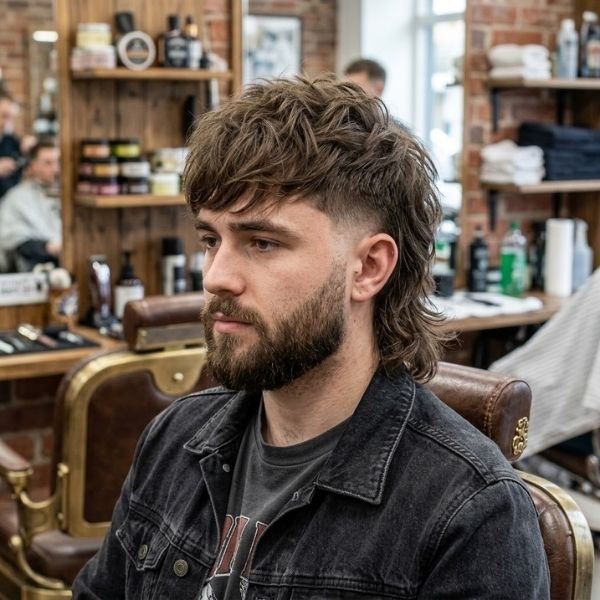
The shag mullet adds heavy layers throughout the top and back, often with a fringe. Paired with a taper, it looks rock inspired but still controlled.
Mohawk Taper Fade Mullet
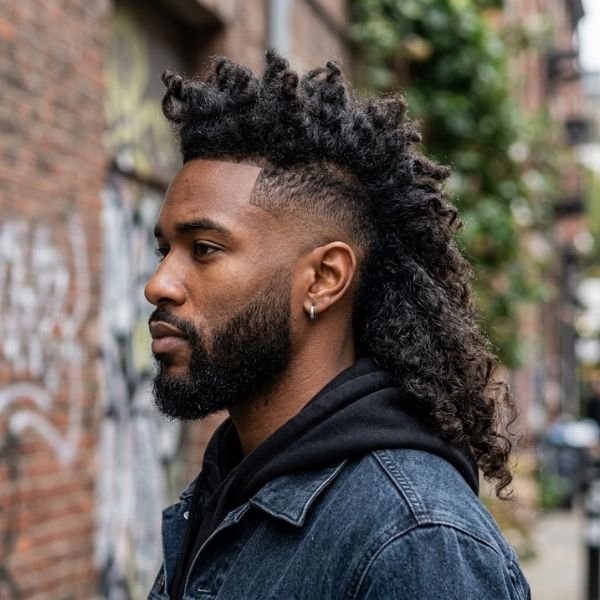
The sides are tapered close and the center strip stays long, then flows into a longer back. It is a loud, confident style.
Slick Back Taper Fade Mullet
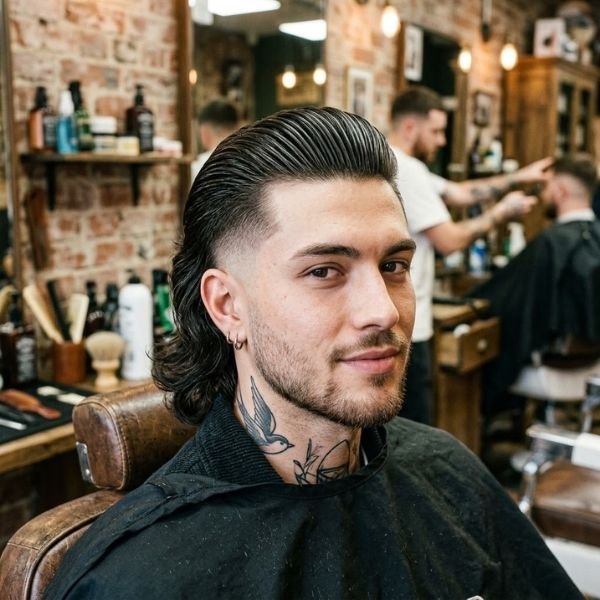
The top is combed back with pomade or gel and flows into the mullet length behind.
Classic Taper Fade Mullet
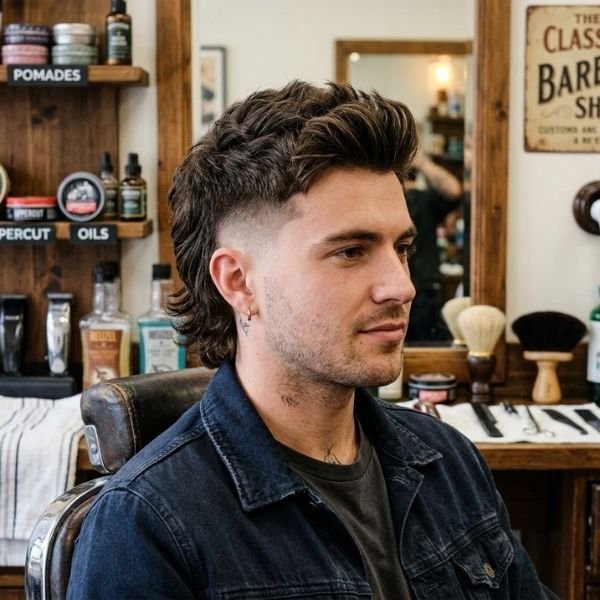
This is the clean, balanced version. A mid or low taper, medium top length, and a moderate back length.
Trending Cuts: Edgar Mullet, Mexican Mullet, and Wolf Cut Mullet
Three names come up often in barber requests:
- Edgar mullet: A blunt, straight across fringe with tight tapered sides and a longer back.
- Mexican mullet: Often a clean taper or fade with a straight cut fringe and a neat back length. The name is used widely in barbershops, and the exact look can vary by barber.
- Wolf cut mullet: A blend of wolf cut layers and mullet length, with lots of choppy volume. Add a taper to keep the sides from getting too wide.
Best Mullet Fade by Hair Type
Hair type decides how the cut sits and how much styling you need. Match the fade to your texture, and the whole shape looks better.
Curly Taper Fade Mullet
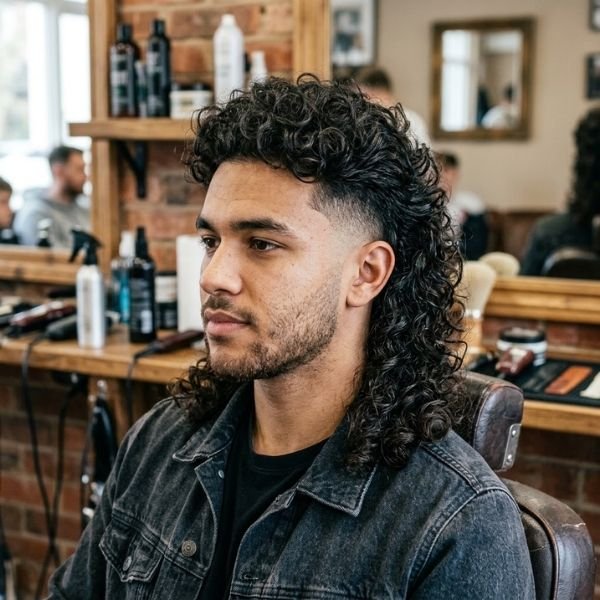
Curls add natural volume to the back, which makes the mullet shape easy to see. A mid taper or burst fade keeps the sides controlled. Ask your barber to shape it while the hair is slightly damp to control shrinkage.
Read More: Taper Fade for Curly Hair: 25 Best Styles, Cuts & Tips
Wavy Taper Fade Mullet
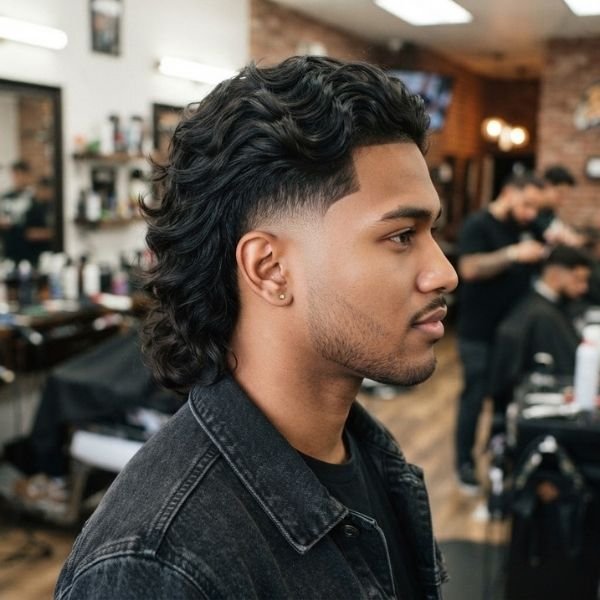
Wavy hair gives natural texture with little effort. A low or mid taper keeps the balance, and a light cream or sea salt spray defines the waves.
Straight Hair Taper Fade Mullet
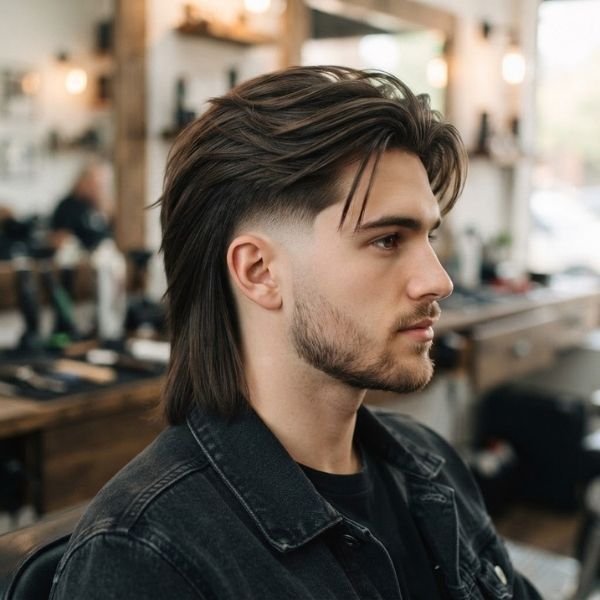
Straight hair shows every line, so the taper looks especially clean.
Thick Hair Taper Fade Mullet
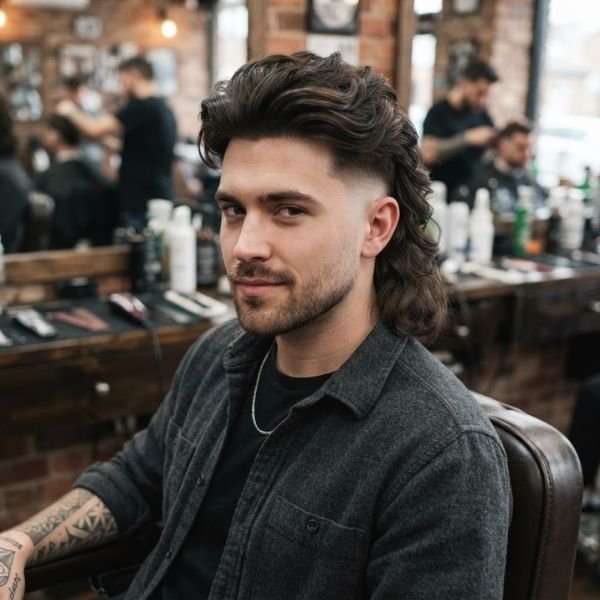
Thick hair can look bulky at the back. Ask for thinning or internal layers to remove weight. A taper on the sides also stops the cut from looking too wide.
Thin Hair Taper Fade Mullet
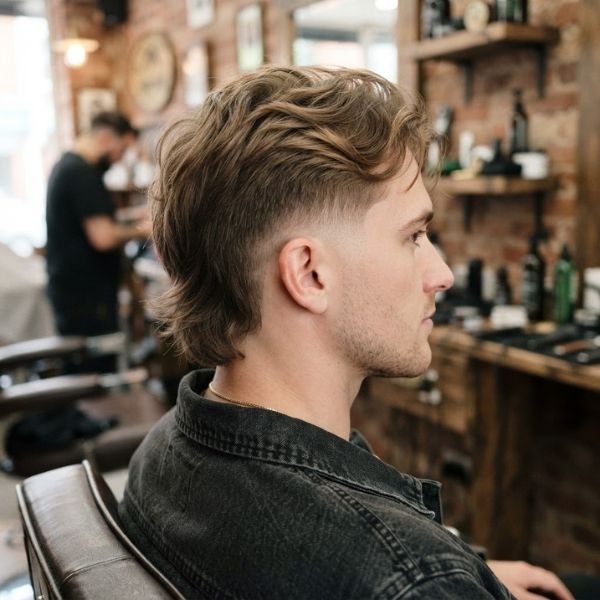
Fine hair needs a shorter, lighter mullet so it does not look see through. Use a light volumizing product, not a heavy wax.
Afro and Coily Taper Fade Mullet
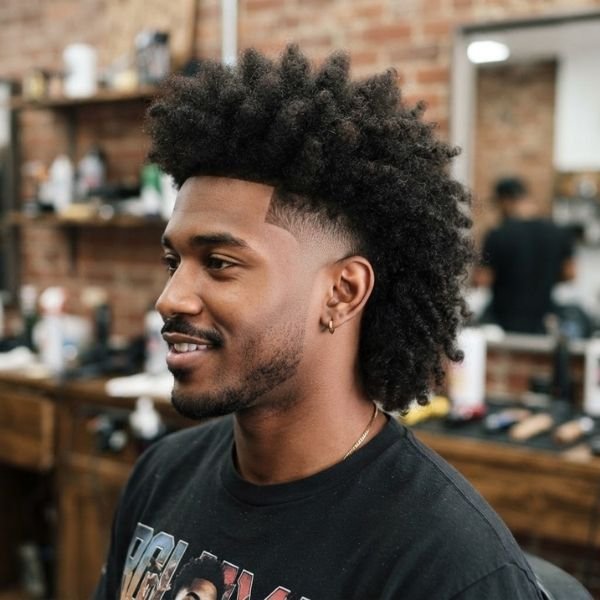
Coily hair holds shape well, which makes sharp tapers and burst fades stand out. A defined line up at the front adds a crisp finish.
Black Men’s Taper Fade Mullet
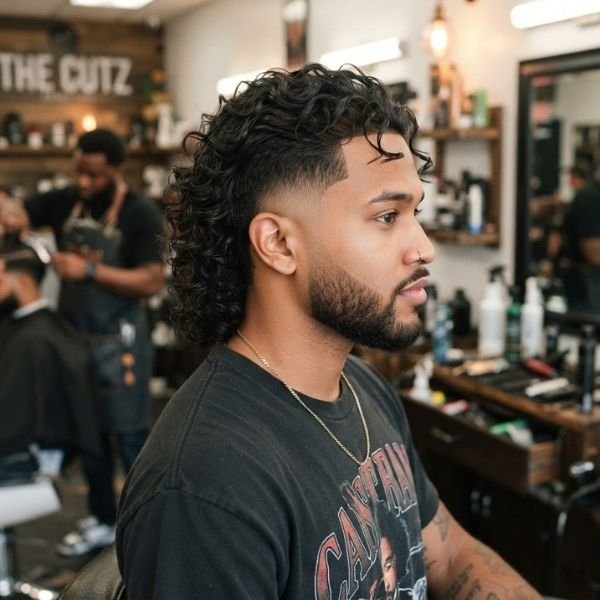
Many Black men pair a taper or burst fade with twists, curls, or a shaped afro on top. Barbers often use a clean line up to sharpen the front.
Asian Taper Fade Mullet
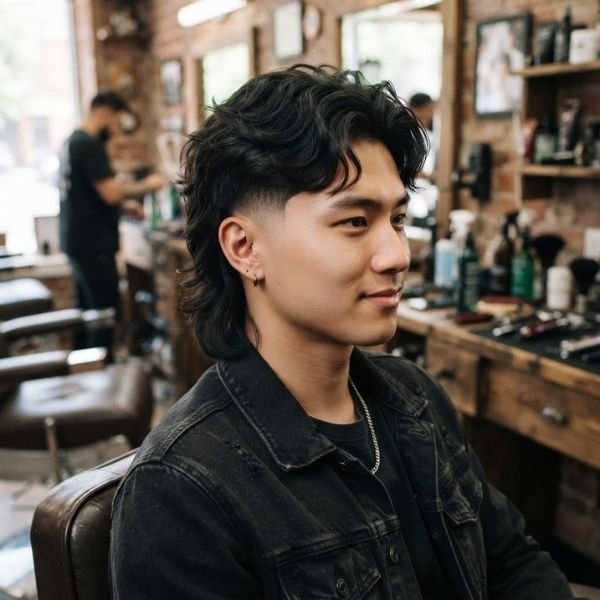
Asian hair is often straight, strong, and thick. Layers help remove weight, and a low or mid taper keeps things tidy.
Who Suits a Taper Mullet?
| Face shape | Suggested version | Why it works |
| Oval | Almost any style | The balanced shape handles most fades and lengths. |
| Round | Mid or high taper with height on top | Height and short sides add length to the face. |
| Square | Classic or low taper | Softer edges balance a strong jawline. |
| Rectangular | Mid taper with a fringe | A fringe shortens the look of a long face. |
| Diamond | Textured or fluffy version | Volume balances narrow forehead and chin. |
Taper Fade Mullet for Every Age Group
The style is flexible, but the right version depends on age, lifestyle, and dress codes.
Taper Fade Mullet for Men
Grown men often choose a low or mid taper with a medium back length. It looks sharp at work and casual outside it.
Taper Fade Mullet for Young Men
Younger guys tend to go bolder with burst fades, shag layers, or a disconnected shape.
Taper Fade Mullet for Teenagers
Teens often like textured, fluffy, or messy versions. Check school rules first, since some schools limit hair length or styles. A low taper with a shorter back is a safe choice.
Taper Fade Mullet for Boys and Kids
For kids, keep it simple. A low taper with a soft, short back length is easy to manage and comfortable.
How to Ask Your Barber for This Cut
Clear words get better results. Follow these steps in order and you will avoid most miscommunication.
Step 1: Choose Your Fade Height
Step 2: Pick a Fade Style
Choose a regular taper, a skin finish, or a burst. Each one changes how bold the sides look.
Step 3: Decide on Top Length and Texture
Say how much length you want on top, in inches or by pointing to your finger. Ask for layers or point cutting if you want movement.
Step 4: Explain the Back Length
Be specific. Say something like “about five to six inches at the back, with soft layers, not a hard line.” This avoids a back that is too long or too blunt.
Step 5: Bring Reference Photos
Step 6: Ask for a Consultation First
A short chat before the cut helps the barber judge your hair density, growth patterns, and cowlicks.
Step 7: Communicate During the Cut
Speak up if the taper looks too high or the length is off.
A sample script: “Mid taper fade on the sides, blended smoothly toward the ears and neck. Three to four inches of texture on top. Around six inches at the back with soft layers.”
Tutorial: How to Style Tapper Fade Mullet
Styling takes about five minutes once you know the routine. Here is the simple version.
Step 1: Start With Clean, Towel-Dried Hair
Wash your hair and pat it dry. Leave it slightly damp, since damp hair takes product evenly.
Step 2: Apply the Right Product
Pick a product for your hair type:
- Matte paste or clay: Straight or thick hair.
- Sea salt spray: Wavy hair and fluffy styles.
- Curl cream: Curly and coily hair.
- Pomade or gel: Slick back looks.
Step 3: Work Product Through the Top First
Rub a small amount between your palms and work it from the roots to the tips.
Step 4: Shape the Back
Use your fingers to lift and separate the back layers.
Step 5: Blend the Sides
Smooth the tapered sides with your hands or a soft brush. Do not put heavy product on the short areas, or they will look greasy.
Step 6: Finish With a Light Hold Spray
A light mist locks the shape in place without stiffness.
Step 7: Adjust Throughout the Day
Touch up with your fingers if the shape drops. A tiny bit of product on the crown brings back volume.
Maintenance Guide
The cut looks best when the outline stays crisp. The back can grow, but the sides need regular care.
- Trim schedule: Visit your barber every 4 to 6 weeks. Skin and high tapers may need a visit closer to every 3 to 4 weeks.
- Wash routine: Wash 2 to 3 times a week. Over washing dries out the back length.
- Conditioner: Use it on the longer back, especially on curly and coily hair.
Taper Fade Mullet vs. Other Popular Cuts
Many people mix up similar names. This section clears up the differences.
Taper Fade Mullet vs. Burst Fade Mullet
A regular taper mullet tapers along the sideburns and neck. A burst fade mullet curves around the ear in a round shape. The burst looks bolder and works well on curly hair.
Taper Fade vs. Fade
A taper is subtle and leaves more length at the bottom. A fade blends lower, often down to skin. A taper feels natural, while a fade feels sharper. Hector’s, a UK barbershop, also compares fades and tapers for mullets with similar advice.
Read More: Low Taper Fade Textured Fringe: 25 Modern Haircuts for Men
Taper Fade vs. Low Fade vs. High Fade
| Style | Where it starts | Look | Upkeep |
| Taper fade | Around sideburns and neckline | Soft and natural | Every 4 to 6 weeks |
| Low fade | Just above the ear | Clean and subtle | Every 3 to 4 weeks |
| High fade | High on the sides | Bold and sharp | Every 2 to 3 weeks |
Burst Fade vs. Taper Fade
A burst fade is shaped like a curve around the ear. A taper fade follows the natural hairline in a straight, gradual line.
Mullet vs. Wolf Cut
A mullet is short on the sides and long at the back. A wolf cut is heavily layered all over, with more volume at the crown.
Mullet vs. Taper Haircut
A regular taper haircut is short at the back and sides. A mullet keeps the back long. This cut uses a taper on the sides and neck, but leaves the back length in place.
Is It Attractive and In Style?
Yes, when it is cut and styled well. The shape draws attention to the jawline and cheekbones, and the texture adds character. The neat sides keep it from looking messy.
Before and After: What to Expect
Before the cut, most people have a uniform length or a basic short style. After, the sides look tighter and the back has more shape.
Here is what to expect in the chair and at home:
- The barber tapers the sides and neckline first.
- The top and back are layered and textured.
- The fade is blended and the lines are cleaned.
- Styling takes a few minutes and adds definition.
Frequently Asked Questions
What is a taper fade mullet?
It is a haircut with a gradual taper on the sides and neckline and longer, textured hair on top and at the back.
How do I ask for a taper fade mullet at the barbershop?
Tell your barber the fade height, fade style, top length, and back length, and bring reference photos.
How often do I need a trim?
Most people need a trim every 4 to 6 weeks, or every 3 to 4 weeks for skin and high tapers.
Can I get this cut with curly hair?
Yes. Curly and coily hair work very well, especially with a mid taper or burst fade.
Is a taper fade mullet good for a first-time bold haircut?
Yes. A low taper fade mullet with medium length is a safe way to try a bold look.
Final Thoughts
This style works because it balances bold and clean. You get length and attitude, plus a tidy outline that keeps the cut wearable.
Start by choosing your fade height, then match the style to your hair type and face shape. Bring photos, speak clearly with your barber, and keep up with regular trims.
Have you tried this cut, or are you thinking about it? Share your questions in the comments, and pass this guide to a friend who is ready for a new look.


1 thought on “Taper Fade Mullet: The Complete Guide to the Coolest Haircut Trend”