
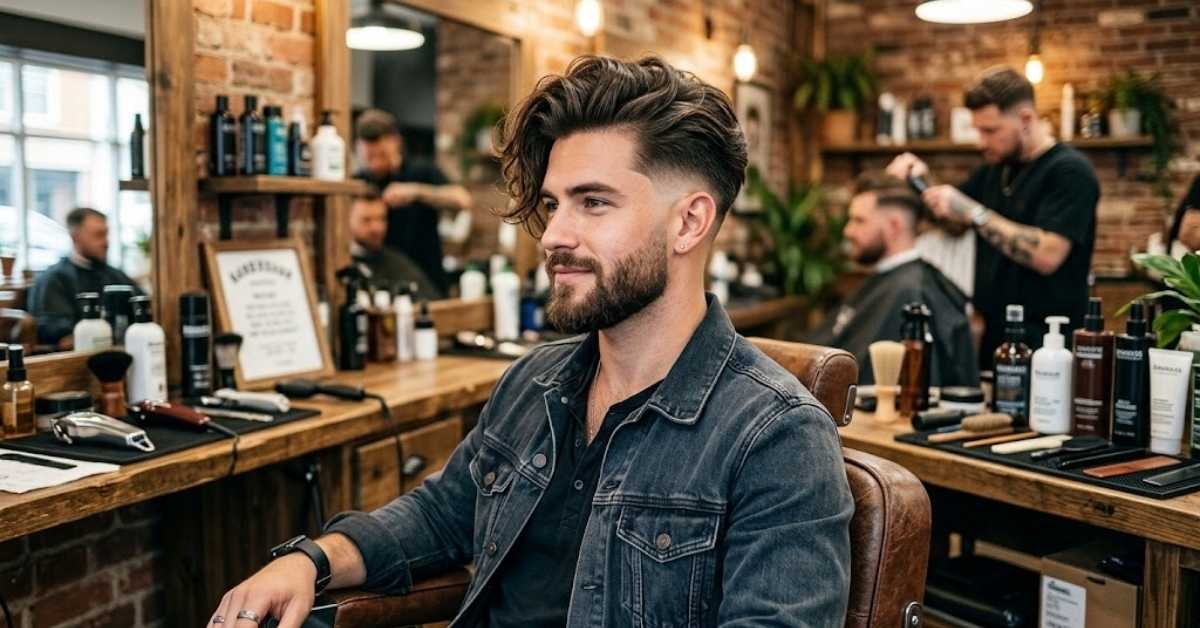

A taper fade with long hair combines longer hair on top with gradually shorter hair around the temples, sideburns, and neckline. It gives you the freedom of long hair while keeping the edges clean and controlled.
You can wear this haircut with straight, wavy, curly, or thick hair. The long section can be styled into a slick back, flow, man bun, curtains, wolf cut, mullet, or textured look.
The best taper depends on how much length you want to keep around the sides and how much contrast you prefer. A low taper looks subtle, while a mid or high taper creates a sharper appearance.
What Is a Taper Fade with Long Hair?
A taper fade with long hair is a haircut where the hair gradually becomes shorter around specific areas while the top and often the back remain long.
The taper usually focuses on the temples, sideburns, and neckline.
Unlike a traditional full fade, a taper does not necessarily remove most of the hair from the sides.
This makes it a practical choice if you want a modern haircut without giving up your long hairstyle.
How the Taper Fade and Long Hair Work Together
The long hair provides volume, movement, and styling flexibility.
The taper removes unwanted bulk around the edges and creates a cleaner outline.
The important part is the transition between the short taper and the longer hair.
A good barber should blend this area according to your hair density, texture, and natural growth pattern.
Why This Style Is So Popular Right Now
Long hairstyles can sometimes look heavy around the ears and neckline as they grow.
A taper solves that problem without forcing you to cut the entire hairstyle short.
It also works with many popular looks, including long flow, curtains, curls, slick backs, mullets, wolf cuts, and man buns.
The result can be relaxed and natural or sharp and structured, depending on the taper height and styling.
Best Types of Taper Fade for Long Hair
Choosing the right taper is mainly about deciding how much hair you want to remove from the sides.
Low Taper Fade with Long Hair
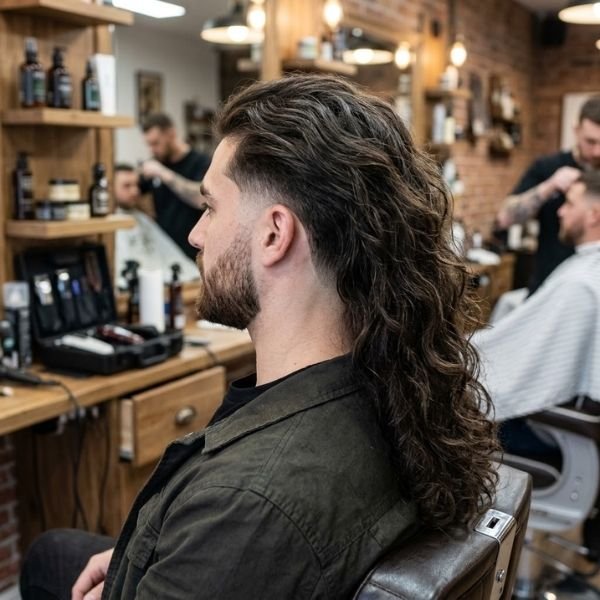
A low taper starts close to the ears, sideburns, and lower neckline.
It preserves plenty of side volume and gives long hair a softer appearance.
A low taper works especially well with long waves, curls, curtains, flow hairstyles, and man buns.
Choose it if you want your long hair to remain the main focus.
Read More: Taper Fade vs Low Fade: The Ultimate Guide to a Perfect Cut
Mid Taper Fade with Long Hair
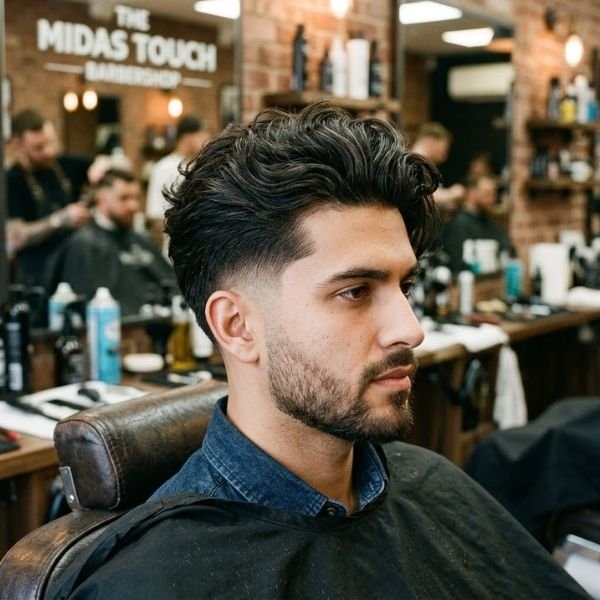
A mid taper begins higher than a low taper and creates more visible contrast.
It gives long hair a cleaner and more structured appearance without removing as much as a high taper.
A mid taper works well with slick backs, textured hairstyles, middle parts, and long curly hair.
High Taper Fade with Long Hair
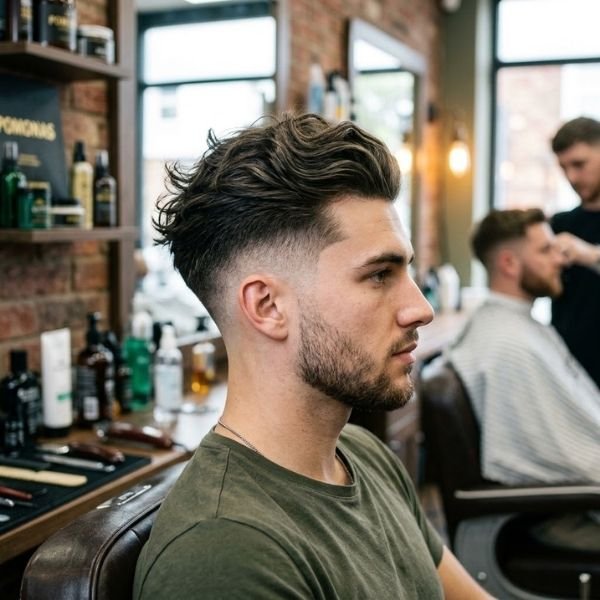
A high taper starts higher around the sides and temples.
It creates stronger contrast between the short sides and long top.
This option is ideal if you want the taper to be obvious.
However, it removes more visual weight from the sides, so it may not be the best choice if you want a very full long hairstyle.
Skin Fade with Long Hair on Top
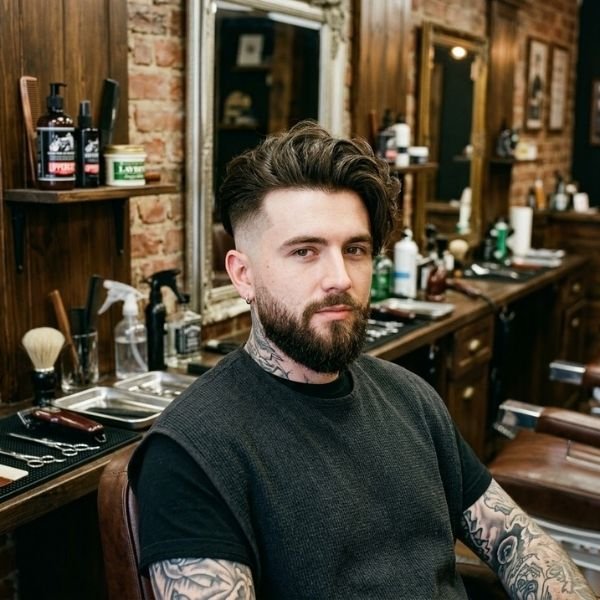
A skin fade gradually reduces the hair down to the skin.
With long hair on top, this creates a dramatic contrast.
It gives you a much sharper finish than a traditional taper.
If you want a softer appearance, ask your barber for a regular taper instead of a skin fade.
Drop Fade with Long Hair
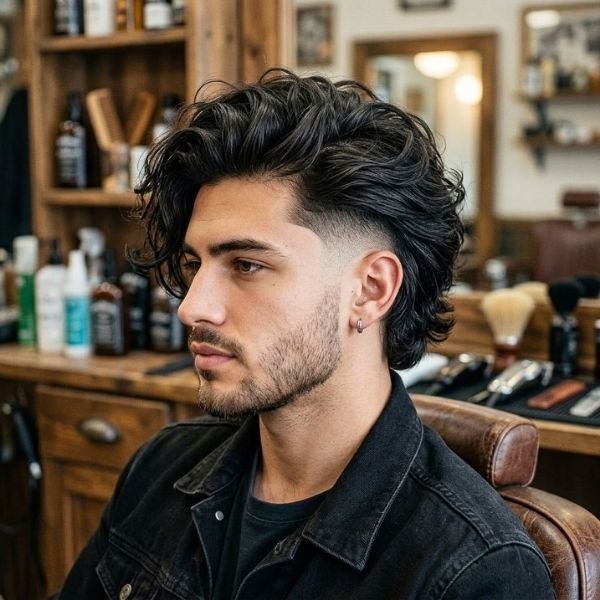
A drop fade follows the natural shape of the head and drops lower toward the back.
It creates an interesting curved shape around the sides and rear.
A drop fade can work especially well with longer backs, curly hairstyles, mullets, and textured cuts.
Best Taper Fade with Long Hair Styles
Slick Back Taper Fade with Long Hair
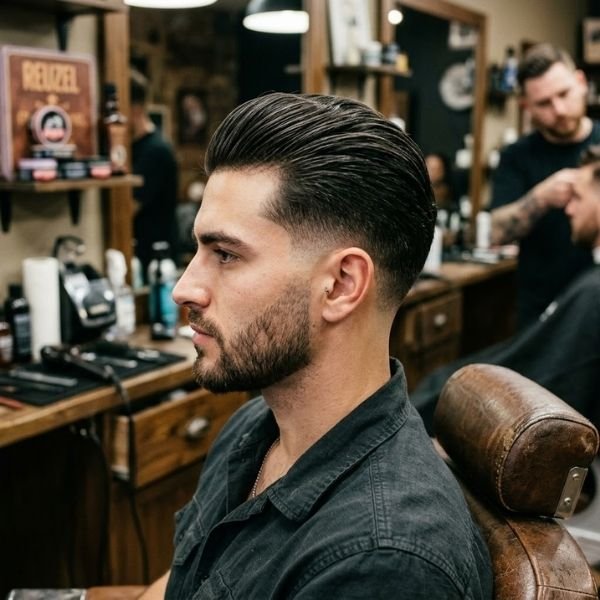
The slick back pushes the long hair away from the face while the taper keeps the sides and neckline clean.
Use a lightweight pomade, styling cream, or flexible gel depending on your hair type.
For a natural look, avoid using too much product.
Flow Haircut with Taper Fade
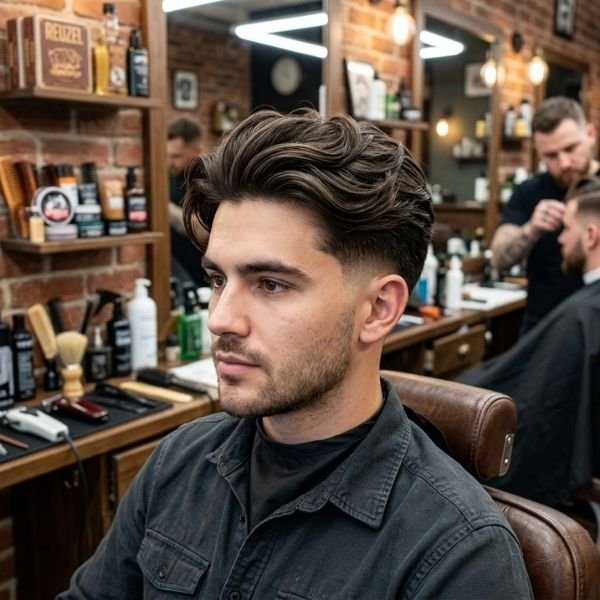
A flow haircut allows the long hair to fall backward naturally.
The taper removes excess bulk around the edges without destroying the relaxed shape.
This is an excellent option for thick or naturally wavy hair.
Man Bun Taper Fade
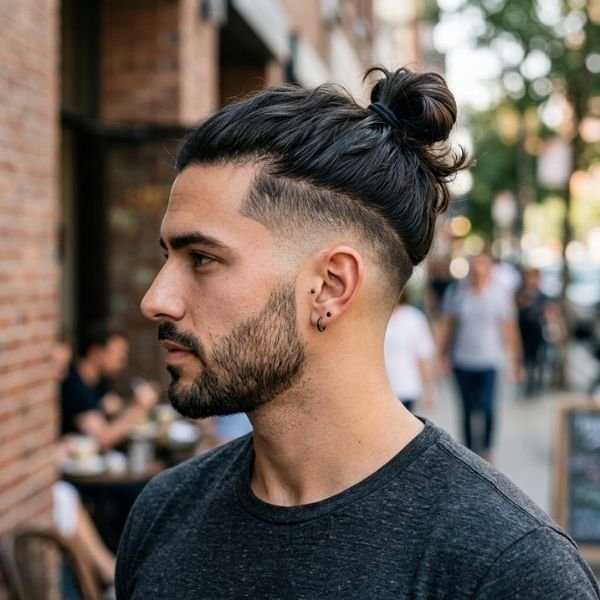
A man bun taper fade combines long hair with a clean tapered perimeter.
The longer hair can be tied at the crown or toward the back of the head.
The taper becomes more visible when the hair is tied up.
Avoid making the bun excessively tight because repeated tension can place stress on the hair.
Taper Fade with Long Curly Hair

Long curly hair looks particularly striking with a clean taper.
The taper controls the area around the ears and neckline while the curls remain full on top.
Use a leave in conditioner and curl cream to maintain definition.
Do not aggressively brush dry curls because this can create unnecessary frizz.
Taper Fade with Long Wavy Hair
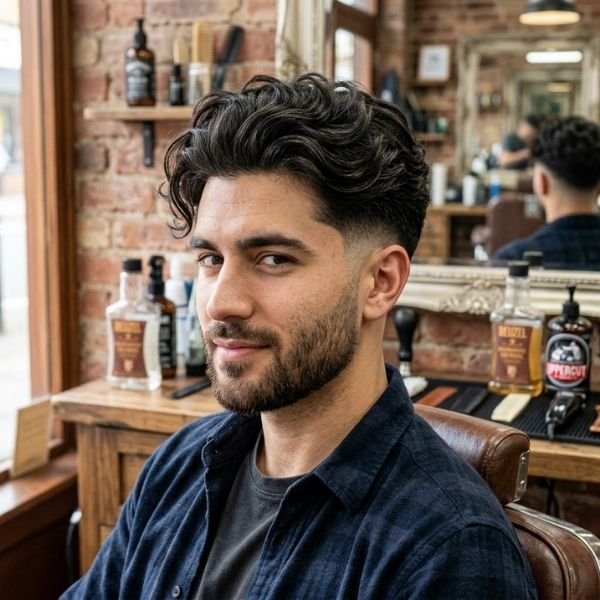
Long wavy hair naturally provides movement and texture.
A low or mid taper can make the hairstyle look cleaner without removing the waves.
A lightweight styling cream or sea salt spray can enhance the natural texture.
Wolf Cut Taper Fade
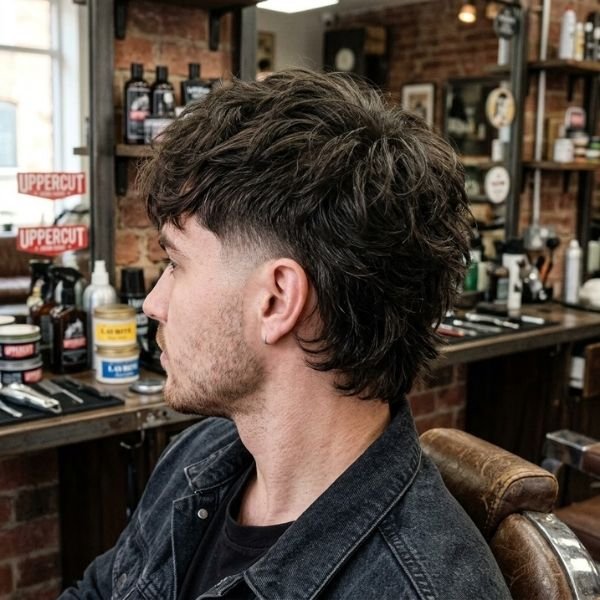
A wolf cut combines long layers, volume, and a deliberately messy appearance.
Adding a taper around the temples and neckline makes the haircut look more controlled.
Keep plenty of length through the top and back to maintain the recognizable wolf cut shape.
Mullet Taper Fade with Long Hair
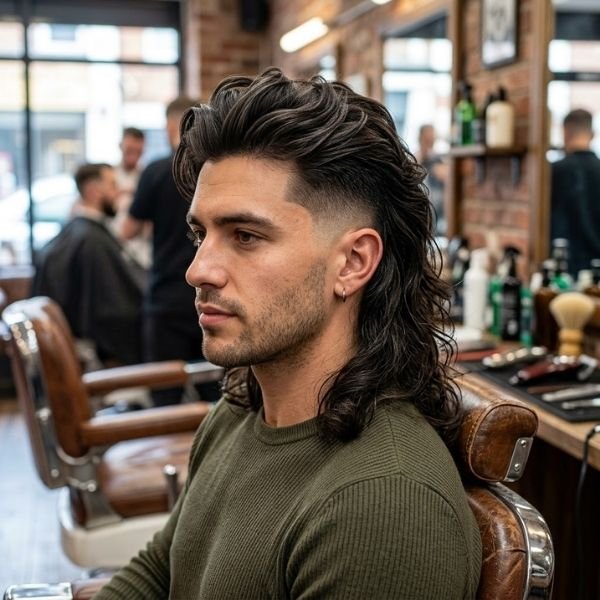
A long mullet keeps additional length toward the back while the sides and temples remain shorter.
A taper creates a smoother transition around the sides.
This combination works well if you want a modern mullet rather than an extremely aggressive cut.
Taper Fade with Curtain Bangs
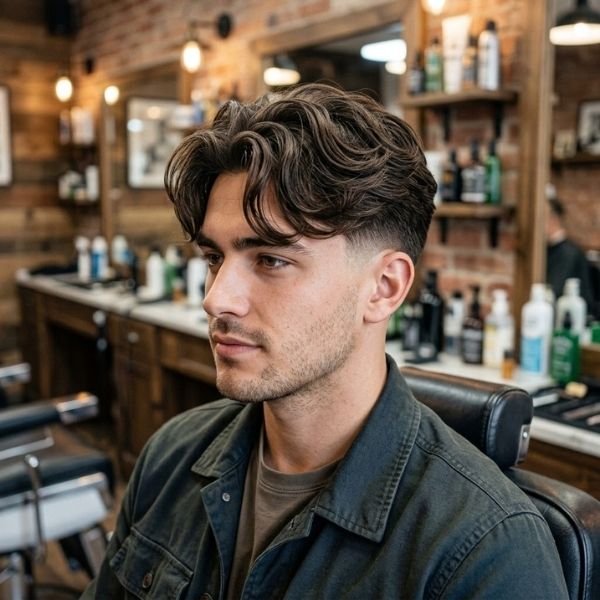
Curtain bangs need enough length at the front to separate naturally around the forehead.
The taper keeps the sides neat while the front remains longer and softer.
A middle part is the classic way to wear this style.
Pompadour Taper Fade with Long Hair
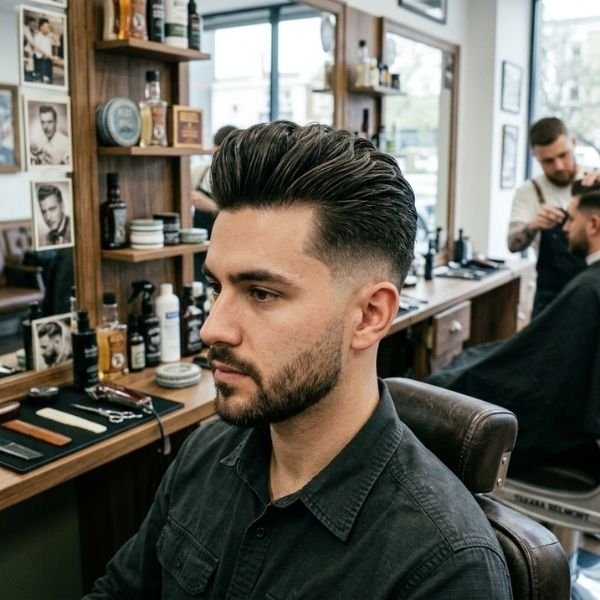
A pompadour needs sufficient length and volume at the front.
The long top is styled upward and backward while the taper creates contrast around the sides.
Thick and straight hair can make this style easier to maintain.
Taper Fade Long Hair with Beard
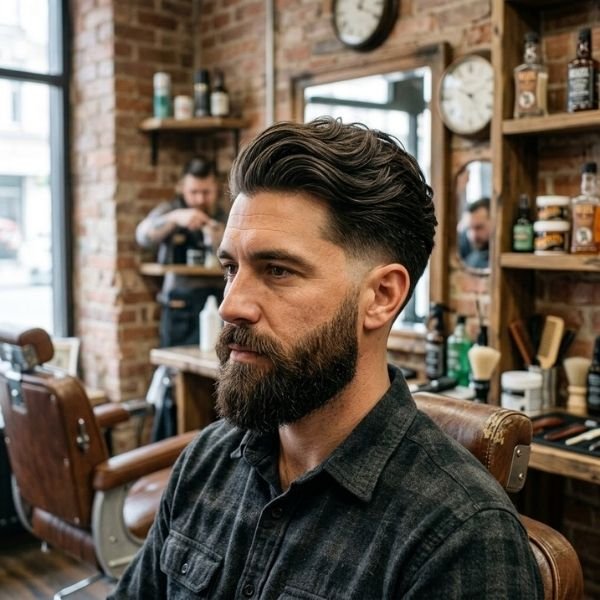
A taper fade can be blended into a beard for a connected appearance.
You can keep the beard full while gradually transitioning the sideburn area into the haircut.
A lower taper usually creates a softer connection, while a higher taper creates more separation.
Taper Fade on Long Hair by Hair Type
Taper Fade on Long Straight Hair
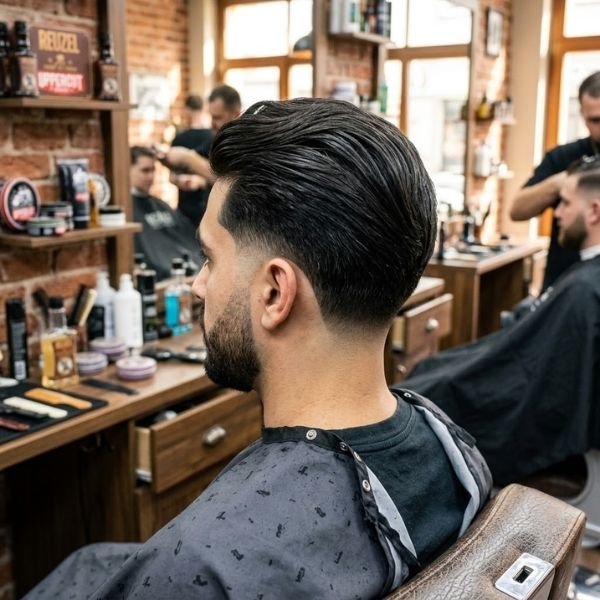
Straight hair is versatile and works well with slick backs, curtains, middle parts, flow hairstyles, and layered cuts.
If your hair is fine, avoid removing too much weight from the sides.
Taper Fade on Long Wavy Hair
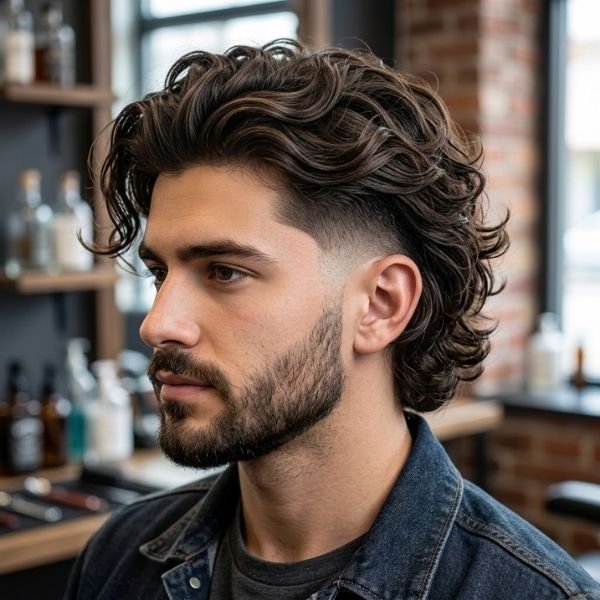
Wavy hair benefits from a taper because the shorter perimeter makes the natural waves more noticeable.
Use lightweight products to avoid flattening the texture.
Let the hair air dry when possible for a more natural finish.
Taper Fade on Long Curly Hair
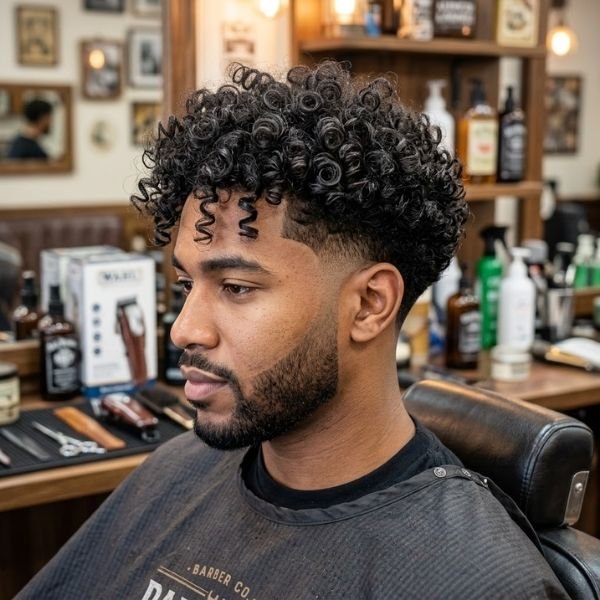
Curly hair needs a haircut that respects its natural curl pattern.
Your barber should consider shrinkage because curly hair can appear much shorter after drying.
Keep the top and back long enough to maintain your desired curl shape.
Read More: Mid Taper Fade Afro: 25 Best Styles, Tips, and a Full Tutorial
Taper Fade on Long Thick Hair
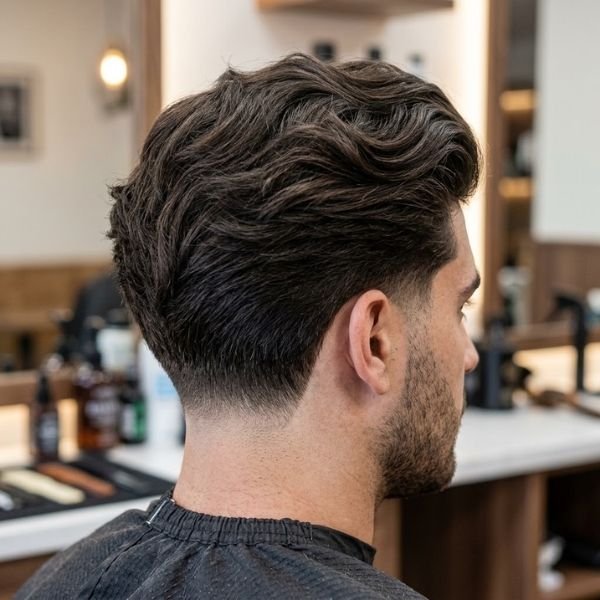
Thick hair provides plenty of styling possibilities.
A taper can remove unwanted bulk around the edges while leaving the top full.
Ask your barber to reduce weight carefully rather than excessively thinning the entire hairstyle.
Taper Fade on Long Fine Hair
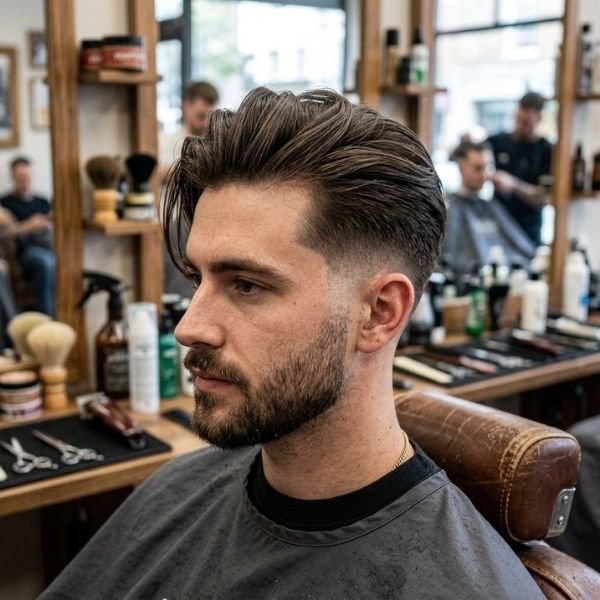
Fine hair usually benefits from keeping as much visual density as possible.
A low taper is often useful because it cleans the edges without taking too much hair from the sides.
Choose lightweight styling products so the long hair does not become flat or greasy.
Taper Fade for Long Hair Tutorial: Step by Step
A professional barber should handle the actual haircut, especially when significant length is involved.
The following process explains how the haircut is generally structured.
Tools You Need
You may need:
- Hair clippers
- Clipper guards
- Adjustable trimmer
- Barber scissors
- Comb
- Hair clips
- Blow dryer
- Styling brush
- Styling product
Step 1: Decide the Fade Height and Guide Line
First decide whether you want a low, mid, or high taper.
Think about how much side volume you want to preserve.
Step 2: Set the Length on Top First
Establish the desired length and overall shape before working heavily on the sides.
This makes it easier to maintain the correct proportions.
Step 3: Clip the Sides with the Longest Guard
Start conservatively around the taper area.
Taking too much hair away at the beginning can make the haircut difficult to correct.
Step 4: Work Down Through Guard Sizes
Gradually move through shorter clipper guards.
This creates the progressive reduction needed for a smooth taper.
Step 5: Blend the Transition Zones
Blend the shorter section into the longer hair.
Clipper over comb can be useful for controlling bulky transition areas.
Step 6: Fade Down to the Hairline
Gradually refine the hair around the temples, sideburns, and neckline.
The final length depends on whether you want a natural taper or a very tight finish.
Step 7: Shape the Neckline
The neckline can be natural, rounded, squared, or tapered.
Your choice can significantly change the appearance of the long hair from behind.
Step 8: Clean Up Edges and Line Up
Clean the temples, around the ears, sideburns, and neckline.
Avoid making the edges unnecessarily sharp if you want a natural long hairstyle.
Step 9: Style the Long Hair on Top
Finish the hair according to your preferred look.
You can create a slick back, middle part, curtains, flow, curls, waves, bun, or textured finish.
How to Ask Your Barber for a Taper Fade on Long Hair
The words you use can make a big difference.
Instead of simply saying “long hair taper fade,” explain exactly what you want to keep.
Key Words to Use
You can tell your barber:
“Keep the length on top and through the back. I want a low taper around the temples, sideburns, and neckline. Keep the transition soft.”
For a stronger taper, say:
“Keep my long top, but give me a mid taper around the temples and neckline. I don’t want a full fade on the sides.”
Also explain whether you want your hair to be worn slicked back, parted, curly, wavy, or loose.
What to Show Your Barber
Bring several reference photos.
Ideally, show:
- One front view
- One side view
- One back view
The photos should have similar hair length and texture to yours.
This gives your barber a much clearer idea of the finished shape.
How to Maintain a Taper Fade with Long Hair
Trim Schedule
A taper generally needs refreshing sooner than the long top.
For a consistently clean appearance, a touch up every 2 to 4 weeks is a useful starting point.
Your exact schedule depends on how quickly your hair grows and how sharp you want the taper to remain.
Read More: Low Taper Fade Short Hair: Best Styles to Try & Mistakes to Avoid
Daily Care for the Long Top
Long hair needs regular conditioning and gentle handling.
Detangle from the ends upward instead of pulling through knots from the roots.
Avoid aggressive towel drying because friction can contribute to frizz and breakage.
Best Products for Long Hair with a Taper Fade
Choose products based on your texture.
- Straight hair: Lightweight cream or flexible pomade
- Wavy hair: Sea salt spray or styling cream
- Curly hair: Leave in conditioner and curl cream
- Thick hair: Lightweight styling cream or clay
- Fine hair: Volumizing mousse or lightweight texture spray
The best product is one that supports your hairstyle without making the long hair heavy.
Taper Fade with Long Hair: Face Shape Guide
Face shape can help you choose proportions, but it should not limit your options.
Hair texture, density, personal preference, and styling habits matter just as much.
Oval Face
An oval face works with almost any long hairstyle.
You can experiment with slick backs, curtains, flow, curls, layers, and different taper heights.
Round Face
Try adding some height on top while keeping excessive width away from the sides.
A textured slick back or voluminous top can create a longer visual shape.
Square Face
Square faces already have strong angles.
Long layers, flow hairstyles, curtains, and slick backs can soften or emphasize those features depending on how you style them.
Oblong or Long Face
Avoid adding unnecessary height if you want a more balanced appearance.
A lower taper with side volume, curtains, waves, or a side part can work particularly well.
Trending Taper Fade Long Hair Styles Right Now
Taper Fade with Flow (Surfer Look)
Long, loose hair combined with a subtle taper creates a relaxed surfer inspired appearance.
The goal is natural movement rather than an overly polished finish.
Disconnected Undercut with Long Hair
A disconnected undercut creates much more contrast than a taper.
The long top remains noticeably separated from the short sides.
Choose this if you want a bold haircut rather than a subtle transition.
Edgar Cut Long Version with Taper Fade
A longer Edgar keeps its recognizable forward fringe while allowing more length through the top.
The taper keeps the temples and neckline cleaner.
Korean Two Block with Long Top
The Korean two block keeps a longer upper section over shorter sides.
With extra length, you can wear it with curtains, a middle part, soft waves, or a loose fringe.
Frequently Asked Questions
Can You Get a Taper Fade with Long Hair?
Yes. A taper can clean the temples, sideburns, and neckline while keeping substantial length on top and through the back.
How Long Is Long Hair for a Taper Fade?
There is no fixed minimum, but around 5 to 6 inches provides plenty of styling flexibility for many long hair taper styles.
Does a Taper Fade Suit All Hair Types with Long Hair?
Yes. Straight, wavy, curly, thick, and fine hair can all work with a taper when the cut is adjusted to the natural texture.
How Often Should I Touch Up a Taper Fade with Long Hair?
A touch up every 2 to 4 weeks is common, although your growth rate and preferred level of sharpness determine the ideal schedule.
What Is the Best Taper Fade for Long Hair?
There is no single best option. A low taper is subtle, a mid taper gives moderate contrast, and a high taper creates a stronger appearance.
Conclusion
A taper fade with long hair gives you the best of both worlds: substantial length for styling and a clean finish around the edges.
The right taper depends on your desired look.
Choose a low taper if you want to preserve more side volume.
Choose a mid taper if you want a noticeable but balanced contrast.
Choose a high taper if you prefer a sharper and more dramatic result.
Your hair texture also matters.
Straight hair works well with slick backs and curtains, wavy hair looks natural with flow styles, and curly hair can create impressive volume around a clean taper.
Before your appointment, decide how you normally wear your hair and bring reference photos showing the front, side, and back.
That makes it much easier for your barber to create a taper fade that works with your actual hair rather than simply copying a haircut that looks good on someone else.

