
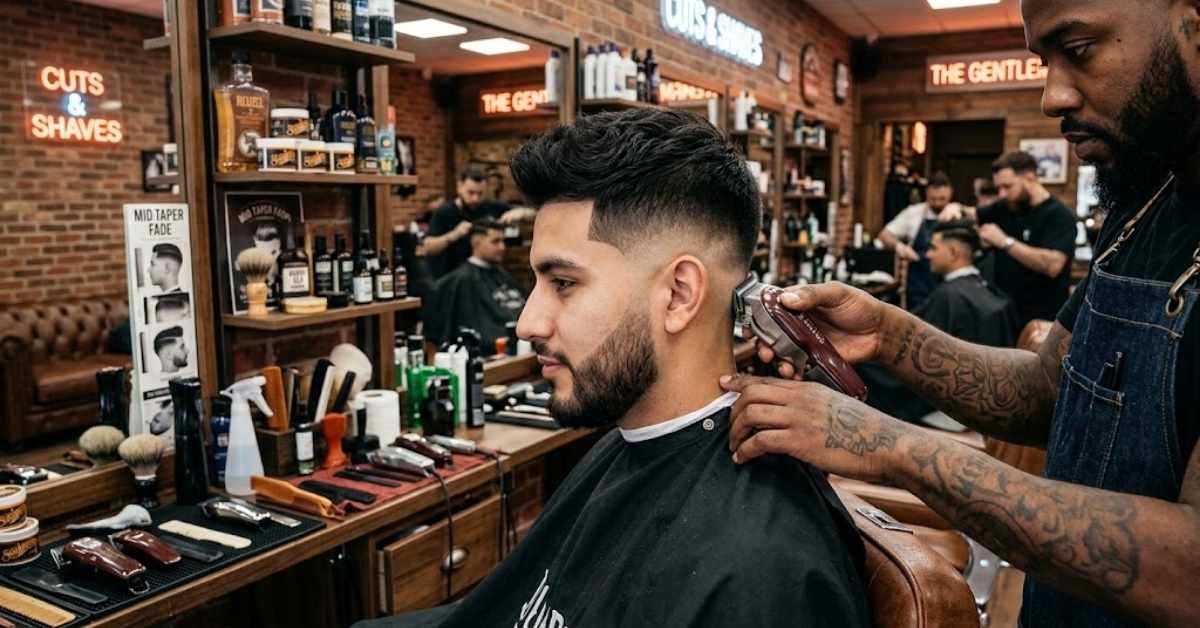

A mid taper fade is one of the most requested cuts in barbershops right now because it sits in the sweet spot between subtle and sharp, working for almost every hair type, face shape, and occasion. It starts around the middle of the ear and blends upward into longer hair on top, giving you a clean fade without the dramatic contrast of a high fade.
This guide breaks down what a mid taper fade actually is, shows 35 of the best haircuts built around it, and walks you through how to ask for it, style it, and keep it looking fresh between trims.
What Is a Mid Taper Fade?
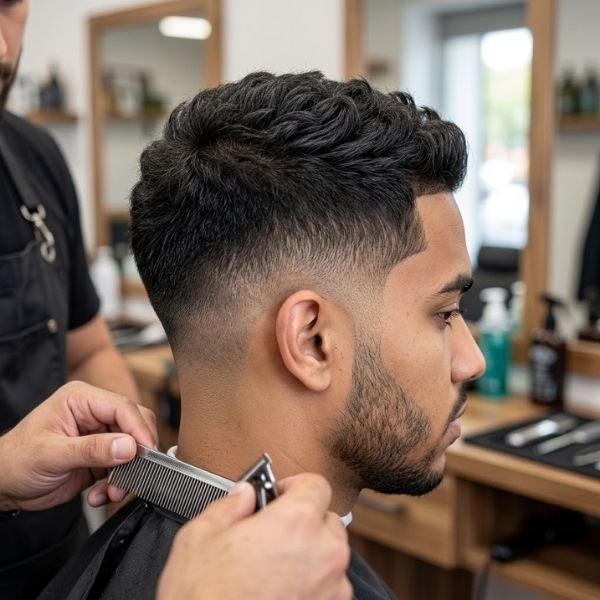
A mid taper fade gradually shortens the hair around the middle area of the temples and blends it toward the sideburns and neckline.
Unlike a full mid fade, the taper is more concentrated around the edges instead of removing a large section of hair around the entire side of the head.
The result is a clean outline with noticeable contrast while still keeping some natural weight on the sides.
The exact placement can vary from barber to barber, so showing a reference photo is often useful.
How Does It Work?
The barber creates a gradual transition from longer hair into shorter hair around the temple, sideburn, and neck areas.
The top is then cut separately according to the desired hairstyle.
That means the same mid taper can support a short crop, long fringe, curly top, slick back, or textured quiff.
The shortest section does not automatically have to reach bare skin. A soft shadow or short clipper finish can create a more natural result.
Mid Taper Fade vs Mid Fade
The main difference is where the fading happens.
A mid taper keeps the transition more localized around the temple, sideburns, and neckline.
A traditional mid fade generally removes more hair across the sides and creates a broader fade area.
Choose a mid taper when you want clean edges without losing as much side weight.
Choose a mid fade when you want stronger contrast and a more obvious faded appearance.
35 Best Haircuts & Hairstyles
1. Classic Mid Taper Fade
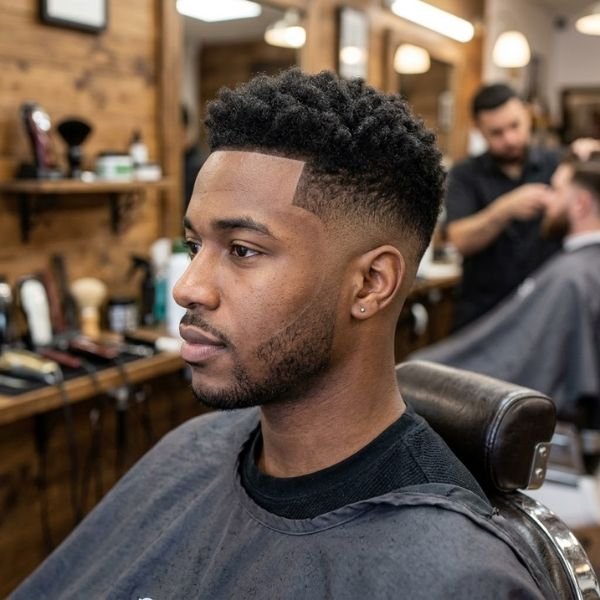
The classic version keeps the top natural and uses a clean, controlled taper around the sides and neckline.
It is a strong everyday choice for men who want a polished haircut without an extreme fade.
Read More: Taper Fade vs Low Fade: The Ultimate Guide to a Perfect Cut
2. Modern Mid Taper Fade
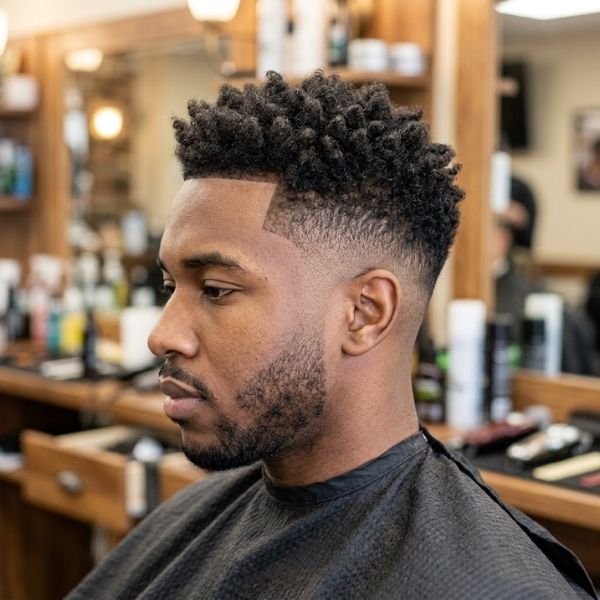
A modern mid taper usually combines the clean taper with more texture or movement on top.
Try it with a loose quiff, messy layers, or a slightly forward fringe for a contemporary finish.
3. Mid Taper Fade With Textured Top
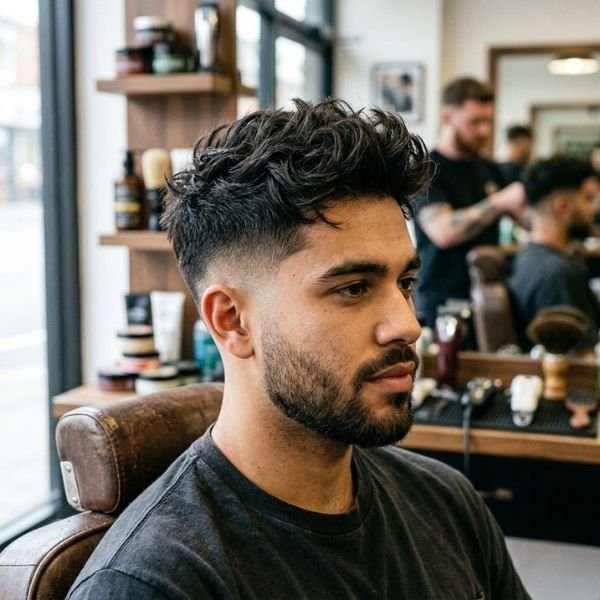
A textured top adds movement and makes the haircut look less rigid.
A matte clay or texture cream can separate the strands without making the hair look greasy.
4. Mid Taper Fade Textured Fringe
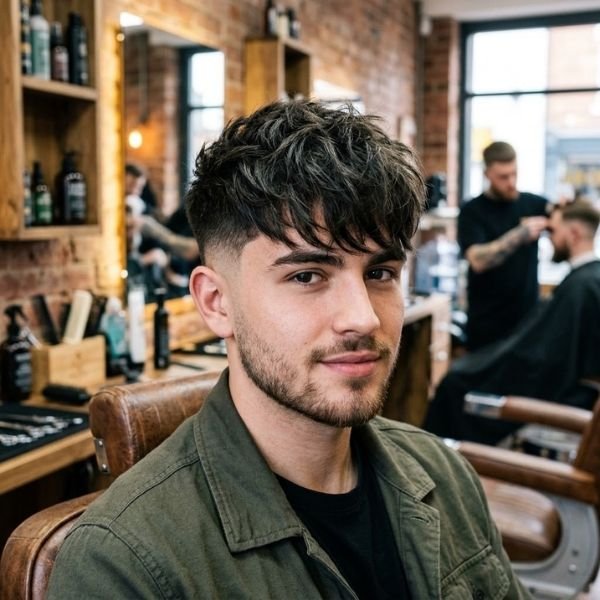
Keep extra length toward the front and cut the fringe with uneven texture.
This works especially well when you want a relaxed style that can be worn forward or slightly pushed to one side.
5. Mid Taper Fade With Messy Top
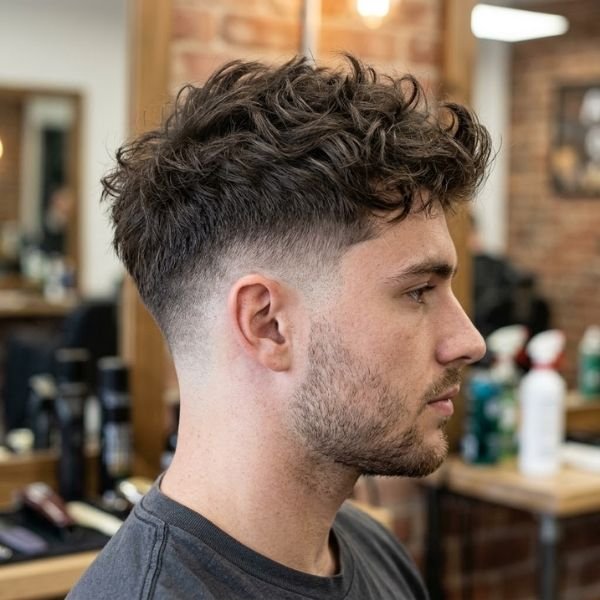
A messy top gives the clean taper a casual contrast.
Use a small amount of matte product, work it through with your fingers, and let the natural direction of your hair do most of the work.
6. Mid Taper Fade With Fluffy Hair
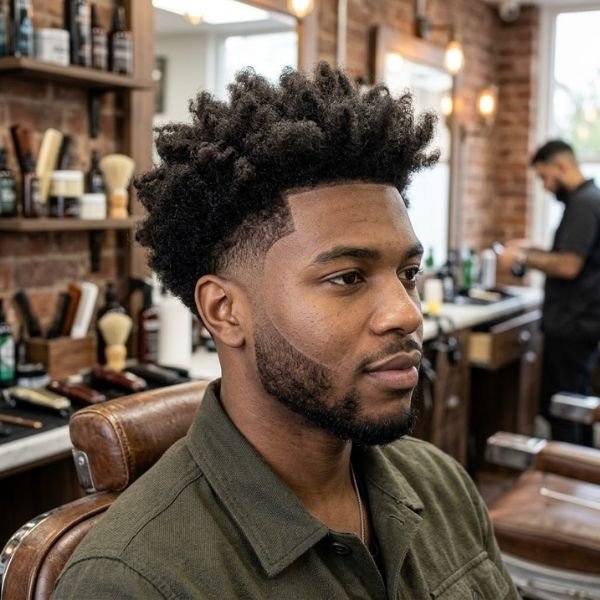
Fluffy hair works well with a mid taper because the shorter perimeter controls the sides while the top keeps its volume.
Blow-drying upward from the roots can create a fuller finish.
7. Mid Taper Fade Blowout
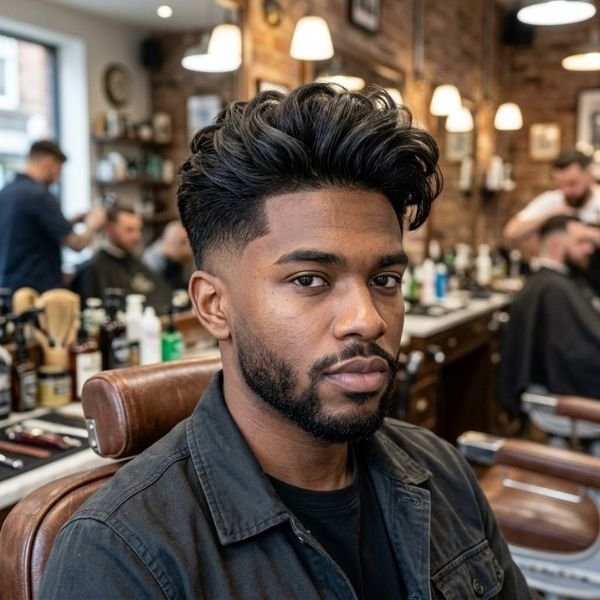
A blowout adds height and volume while the taper keeps the sides controlled.
This is particularly useful for thick or naturally voluminous hair.
8. Mid Taper Fade Blowout With Fringe
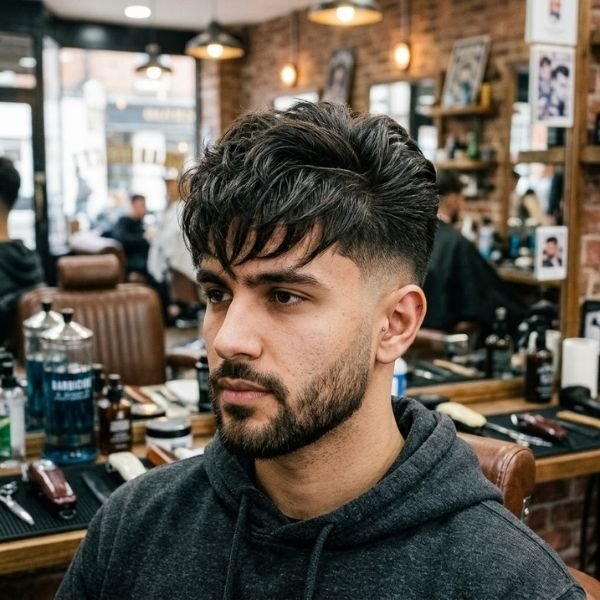
Add a forward fringe to the blowout for more movement around the forehead.
Keep the fringe textured rather than perfectly straight for a softer appearance.
9. Mid Taper Fade Blowout With Textured Hair
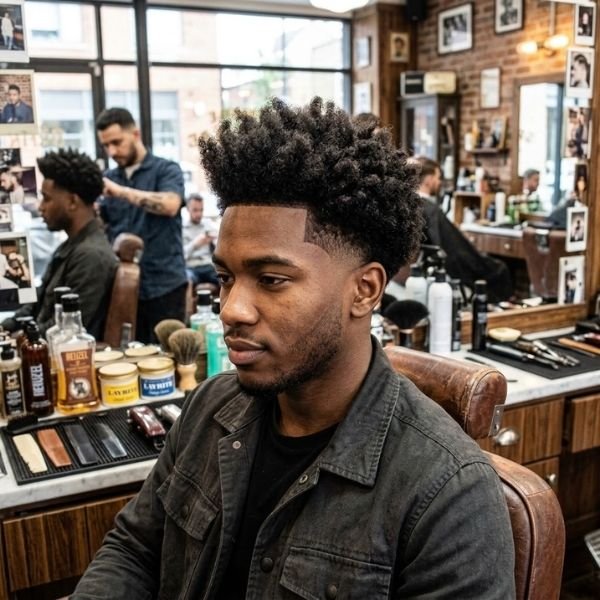
Combine blow-dried volume with separated strands on top.
This creates a fuller hairstyle without making the sides look bulky.
10. Mid Taper Fade for Straight Hair
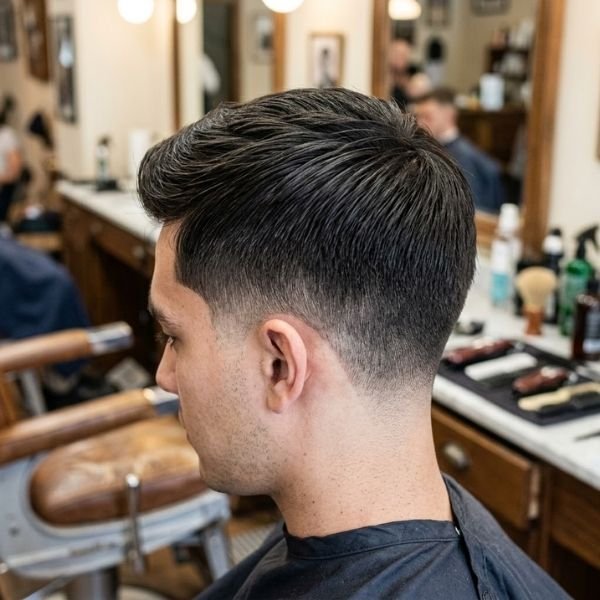
Straight hair gives you a clean canvas for slick backs, side parts, crops, quiffs, and textured styles.
Use a matte clay for a natural finish or a pomade when you want more shine.
11. Mid Taper Fade for Wavy Hair
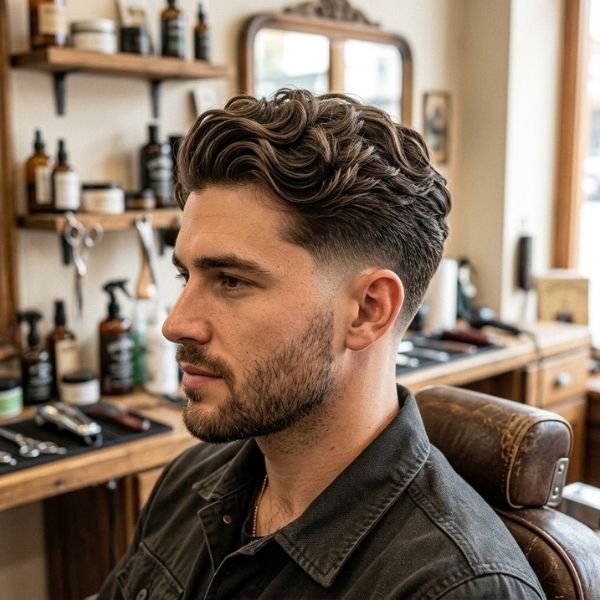
Wavy hair adds natural movement to the top.
Leave enough length for the waves to form instead of cutting them too short, then use a lightweight styling cream to control frizz.
12. Mid Taper Fade for Curly Hair
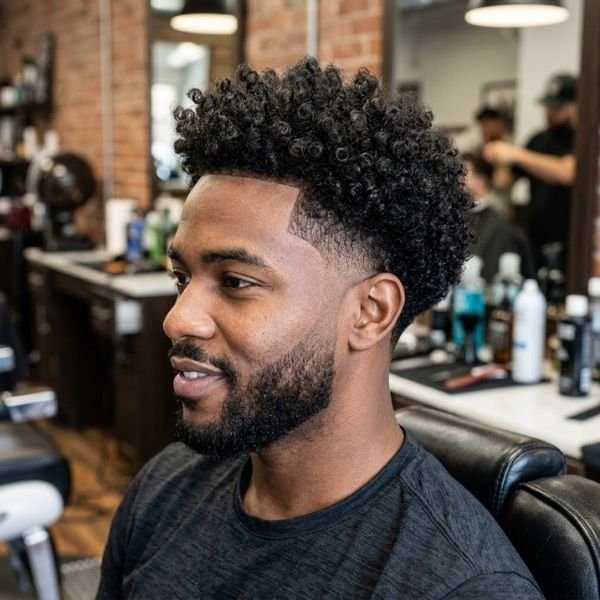
A curly top with a mid taper creates a strong contrast between natural texture and clean edges.
Keep the curls hydrated and defined while allowing the taper to frame the face.
13. Mid Taper Fade for Thick Hair
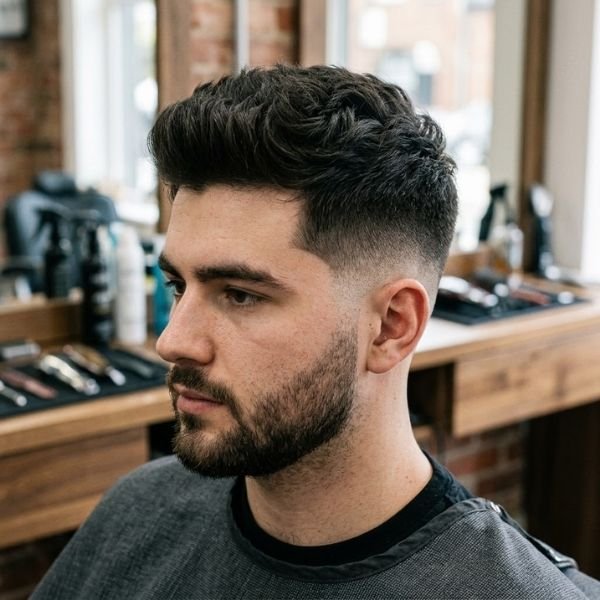
Thick hair benefits from removing some bulk around the sides.
The top can remain longer for volume, while strategic layering prevents it from becoming too heavy.
14. Mid Taper Fade With Beard
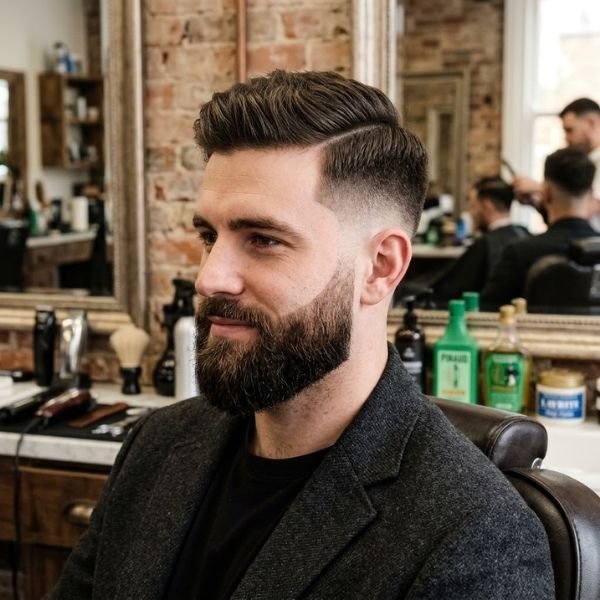
A beard can connect visually with the taper around the sideburn area.
Ask your barber to blend the transition rather than creating a sudden line between the haircut and beard.
15. Mid Taper Fade With Line Up
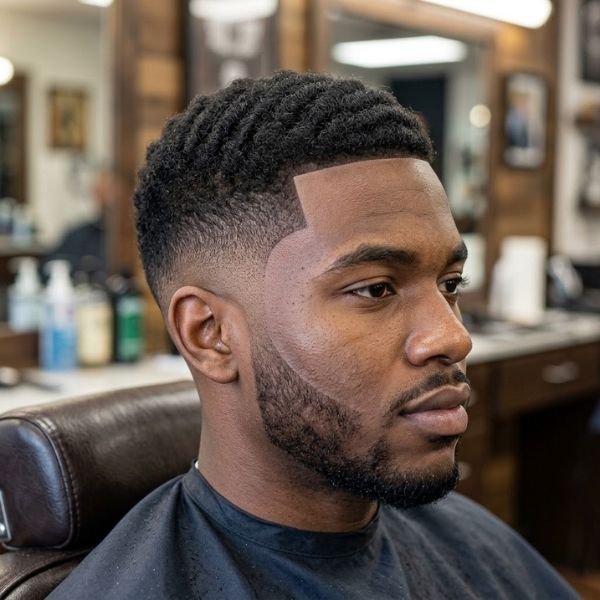
A line up sharpens the forehead and temple area.
It works especially well when you want a crisp, defined finish around an otherwise natural-looking haircut.
16. Mid Taper Fade With Design
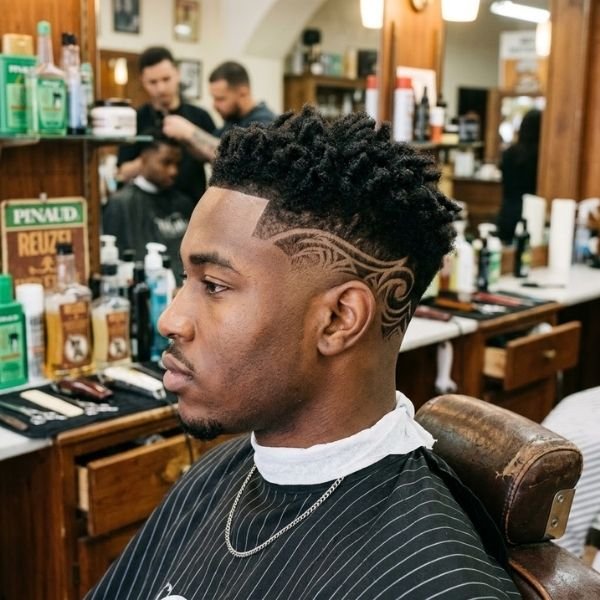
A small shaved design can make the haircut more expressive.
Keep the design simple if you want it to grow out neatly and remain easy to maintain.
17. Mid Taper Fade With Hard Part
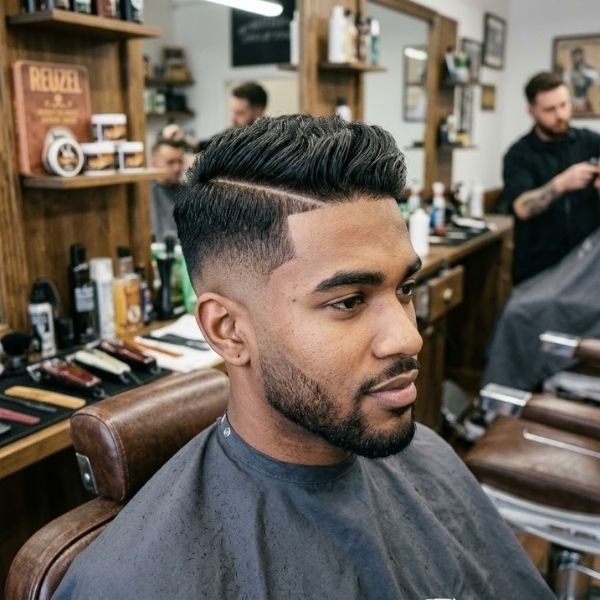
A hard part creates a clearly defined separation between the top and sides.
It pairs naturally with a comb over, side part, or brushed-up hairstyle.
18. Mid Taper Fade Middle Part
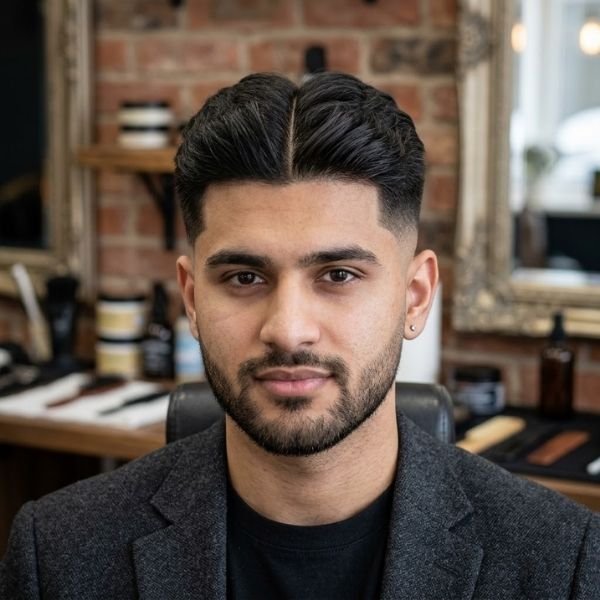
A middle part gives the haircut a relaxed, contemporary shape.
Leave enough length on top for the hair to fall naturally on both sides of the part.
19. Mid Taper Fade Side Part
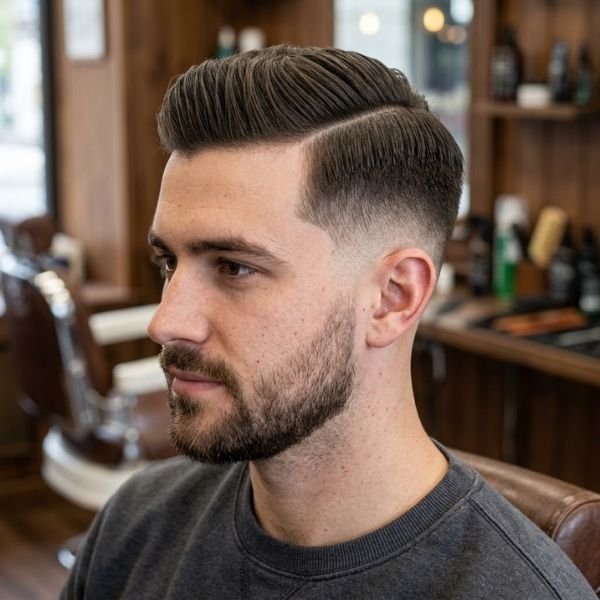
A side part is one of the easiest ways to make a mid taper look polished.
It can be styled neatly for formal settings or loosened with texture for a more casual appearance.
20. Mid Taper Fade Buzz Cut
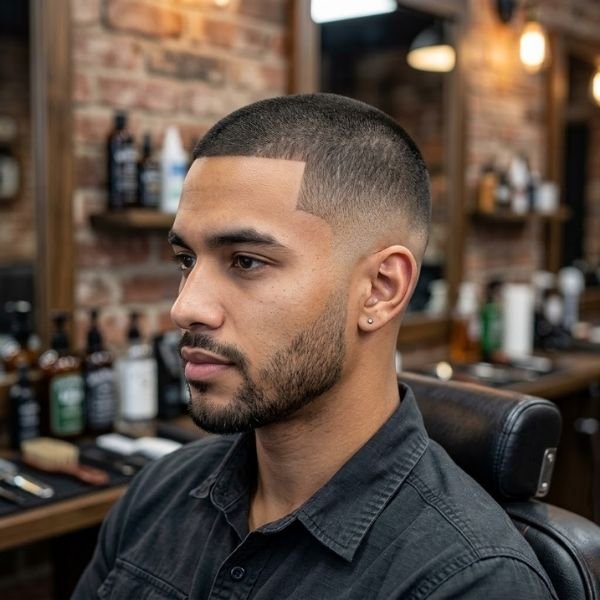
A buzz cut keeps the top short and lets the taper provide most of the visual detail.
It is a practical choice for men who want very little daily styling.
21. Mid Taper Fade Mullet
A mullet keeps the back noticeably longer while the taper cleans up the temples and sideburns.
The combination creates a sharper outline without removing the personality of the mullet.
22. Mid Taper Fade Quiff
The quiff adds height at the front and gives the haircut a more structured appearance.
Blow-dry the front upward, then use a matte styling product to hold the shape.
Read More: Mid Taper Fade Afro: 25 Best Styles, Tips, and a Full Tutorial
23. Mid Taper Fade Pompadour
A pompadour needs more length and volume at the front.
The mid taper keeps the sides controlled while the large top creates the main visual focus.
24. Mid Taper Fade Slick Back
The slick back works particularly well with straight or slightly wavy hair.
Comb the top backward and use a medium or strong-hold product depending on how much control you need.
25. Mid Taper Fade French Crop
A French crop keeps the top short and places the fringe toward the forehead.
The taper adds cleanliness around the sides without making the haircut look overly severe.
26. Mid Taper Fade Crop Top
The crop top is compact, textured, and easy to style.
Ask for a slightly messy finish if you want the top to look fuller and less uniform.
27. Mid Taper Fade With Long Top
A longer top gives you more styling options.
You can switch between a middle part, slick back, quiff, fringe, or loose textured style without changing the taper.
28. Mid Taper Fade With Short Top
A short top keeps the haircut practical and low effort.
This option is ideal if you prefer a clean appearance without spending much time styling your hair.
29. Mid Taper Fade With Curly Top
Let the curls remain the main feature while the taper removes excess bulk around the perimeter.
A curl cream or lightweight leave-in product can help maintain definition.
30. Mid Taper Fade With Spiky Hair
Short spikes add texture and a slightly edgy finish.
Use a matte clay or fiber rather than a heavy wet-look gel if you want the spikes to appear natural.
31. Mid Taper Fade With Fringe
A simple fringe softens the forehead area and gives the haircut more personality.
It can be short and neat or longer and textured depending on your preference.
32. Mid Taper Fade With Choppy Fringe
A choppy fringe uses uneven lengths to create movement.
It is a good match for thick or straight hair that needs extra texture.
33. Mid Taper Fade With Natural Texture
Instead of forcing the hair into a specific shape, keep its natural movement.
This works especially well for wavy, curly, and thick hair.
34. Low-Contrast Mid Taper Fade
A low-contrast version keeps the transition soft rather than dramatically exposing the scalp.
It is a useful option if you want the structure of a taper without a very sharp visual change.
35. Trendy Mid Taper Fade Hairstyle
For a trend-focused look, combine the taper with current styling details such as a textured top, messy fringe, middle part, blowout, or subtle design.
The most important part is choosing a trend that works with your natural hair rather than fighting its texture.
Best Hair Types for This Style
The mid taper is adaptable because the taper itself does not determine the top hairstyle.
Your hair texture mainly determines how much length, layering, and product you need.
For Straight Hair
Straight hair works with almost every variation.
Try a slick back, side part, French crop, textured fringe, quiff, or spiky top.
For Wavy Hair
Wavy hair naturally provides movement and volume.
A textured top, messy style, middle part, or blowout can make the waves more noticeable.
For Curly Hair
Curly hair looks strongest when the natural curl pattern remains visible.
Keep enough length for the curls to form properly and use the taper to clean the perimeter.
For Thick Hair
Thick hair pairs especially well with a mid taper because the sides can be reduced while the top retains volume.
Ask your barber to remove weight without making the top look thin.
How to Choose the Best Style for You
The best variation depends on more than the haircut trend you like in a photo.
Consider your texture, top length, face shape, styling routine, and how often you are willing to visit the barber.
Choose Based on Hair Type
Straight hair gives you more control over sleek styles.
Wavy and curly hair usually look better when the cut follows their natural movement.
Thick hair often benefits from weight removal and controlled layering.
Choose Based on Hair Length
Short hair is easier to maintain and style.
Medium length gives you options such as a quiff, fringe, crop, or side part.
Longer hair gives you more freedom with middle parts, slick backs, mullets, and voluminous styles.
Choose Based on Face Shape
For a round face, some height on top can create a more elongated appearance.
For a square face, texture can soften the overall look.
Oval faces can handle a wide range of top styles.
For longer faces, avoid excessive height if you do not want to emphasize facial length.
These are styling guidelines rather than strict rules because hair density, hairline, and personal preference also matter.
Choose Based on Desired Style
For a professional look, choose a classic side part, short textured top, or controlled slick back.
For a casual look, try messy texture, a fringe, waves, or curls.
For a statement haircut, consider a blowout, mullet, hard part, or design.
How to Ask Your Barber for a Mid Taper Fade: Tutorial
The easiest way to avoid confusion is to explain where you want the taper, how short you want it, and how much length you want on top.
You can say:
“I want a mid taper around the temples, sideburns, and neckline. Keep some weight on the sides, blend it gradually, and leave the top long enough for a textured style.”
Then specify your preferred finish:
- Tell your barber the top length you want.
- Explain whether you want a soft taper or sharper contrast.
- Say whether the shortest point should be a shadow, clipper length, or skin.
- Show a side-profile reference photo.
- Tell the barber how you normally style your hair.
A reference photo is particularly helpful because the words “mid taper” can be interpreted differently between barbers.
How to Get a Mid Taper Fade
A professional barber typically starts by establishing the taper height around the temple and perimeter.
The bulk is then reduced, followed by progressive blending through different clipper lengths.
The barber connects the transition with the top and cleans the sideburns and neckline.
The final step is detailing, where visible lines, uneven areas, and excess weight are refined.
Because the exact technique depends on the desired finish and hair texture, a professional cut is preferable to trying to reproduce the blend yourself.
How to Style It at Home
Styling depends mainly on what you want the top to do.
Start with clean, slightly damp hair and use a small amount of product.
Styling a Textured Top
Apply a matte clay or texture cream through the top.
Use your fingers to separate sections and create movement rather than combing everything flat.
Styling a Blowout Look
Use a blow dryer to lift the roots while directing the hair upward and away from the face.
Finish with a lightweight styling product to control flyaways without flattening the volume.
Read More: Low Taper Fade Short Hair: Best Styles to Try & Mistakes to Avoid
Styling It With a Fringe
Blow-dry the fringe forward.
Use your fingers to separate the ends and create a slightly irregular finish.
Styling Straight Hair
For a slick back or side part, use a comb after applying your styling product.
For a textured style, switch to your fingers and keep the finish less polished.
Styling Curly or Wavy Hair
Apply curl cream or lightweight styling mousse to damp hair.
Scrunch the curls or waves and allow them to dry naturally, or use a diffuser on a low setting.
How to Maintain This Haircut
The taper stays sharpest when the temple, sideburn, and neckline areas are cleaned up regularly.
You do not necessarily need to completely recut the top every time.
Between appointments:
- Keep the neckline clean.
- Avoid heavy product buildup.
- Use shampoo and conditioner appropriate for your hair texture.
- Refresh curls with water and curl product instead of repeatedly adding heavy product.
- Ask for a small edge-up when the perimeter becomes untidy.
Maintenance depends on how sharp you want the taper to remain.
How Long Does a Mid Taper Fade Last?
A mid taper generally looks freshest for around 2 to 4 weeks, although hair growth rate and how sharp you want the edges can change that.
Men who prefer a softer, more natural grow-out may comfortably stretch appointments longer.
A common maintenance range cited by current hairstyle guides is roughly 4 to 6 weeks for a broader haircut refresh, while sharper taper details may need attention sooner.
Mid Taper Fade vs Other Taper Styles
Vs. Low Taper Fade
A low taper begins lower around the ear and neckline, creating a softer and more subtle transition.
A mid taper starts higher, giving the haircut more visible structure and contrast.
Vs. High Taper Fade
A high taper moves the transition higher toward the temple.
A mid taper leaves more surrounding weight and usually gives you a more balanced middle ground.
Vs. Regular Mid Fade
A mid fade generally affects a wider section of the sides.
A mid taper concentrates the shortening around the perimeter, allowing more side weight to remain.
Vs. Skin Fade
A skin fade takes the shortest section down to bare scalp.
A mid taper can stop at a short clipper length or shadow, so it does not have to expose the skin.
Frequently Asked Questions
What is a mid taper fade?
A mid taper fade gradually shortens the hair around the middle of the temples, sideburns, and neckline while keeping more length on the sides and top.
Is it a good haircut for men?
Yes, its adaptable taper can be paired with many top styles and works across straight, wavy, curly, and thick hair.
What is the difference between a mid taper and a mid fade?
A mid taper keeps the fade more localized around the perimeter, while a mid fade usually removes more hair across the sides.
Does it work well for straight hair?
Yes, straight hair works particularly well with slick backs, side parts, textured tops, crops, and quiffs.
Does it work well for curly hair?
Yes, the taper can clean the perimeter while leaving enough length on top to show the natural curl pattern.
Can you add a fringe to it?
Yes, a short, textured, choppy, or longer fringe can all work with a mid taper.
Can you add a blowout to it?
Yes, the taper controls the sides while a blowout creates volume and movement on top.
How long does a mid taper fade last?
Most people can expect around 2 to 4 weeks of sharp appearance, depending on growth speed and preferred finish.
How often should you get a trim?
A sharper look may need a cleanup every 2 to 4 weeks, while a softer grow-out can last longer.
How do you ask a barber for this cut?
Ask for a mid taper around the temples, sideburns, and neckline, then specify the top length and show a reference photo.
Final Thoughts
The mid taper fade earns its popularity by striking a balance that few other haircuts manage: sharp enough to look intentional, subtle enough to suit almost any workplace or occasion. Whether you go with a textured crop, a slicked-back classic, or a bold design, the key is matching the style to your hair type, face shape, and how much time you want to spend styling it. Bring a photo to your next barber appointment, be specific about the fade height, and keep up with regular trims to get the most out of this versatile cut.

