
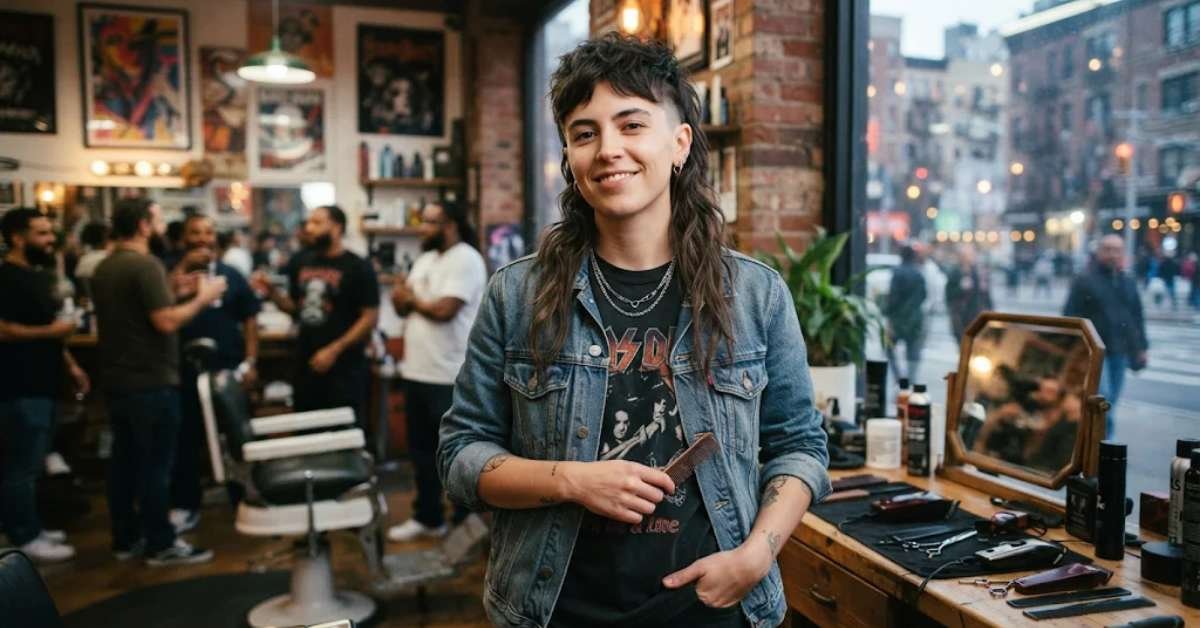

Modern mullet hairstyles keep the short sides and longer back of the classic cut, but blend the two with fades, tapers, and layers so the shape looks intentional instead of retro. This guide covers 36 styles grouped by fade, hair texture, Korean and curtain influence, edgy detail, and office-ready polish.
You will also learn how a modern mullet differs from the 80s version, which cut suits your face shape, what to tell your barber, and how to style and maintain it. If you want contrast that still looks sharp at work, there is a version here for your hair type and your schedule.
Style ideas here were cross-checked against barber-led guides such as Man of Many (an Australian men’s style publication) and Boss Hunting (an Australian men’s lifestyle site), then rewritten with extra detail on upkeep and barber wording.
Classic Modern Mullet Styles
These six cuts are the foundation. Each one keeps the sides shorter than the back, then changes the top, the finish, or the fringe.
1. Textured Modern Mullet
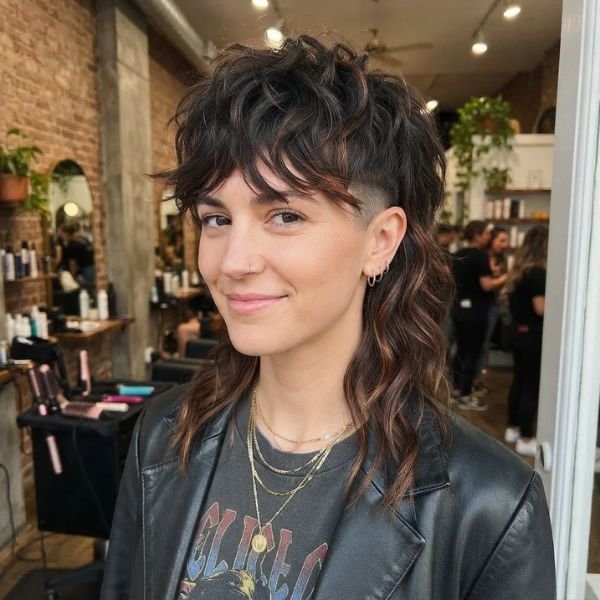
Choppy layers on top flow into a longer back while the sides stay short. Matte clay adds grit and movement. It is the easiest entry point if this is your first mullet.
2. Subtle Modern Mullet

The back sits just over the collar, so the shape reads as a longer cut rather than a statement. Ask for soft layering. It suits guys who want the trend without the stares.
3. Modern Mullet with Side Part
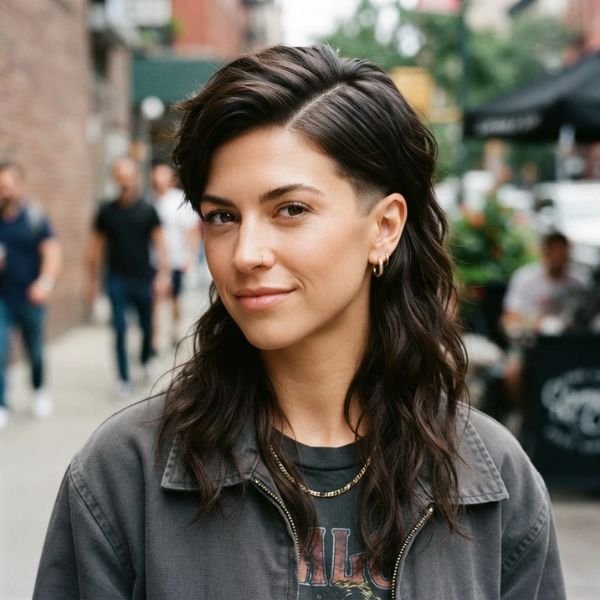
A defined part gives the top a neat, directional line. The back stays longer and loose. It looks sharp with a blazer and still feels relaxed on weekends.
4. Shaggy Modern Mullet

Heavy layers and uneven lengths create a lived-in, rock-inspired shape. Use sea salt spray and air dry. This works best on wavy hair that already moves.
5. Clean Modern Mullet
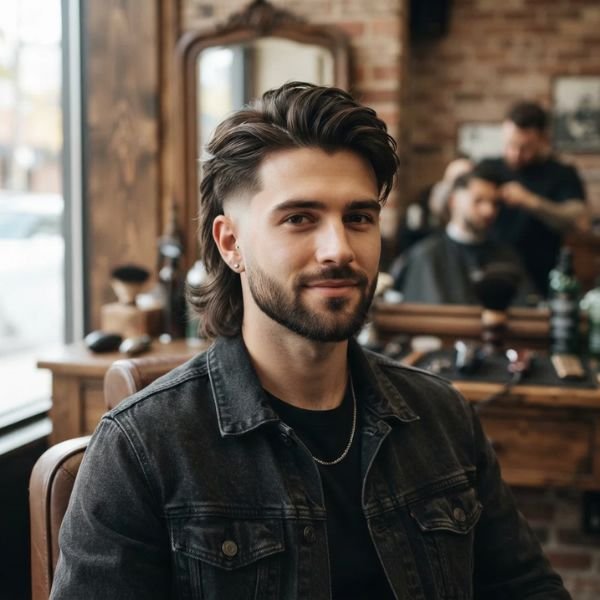
Smooth layers, tidy edges, and a tapered neckline keep everything intentional. A light cream controls frizz. Expect a trim every four to five weeks to hold the lines.
6. Modern Mullet with Fringe
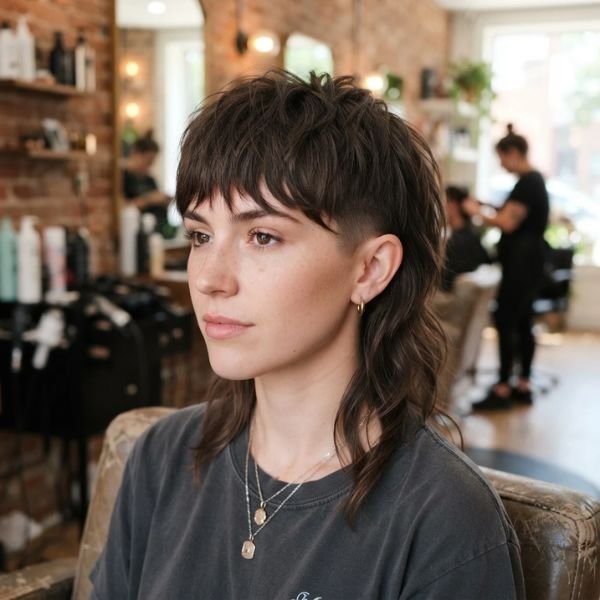
A short or medium fringe falls across the forehead while the back runs long. It softens a strong brow and suits straight hair best. Trim the fringe early so it stays off your eyes.
Modern Mullets with Fades and Tapers
Fades and tapers are what separate a modern mullet from the old one. They clean the sides and make the long back look chosen, not forgotten.
7. Modern Mullet Fade
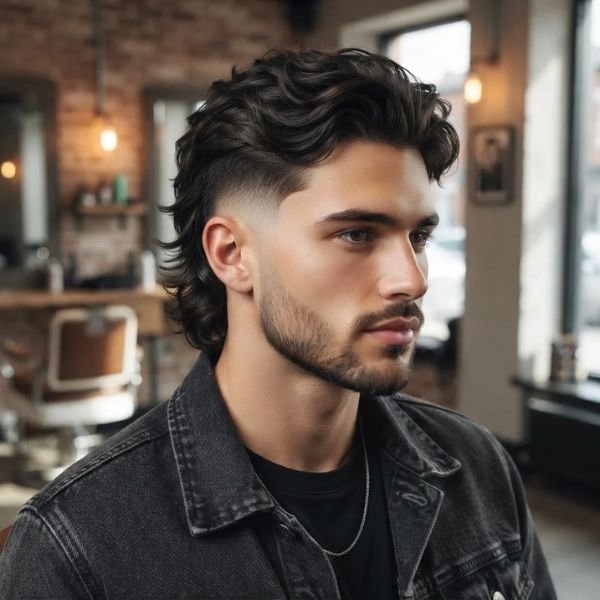
The sides fade down to the skin or a number one guard, then blend into a long back. It is high contrast and very sharp. Book a touch up every three weeks.
8. Burst Fade Mullet
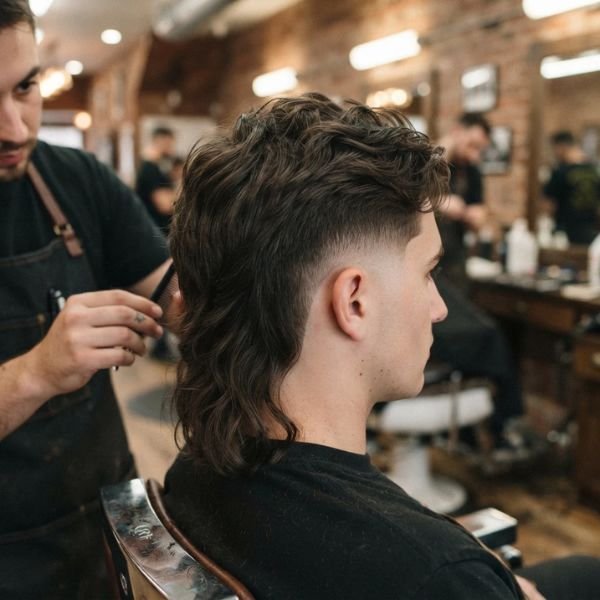
A burst fade curves around the ear and stops at the nape, so the back stays full. It frames the ear and shows off thick or curly hair. Ask for a rounded fade, not a straight one.
9. Low Taper Mullet
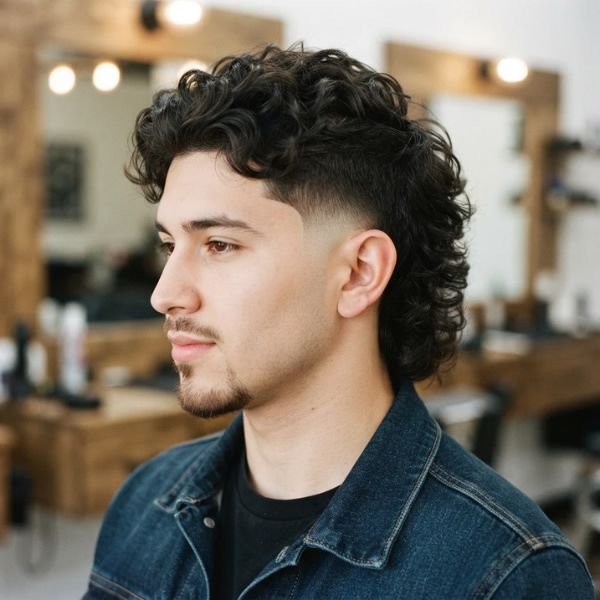
The taper starts low near the ear and neckline, leaving more length at the sides. It is the most conservative fade option and grows out cleanly.
10. Drop Fade Mullet
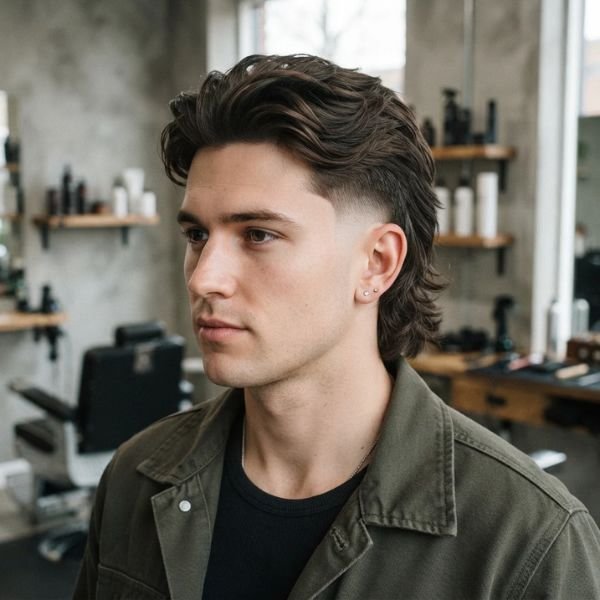
The fade line drops behind the ear in an arc, which exposes more of the lower skull. It adds shape to the back. Pair it with texture on top for balance.
11. High Fade Mullet
The fade starts high on the temple, creating strong separation from the longer top and back. It looks bold and modern. Keep the top textured so it does not look severe.
12. Mullet with Undercut Sides
The sides are clipped short with a sharp disconnect from the top, and the back stays long. The contrast is the point. Expect regular clipper work to keep it crisp.
13. Tapered Mullet with Beard
The taper blends into a trimmed beard, so the sides and jaw read as one clean line. A neat beard balances the length at the back. Keep the beard edges sharp.
Modern Mullets by Hair Texture
Texture changes how a mullet falls, grows, and needs to be cut. Matching the cut to your natural pattern saves you daily styling time.
14. Straight Hair Modern Mullet
Straight hair shows every layer line, so ask for point cutting to add softness. A texture spray gives grip. It works well with a short fringe or side part.
15. Wavy Modern Mullet
Waves add natural volume, which makes this the lowest effort texture to wear. Use a light mousse and let it dry. The back often sits in loose, even waves.
16. Curly Modern Mullet
Curls give the top bounce and the back a thick, defined tail. Cut it dry or while curls are defined. Use a curl cream and avoid heavy brushing.
17. Coily Modern Mullet
Coily hair holds shape well, so fades and tight tapers look especially clean. Moisture is key. Use a leave in conditioner and a pick to lift the top.
18. Thick-Hair Modern Mullet
Thick hair needs thinning or internal layers, otherwise the back turns into a block. Ask your barber to remove weight. A strong fade on the sides helps too.
19. Fine-Hair Modern Mullet
Keep the layers light and the length moderate so the back does not look stringy. A sea salt spray adds body. Avoid heavy waxes that flatten fine strands.
20. Wavy Mullet with Flow
This version lets length move freely with minimal product. The sides stay tapered, but the top and back drift in loose waves. It looks best air dried.
Korean and Curtain Modern Mullets
These styles borrow softer shapes from East Asian grooming and 90s curtain looks. They lean on layering and face framing rather than hard fades.
21. Korean Modern Mullet
Soft layers, a side swept fringe, and a lightly tapered back give a polished, youthful shape. Straight, dark hair suits it best. Blow dry for a natural lift.
22. Curtain Mullet
A center or slightly off center part lets the top fall to both sides like curtains. The back runs long. It frames the face and flatters most shapes.
23. Wolf Mullet
A wolf mullet blends mullet length with heavy, shaggy layers throughout. It is wilder and fuller than a standard cut. Tousle it with texture spray.
24. Soft Layered Mullet
Long, blended layers remove hard lines between the top and back. The result is airy and easy to style. It is ideal for wavy or medium thick hair.
25. Textured Crop Mullet
A short, choppy crop on top meets a compact, tapered back. It is lower maintenance and easy to wear in warm weather. Use a light paste for definition.
Bold and Edgy Modern Mullets
If you want people to notice the cut, start here. These styles add pattern, length, color, or shape to the basic mullet formula.
26. Modern Mullet with Design
Shaved lines or patterns cut into the sides add detail to a faded mullet. Choose simple lines first. Designs need a trim every two weeks to stay readable.
27. Long Back Modern Mullet
The back falls well past the collar, sometimes to the shoulders, while the top stays shorter. It makes the contrast dramatic. Keep ends healthy with regular trims.
28. Mullet with Color Accents
Subtle highlights, a bleached top, or bold dyed tips add depth. Color needs extra care, so use a sulfate free shampoo. Start with one accent shade.
29. Mohawk Mullet Hybrid
A raised center strip runs front to back while the sides are faded. It borrows the height of a mohawk and the tail of a mullet. Style it up with firm paste.
30. Spiky Modern Mullet
Short, sharp spikes on top meet a tapered back for a punk inspired look. Use a strong gel or clay. It suits thick, straight hair and an expressive personality.
Polished Modern Mullets for Work
A mullet can pass in an office if the length is controlled and the edges are clean. These versions are designed for professional settings.
31. Collar-Length Office Mullet
The back stops at the collar and the sides are neatly tapered. It reads as a layered cut at a glance. Use a light cream and comb it back in meetings.
32. Slicked-Back Mullet
Slicked back with pomade, the top looks formal while the back keeps its length. It is clean and confident. Use a medium hold product and a fine tooth comb.
33. Temple Taper Mullet
A tight taper at the temples and around the ears keeps the sides tidy and reduces bulk. The back stays natural. It is a safe pick for conservative workplaces.
34. Scissor-Cut Low-Contrast Mullet
Cut entirely with scissors, this version blends the sides and back with no visible fade. It looks natural and grows out smoothly. Expect a longer barber appointment.
35. Gray Modern Mullet for Men Over 40
Gray hair adds texture and character to the cut. Keep the layers soft and the length controlled. A purple shampoo once a week reduces yellow tones.
36. Tapered-Nape Curly Mullet
Tight curls sit on top while a clean taper at the nape keeps the neckline neat. It balances volume with structure. Moisturize daily to protect curl definition.
What Makes a Modern Mullet Different from Your Dad’s
The classic 80s mullet was long all over the back and cut with little shape on the top. It was often feathered and left to grow. The result was a stark, uneven look that had little to do with the wearer’s face or hair type.
A modern mullet is built with intent. The top is layered and styled, the sides are tapered or faded, and the back is shaped to match your hair texture. The idea is controlled contrast, not neglect.
• Shorter, more textured top instead of a flat, feathered one
• Fades or tapers at the sides instead of full-length hair
• Cleaner neckline and lighter, blended layers
• Styling products that add texture, not stiffness
How to Choose a Modern Mullet for Your Face Shape
| Face shape | Best mullet styles | Why it works |
| Oval | Almost any, including the textured or fade mullet | Balanced proportions handle most lengths |
| Round | High fade mullet, textured crop mullet | Height on top and tight sides add length to the face |
| Square | Soft layered mullet, curtain mullet | Softer layers reduce the angular jawline |
| Oblong | Mullet with fringe, side part mullet | Fringe and width shorten the face visually |
| Heart | Curtain mullet, low taper mullet | Fuller nape adds weight to a narrow chin |
| Diamond | Textured crop mullet with fringe | Fringe softens wide cheekbones |
What to Tell Your Barber
Clear instructions prevent a haircut that looks too long, too short, or too retro. Bring two or three photos and use specific terms.
1. State the sides: skin fade, low taper, or scissor blended, and where the fade should start.
2. State the top length, and ask for texture or point cutting.
3. State the back length: collar, mid neck, or shoulder.
4. Ask how the neckline should finish: rounded, squared, or natural.
5. Mention your daily routine so the cut fits the time you will spend styling.
A simple script works well: “I would like a modern mullet with a low taper on the sides, textured top, and the back at collar length.” If you are unsure, ask the barber to start longer and trim down.
Maintenance and Styling
A modern mullet looks best when it is trimmed regularly and styled with the right product. Neglect turns it back into the outdated version quickly.
• Trim every three to five weeks to keep the fade and neckline sharp
• Use texture spray or sea salt spray for body on fine or straight hair
• Use matte clay or paste for definition and hold
• Use curl cream or leave in conditioner on curly and coily hair
• Wash two to three times a week and condition the lengths
• Dry the back with a diffuser or let it air dry to avoid frizz
For grow out, expect about six to nine months to reach a solid collar length, since hair grows roughly half an inch a month. A barber can shape the in-between stages so it never looks messy.
When a Modern Mullet Is Not the Right Choice
Not every head of hair suits this cut, and that is fine. A mullet is a high maintenance haircut if you want the clean version.
• Your hair is very thin or receding heavily, and the contrast would highlight it
• Your workplace has strict grooming rules
• You want a no-styling, low-maintenance haircut
• You cannot visit a barber every month
• Your hair grows slowly or has a very flat nape that cannot hold length
A tapered crop, textured quiff, or classic fade can deliver a similar sharpness with less upkeep.
FAQ
What Is a Modern Mullet?
A modern mullet is a haircut with shorter, tapered or faded sides and a longer, layered back. It is a refined version of the 80s mullet.
How Is a Modern Mullet Different from an 80s Mullet?
A modern mullet has texture, fades, and a shaped neckline. The 80s version was longer, feathered, and less styled.
How Do I Ask My Barber for a Modern Mullet?
Name the side style, top length, and back length, and bring reference photos. Ask for texture and a tapered neckline.
Does a Modern Mullet Work on Curly Hair?
Yes. Curly hair gives the cut natural volume, and a fade or taper keeps the sides clean.
How Often Does a Modern Mullet Need Maintenance?
Trim every three to five weeks for faded styles, or every six weeks for scissor-cut versions.
Is a Modern Mullet a Professional Haircut?
It can be, if the back stays near collar length and the edges are tidy. Subtle and tapered versions work best.
How Long Does It Take to Grow a Modern Mullet?
Most men need six to nine months to grow the back to collar length. Regular shaping trims help along the way.
What Is the Difference Between a Mullet and a Wolf Cut?
A mullet is defined by short sides and a long back. A wolf cut has heavy layers throughout, with less contrast.
Conclusion
Modern mullet hairstyles work because they can be adjusted. You can keep it subtle with a collar-length cut, go sharp with a fade, or add edge with color and design. The right choice depends on your hair texture, face shape, and how much time you want to spend styling.
Pick two or three styles from this guide, save photos, and share them with your barber. Start a little longer than you think you need, since it is easy to take length off but slow to grow it back.

