
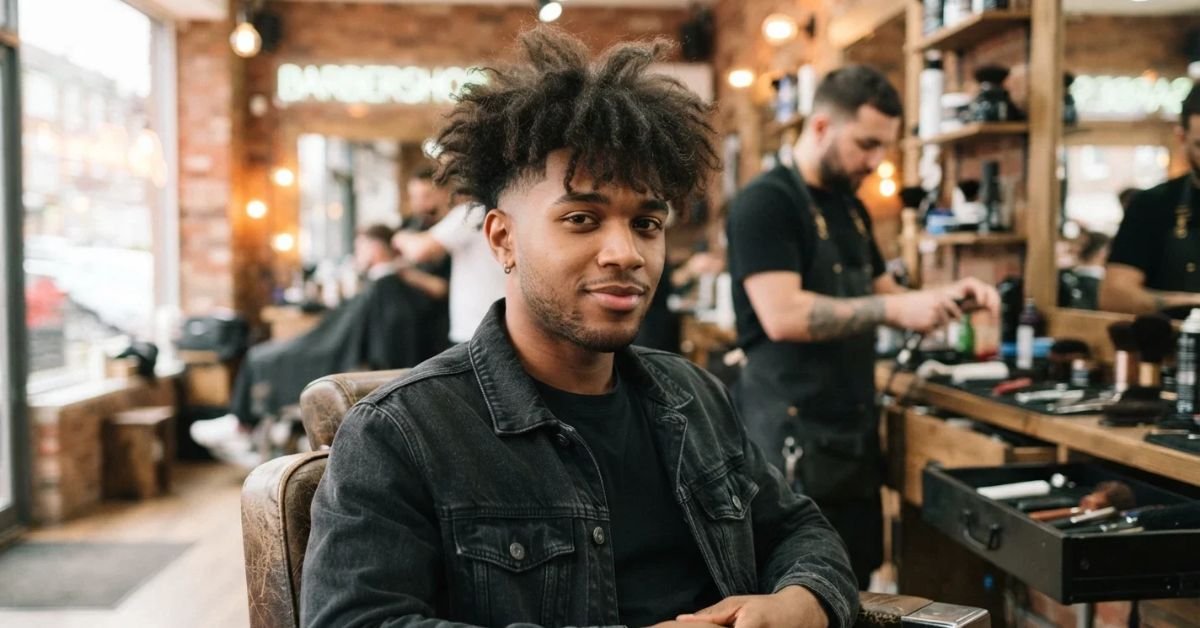

Low taper fade fluffy hair is a men’s cut that keeps the sides short and clean while the top stays soft, airy, and full of volume. The fade starts just above the ears and neckline, so the shape looks sharp without losing length where it counts. In 2026 it works for school, the office, and weekends because one haircut flips between messy and neat in minutes.
This guide covers 20 styles, face shape and hair type matches, barber instructions, styling steps, upkeep, and mistakes to avoid. Every section is written to help you walk into the chair with a clear plan and walk out with a cut that suits your hair.
What is Low Taper Fade Fluffy Hair?
It is a haircut that pairs a subtle low taper on the sides and back with a full, textured top. The sides get shorter gradually near the ears and nape. The top keeps enough length to look puffy, tousled, and light.
Why is this hairstyle trending in 2026?
Men want cuts that look styled without hours of effort. A soft top with a clean edge delivers that balance. Short video platforms also keep pushing fluffy fringes and blowout looks, which has made the low taper the go-to base for them.
Who should choose this haircut?
Anyone with at least 3 to 4 inches of hair on top can wear it. Students, office workers, and creatives all pull it off. It is especially good for men who want volume but still need a neat, work-ready outline.
What readers will learn in this guide.
By the end, you will know how to pick, request, style, and maintain this cut. Here is what is covered:
• 20 low taper fade fluffy hair ideas for different textures, lengths, and ages
• Exact words to use with your barber
• Face shape and hair type matching
• Styling products and a simple routine
What Is Low Taper Fade Fluffy Hair?
The name describes two parts working together. The taper controls the sides and back. The fluffy texture controls the top. Understanding both makes it easier to explain the cut to a barber and to style it later.
What Is a Low Taper Fade?
A low taper fade shortens the hair gradually on the sides and back, starting low around the ears and the nape. Unlike a bald or skin fade, it leaves visible length at the bottom, so the shape looks soft and natural.
As Prose notes, almost anyone can get a low taper because there are few restrictions on hair type or style.
What Makes Hair Look Fluffy?
Fluffy hair has lift, air, and movement. That comes from layering, light texturizing, and drying hair with a little lift at the roots. Fine and straight hair needs more help from products, while wavy and curly hair puffs up naturally.
Why Is This Hairstyle So Popular?
Three reasons keep it popular. First, it looks clean in photos and in person. Second, it is easy to restyle, since a few seconds with a dryer changes the mood. Third, it fits many hair types, from straight to curly.
Sites such as Forte Series describe the look as a mix of soft texture and clean edges, with a messy, tousled top above a neat taper. That mix explains why barbers get asked for it so often.
Benefits of a Low Taper Fade Fluffy Haircut
This cut gives you more than a trendy look. Here are the main advantages:
• Versatile: works for school, work, gym, and events
• Low risk: the low start keeps the cut subtle if you are new to fades
• Volume friendly: adds body to thin or flat hair
• Quick styling: 5 minutes is enough on most days
Top 20 Best Low Taper Fade Fluffy Hair Hairstyles
Each idea below includes who it suits and one styling cue. Pick the one closest to your hair type, then adjust the length with your barber.
Classic Low Taper Fade Fluffy Hair

The original version keeps about 3 inches on top, brushed forward and slightly up. The taper stays tight around the ears. It suits men who want a tidy look with a little life.
Modern Low Taper Fade Fluffy Hair
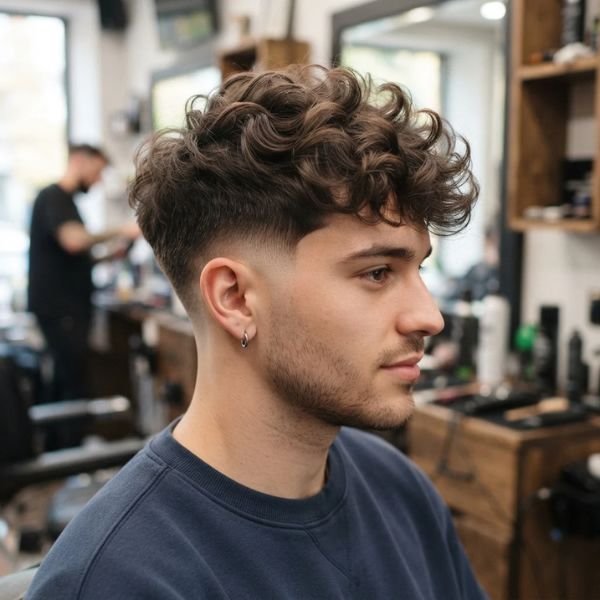
This version adds sharper lines at the neck and a lightly disconnected top. Ask for subtle layers so the shape feels current, not boxy.
Textured Low Taper Fade Fluffy Hair
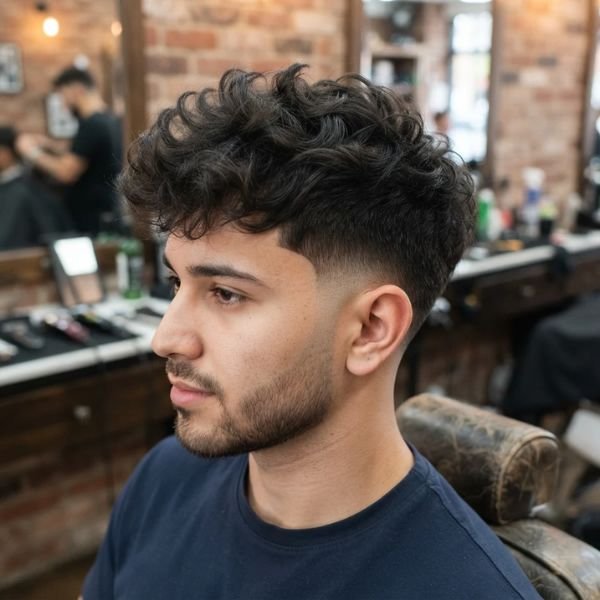
Choppy layers give the top grip and separation. Finish with matte clay and a quick blast of cool air to lock in the texture.
Messy Low Taper Fade Fluffy Hair

A tousled finish for men who like an undone look. Scrunch a pea-sized amount of paste through dry hair and leave it alone.
Curly Low Taper Fade Fluffy Hair

Natural curls already create volume, so the taper keeps the shape controlled. Use a curl cream and diffuse on low heat to avoid frizz.
Wavy Low Taper Fade Fluffy Hair
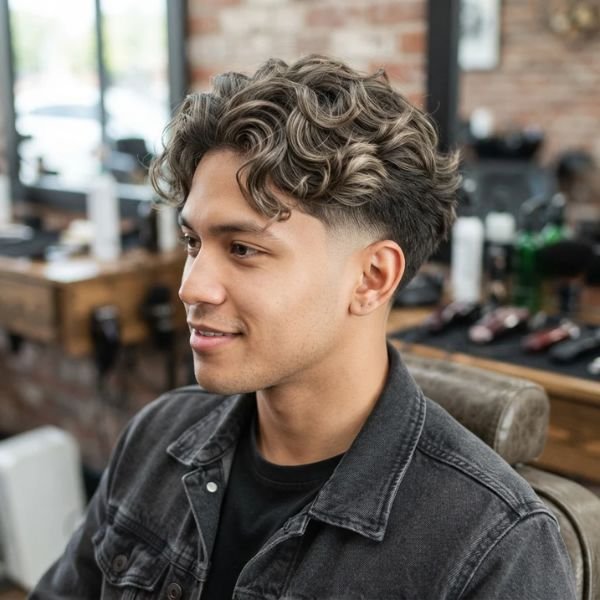
Waves bring soft movement without much effort. A sea salt spray and air drying usually give a relaxed, beachy finish.
Straight Low Taper Fade Fluffy Hair
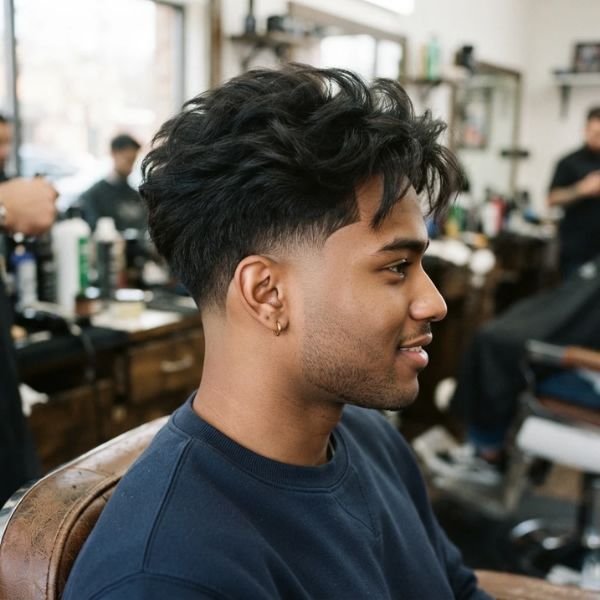
Straight hair needs layers and lift to look fluffy. Blow dry upward at the roots, then add light powder for hold.
Thick Low Taper Fade Fluffy Hair

Thick hair can look heavy, so ask your barber to thin the top lightly. That keeps the volume airy instead of bulky.
Thin Low Taper Fade Fluffy Hair

Fine hair gains body from short layers and volumizing powder. Avoid heavy pomade, which makes thin strands look flat and see-through.
Medium-Length Low Taper Fade Fluffy Hair

Around 4 inches on top is the sweet spot for most men. It is long enough to move and short enough to need little product.
Long Top Low Taper Fade Fluffy Hair

Keep 5 inches or more on top and let it flow back or sideways. The low taper stops the extra length from looking untidy.
Low Taper Fade Fluffy Hair with Fringe
A soft fringe falls forward over the forehead. It suits men with a high forehead, and a textured cut keeps it from looking too neat.
Low Taper Fade Fluffy Hair with Curtains
Hair parts in the center and falls to each side. Blow dry outward from the part to get that light, floating shape.
Asian Low Taper Fade Fluffy Hair
Straight, dense hair responds well to layered, blown-out tops. Ask for a longer fringe and soft texture to avoid a flat, helmet-like shape.
Blonde Low Taper Fade Fluffy Hair
Lighter hair makes texture stand out. Use a purple shampoo now and then to keep brassy tones away.
Low Taper Fade Fluffy Hair with Beard
The taper can blend straight into the sideburns and beard. Keep the beard trimmed close at the cheeks for a sharp, balanced finish.
Low Taper Fade Fluffy Hair with Textured Top
Think of this as the cut with the most movement. Heavy layering, a bit of paste, and a clean taper create a bold shape.
Low Taper Fade Fluffy Hair for Teen Boys
Easy to manage and school friendly. A shorter top, around 2 to 3 inches, keeps it simple while still looking stylish.
Professional Low Taper Fade Fluffy Hair
Keep the top slightly shorter and brush it neatly to one side or back. The taper keeps the cut sharp for meetings and interviews.
Trending Low Taper Fade Fluffy Hair 2026
The current favorite pairs a blowout top with a soft low taper and a lightly broken fringe. It looks natural, a little undone, and very photo friendly.
How to Ask Your Barber for a Low Taper Fade Fluffy Haircut
Clear words save you from a surprise result. Use the steps below as a script.
Ask for a clean low taper fade.
Say the fade should start above the ear and blend down to the nape. Name the shortest guard you like, such as a 1 or 2.
Leave extra length on top for volume.
Tell your barber to keep 3 to 5 inches on top. Short tops cannot get fluffy, so protect the length.
Request textured layers.
Ask for point cutting or light texturizing. These techniques remove weight and create the airy, separated look.
Decide on a natural or textured fringe.
A natural fringe falls softly forward. A textured fringe is choppier and more visible. Tell your barber which one you want and how close to the eyebrows it should sit.
Bring a reference photo.
A photo removes guesswork. Choose one with a similar hair type to yours, since the same cut looks different on straight and curly hair.
Ask your barber how to style it at home.
Best Face Shapes
The cut flatters most faces, but small adjustments improve the balance. Here is how to tweak it.
Oval Face
Oval faces suit nearly every variation. Try a classic fluffy top with a natural fringe.
Round Face
Add height on top and keep the sides tight. The vertical lift makes the face look longer.
Square Face
Soft, textured layers soften a strong jaw. A fringe worn slightly off-center also works well.
Diamond Face
A fringe or curtains adds width at the forehead, which balances prominent cheekbones.
Heart Face
Choose a side-swept fringe and avoid too much height. This keeps the forehead from looking wider.
Oblong Face
Keep the top fluffy but not too tall. A fringe shortens the look of a long face.
FashionBeans also points out that the low taper complements oval and square faces and gives longer or rectangular faces a flattering shape.
Best Hair Types
Your hair texture decides how easy the volume is and which products you need.
Straight Hair
Needs layers, a blow dryer, and light powder. Without lift, straight hair falls flat.
Wavy Hair
The best match for effortless fluff. Use sea salt spray and let the waves form.
Curly Hair
Curls give natural volume. Keep them moisturized and avoid brushing when dry.
Thick Hair
Ask for internal thinning to cut weight. Use a lightweight cream rather than heavy wax.
Fine Hair
Volumizing products and short layers make fine hair look fuller. Skip oils and heavy pomades.
Medium-Length Hair
This is the easiest length to work with. It holds shape and still moves freely.
Pros and Cons
| Pros | Cons |
| Works with most hair types | Needs trims every 3 to 4 weeks |
| Easy to restyle | Fine hair may need extra products |
| Subtle fade is office safe | Requires a skilled barber for smooth blending |
| Adds volume and texture | Grows out of shape if you skip trims |
How to Style Low Taper Fade Fluffy Hair
Styling takes about 5 minutes. The goal is lift at the roots and light separation at the ends.
Best Styling Products
Choose products that add hold without weight. The list below covers the essentials:
• Sea salt spray: adds grit and beachy texture to straight or fine hair
• Volume powder: gives lift and a matte finish at the roots
• Matte clay or paste: holds the shape with a natural look
• Curl cream: defines curls and controls frizz
• Light hairspray: sets the final shape without stiffness
Step-by-Step Styling Guide
Follow these steps for a repeatable result:
1. Wash with a gentle shampoo and towel dry until damp, not dripping.
2. Spray sea salt spray or a lightweight prep tonic through the roots.
3. Blow dry on medium heat, lifting the hair up and forward with your fingers.
4. Rub a pea-sized amount of clay or paste between your palms.
5. Work it through the top, shaping the fringe and ends.
6. Add a small amount of volume powder at the roots if needed.
7. Finish with a cool blast and a light mist of hairspray.
How to Maintain Low Taper Fade Fluffy Hair
The sides lose shape faster than the top. Most barbers recommend a tidy up every 3 to 4 weeks to keep the taper clean. Waiting longer is possible with a low taper because it grows out gently, but the neckline will look rough.
• Wash 2 to 3 times a week to avoid drying out the hair
• Use conditioner on the lengths, especially for curly hair
• Avoid daily heat on high settings
• Trim the top every 6 to 8 weeks to remove split ends
Low Taper Fade Fluffy Hair vs Textured Fringe
A textured fringe focuses on a choppy, forward-falling front. Low taper fade fluffy hair focuses on overall volume across the whole top. Many men combine them, but the fringe version looks sharper and the fluffy version looks softer.
Low Taper Fade Fluffy Hair vs Curtains
Curtains part in the middle and fall to each side, which gives a 90s feel. Fluffy hair has no fixed part and relies on lift. Curtains need longer hair, usually 4 inches or more, while fluffy hair works at shorter lengths too.
Low Taper Fade Fluffy Hair vs Middle Part
A middle part is a defined line with hair falling evenly on both sides. It looks neat and symmetrical. Fluffy hair is looser, more random, and less formal.
Celebrity Inspiration
Celebrities show how flexible this style can be. Timothée Chalamet, the American actor known for Dune and Wonka, often wears a voluminous, tousled top. Jacob Elordi, the Australian actor from Saltburn, has worn soft, lifted hair with a neat finish. Harry Styles, the singer and former One Direction member, is known for loose, airy hair that moves.
These looks are not always exact low taper cuts, but the soft, full top is the same idea. Bring a photo to your barber and ask for the taper to be added to the sides.
Common Mistakes to Avoid
Small errors can ruin the shape. Watch out for these:
8. Cutting the top too short, which kills the fluffy effect.
9. Using too much product, which weighs the hair down.
10. Skipping trims, which makes the taper look messy.
11. Ignoring hair type, such as using heavy wax on fine hair.
12. Asking for a fade that starts too high, which changes the cut into a different style.
Final Thought
This cut gives you a clean, modern shape with plenty of personality. The taper handles the neatness, and the fluffy top handles the style. Pick the version that fits your hair type and face shape, give your barber clear instructions, and keep up a monthly trim. With a small routine, you get a cut that looks good on busy days and relaxed ones. Share your favorite style from the list in the comments, or send this guide to a friend who needs a fresh cut.
FAQ
What is low taper fade fluffy hair?
It is a haircut with a gradual low taper on the sides and back and a soft, voluminous top.
How long should my hair be on top?
Aim for 3 to 5 inches, so there is enough length to create volume.
How often should I get a trim?
Every 3 to 4 weeks keeps the taper neat, and the top can wait 6 to 8 weeks.
Does this cut work for thin hair?
Yes, short layers and volume powder make thin hair look fuller.
Is a low taper fade office friendly?
Yes, the subtle fade looks polished, especially with a neatly styled top.
Which products work best for fluffy hair?
Sea salt spray, volume powder, and matte clay or paste give lift without weight.

