
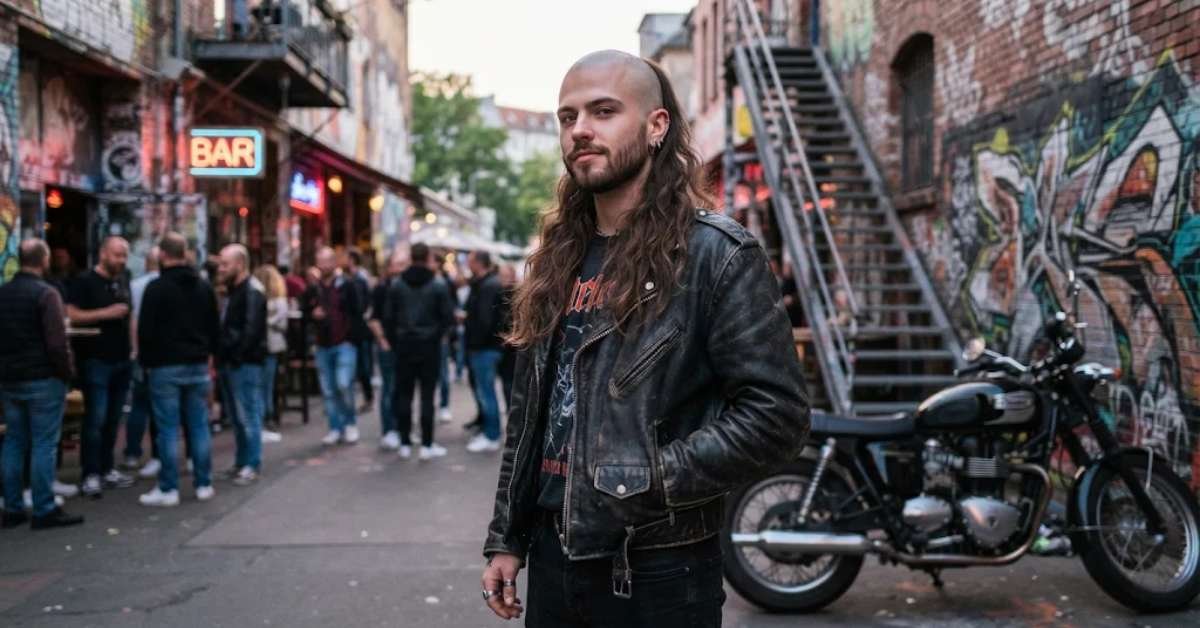

A skullet haircut is a mullet with the top shaved or cut very short, so the sides and crown stay tight while the hair at the back grows long. The name blends “skull” and “mullet.” It suits men who want the nerve of a mullet without the bulk on top. Most versions use a skin fade or a low guard on top and leave the nape long and loose.
The look became famous in Australia, where Richmond footballer Dustin Martin’s cut made it a household name. This guide gives you 25 styles, face shape advice, a barber script, growing steps, upkeep tips, and honest reasons to skip it. Every style includes what to ask for at the chair.
What the Skullet Actually Is
The skullet is a hybrid of a mullet and a buzz cut. Short on top, long at the back, with a hard contrast between the two.
A Mullet Keeps Hair on Top; a Skullet Shaves It Off
A classic mullet keeps length on the top and lets the back grow long. A skullet flips that. The top is buzzed, shaved, or faded to skin, and only the back stays long.
The UK salon group Rush describes the skullet as a blend of a mullet and a buzz cut or skinhead. Think of it as a mullet with the volume removed. The silhouette stays the same, but the contrast is sharper.
Clean Skullets Have Tight Fades; Shaggy Skullets Have Texture and Length
Skullets fall into two camps. Which one you pick decides what you tell your barber.
• Clean skullet: skin fade or zero guard on top, a crisp line-up, and a blunt, neat back.
• Shaggy skullet: a softer top, choppy layers at the back, and visible texture that falls past the collar.
Clean versions look sharp and deliberate. Shaggy versions look relaxed and lean toward rock and punk style.
In Australia the Skullet Is Often Called the Dusty
Dustin Martin, nicknamed Dusty, is a Richmond Football Club star in the AFL (Australian Football League) and a three-time premiership winner. AFL.com.au once described his cut as shaved at the front and sides and spiked at the back.
Fans copied it. A Footy Almanac piece even describes young Richmond supporters asking their barber for a “Dusty.” In Melbourne, say dusty and most barbers know what you mean. Elsewhere, say skullet.
Skin Fade and Shaved Skullets
These eight styles lean clean and high contrast. The top is shaved or faded to skin, so the long back does all the talking.
1. High Skin Fade Skullet

The fade starts high on the temples and drops to bare skin around the ears. It leaves a bold gap between the shaved top and the long back. This is the sharpest version and the one most barbers picture first.
Ask for: a high skin fade, top shaved or at a zero guard, back left long and blunt.
2. Mid Fade Skullet with Blunt Back

A mid fade starts near the temple line, so it looks softer than a high fade. The back is cut straight across with no layers. That blunt edge gives the length a heavy, deliberate feel.
Ask for: a mid skin fade, short top, and a straight cut across the nape.
3. Skin Fade with Wavy Back

Natural waves add movement to the long section. The tight fade keeps the sides clean while the waves flow past the collar. Wavy hair gives this style its shape with little effort.
Ask for: the waves left uncut for weight, with only split ends trimmed.
4. Skin Fade Skullet with Line-Up
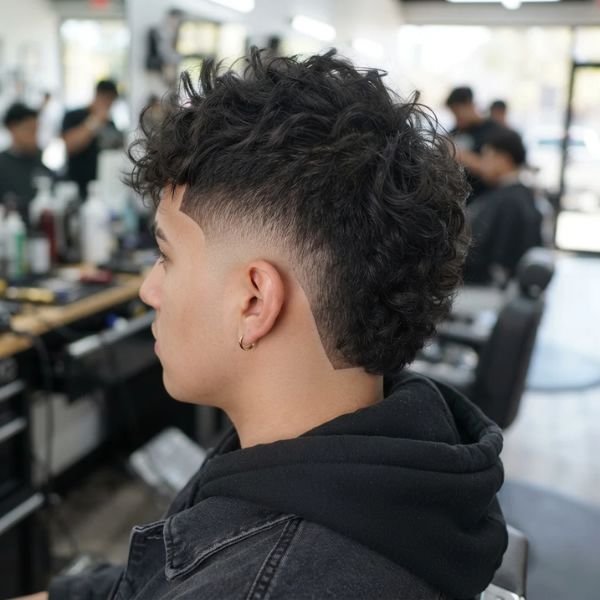
A line-up, also called an edge-up, is a crisp outline along the forehead and temples. It frames the shaved top and makes the shape look intentional. Expect to refresh it every two weeks.
Ask for: a skin fade with a sharp line-up and a razor finish on the hairline.
5. Low Fade Skullet

A low fade stays near the ears and nape. It is the safest fade for anyone nervous about going short on the sides.
Ask for: a low fade, number 1 or 2 on top, and a back about three to four inches long.
6. Textured Back Skin Fade Skullet Haircut
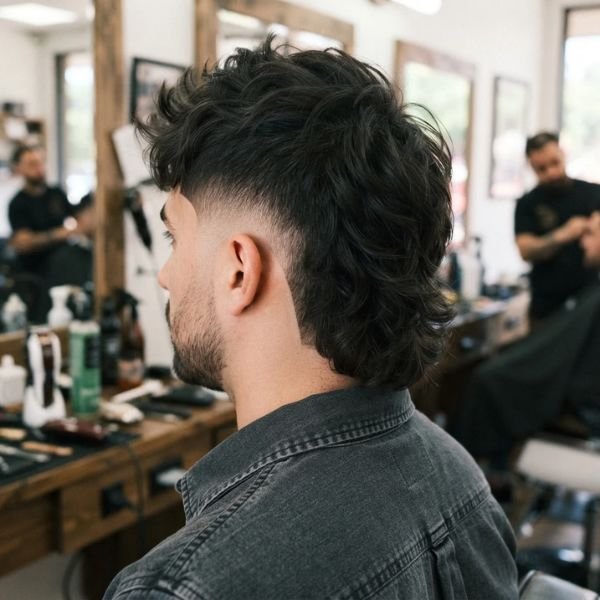
Here the back is point cut, which means the barber snips into the ends for a ragged finish. The result looks lived in rather than polished. It works well on straight, thick hair.
Ask for: a textured back with no blunt line, and a skin fade on the sides.
7. Skin Fade Skullet with Permed Back
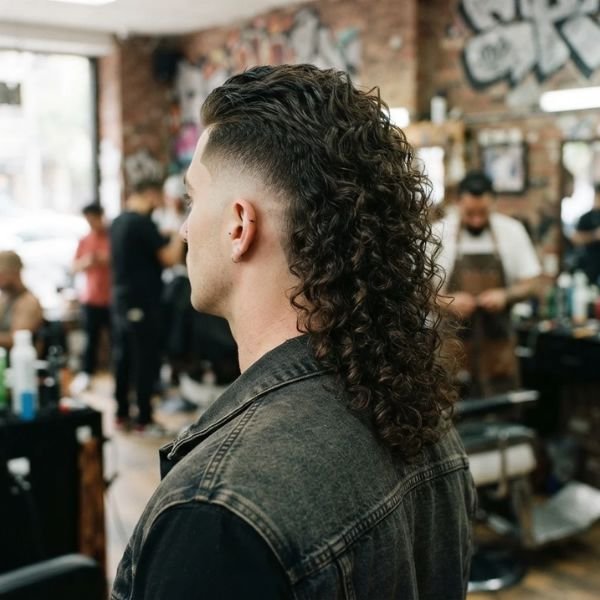
A perm uses a chemical solution to create curls in straight hair. Applied only to the back, it gives a loud contrast against the shaved top. Book a stylist who does perms, because it takes a few hours.
Ask for: a perm on the back section only, with a clean skin fade around it.
8. Zero Guard Skullet on Dark Hair

A zero guard clipper setting leaves almost no length, so dark hair shows a deep shadow on the scalp. That shadow makes the long back look richer by contrast. It reads best on black or dark brown hair.
Ask for: zero guard on top, a faded edge on the sides, and a long dark back.
Textured, Layered, and Soft Skullets
These eight styles trade the hard edge for movement.
9. Drop Fade Skullet
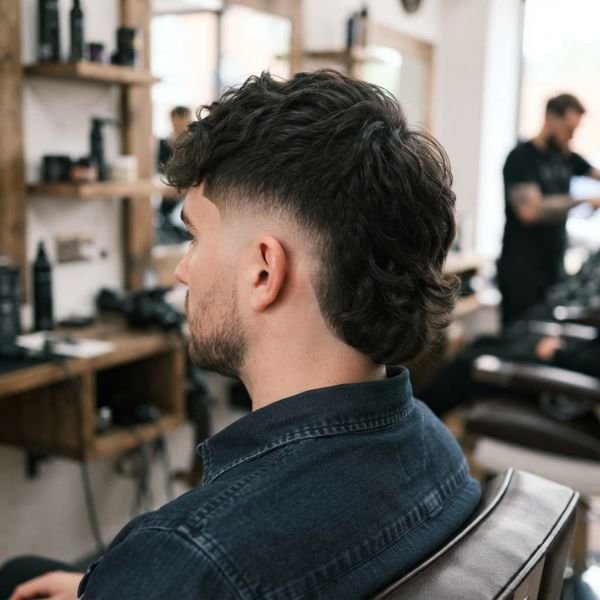
A drop fade curves down behind the ear instead of running straight around the head. It follows the shape of the skull and flows into the long back. The curve makes the transition look smoother.
Ask for: a drop fade with the curve behind the ear and a buzzed top.
10. Number 2 Guard Top with Textured Back
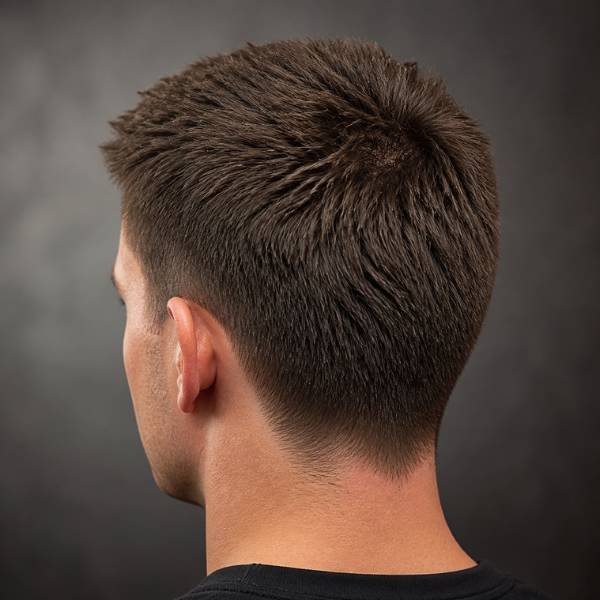
A number 2 guard leaves about a quarter inch (6 mm) of hair. That keeps a hint of color on top instead of bare scalp. It is a friendly starting point for first timers.
Ask for: a number 2 on top, a textured back, and tapered sides.
11. Layered Skullet Back
Layers are different lengths cut into the back so the hair stacks and flicks outward. They remove weight and stop the back from lying flat.
Ask for: long layers through the back and a shaved or short top.
12. Curly Skullet
Curls take over the back and bounce past the neckline. Keep the top short so the curls become the focus. Curly hair shrinks when dry, so let the back grow longer than you think you need.
Ask for: my curls cut dry, with extra length left in the back.
13. Skullet with Undercut Transition
An undercut leaves a sharp step between the short sides and the longer hair, with no blending. It creates a strong, disconnected shape. Skullet fans pick it for the punk edge.
Ask for: undercut sides, a buzzed top, and a long back with a visible disconnect.
14. Skullet with Faded Neckline
The nape can end in a faded edge instead of a hard block. That softens the line where the short sides meet the long back.
Ask for: a faded neckline instead of a blocked one, with the nape tapered.
15. Skullet with Side-Swept Back
Hair at the back is brushed or cut to fall toward one side. A little product holds the sweep. The slight angle gives the style a relaxed, 90s feel.
Ask for: the back cut slightly longer on one side so it sweeps.
16. Salt and Pepper Skullet
Gray hair mixed with darker strands turns the long back into a feature. Silver in the mullet portion looks distinguished. A purple toning shampoo helps keep gray from turning yellow.
Ask for: my natural gray kept, the top tidied, and a long back with soft ends.
Statement and Modern Skullet Variations
This last group covers special cases, from the cautious beginner cut to the full shaggy back.
17. Short Back Entry-Level Skullet
Cut the back to about two to three inches. It is the lowest risk way to test the shape.
Ask for: a short back, one to two inches past the collar.
18. Skullet Adjusted for Square and Round Faces
Round faces gain from a taller fade and a longer back, which stretch the face visually. Square faces suit a lower fade with a softer, wavy back to ease the jaw. The face shape table below gives the full rules.
Ask for: the fade height adjusted for my face shape.
19. Skullet with Highlighted Back
Bleach or color applied only to the back creates a two tone effect. Blonde and copper pop against a dark base. Bleach weakens hair, so use a bond repairing treatment afterward.
Ask for: highlights on the back section only.
20. Taper Fade Skullet
A taper fade shortens hair gradually and leaves the neckline and sideburns longer than a skin fade does. It looks neat and suits stricter workplaces.
Ask for: a taper on the sides, a short top, and a long back.
21. Skullet with Fringe Back
A short fringe, meaning a small fall of hair over the forehead, stays on top while the back grows long. It bridges the gap between a skullet and a regular mullet. It also helps cover a high forehead.
Ask for: a short fringe kept, faded sides, and a long back.
22. Skullet with Fade into Beard
The sideburn fade connects straight into the beard, so there is no gap. The shaved top, faded beard, and long back look like one planned design. A beard fade keeps the jaw outline sharp.
Ask for: my sideburns blended into my beard with a smooth fade.
23. Soft Skullet with Textured Back
A soft skullet uses a slightly longer top, such as a number 3 or 4, and a feathered back. It skips the harsh contrast of a skin fade. It suits people who prefer a gentler silhouette.
Ask for: a number 3 or 4 on top and a feathered, textured back.
24. Skullet for a Balding Crown
A shaved top hides thinning because there is no visible contrast between thick and thin patches. Many men with receding hair own the bald look and keep the length at the back. The long hair turns hair loss into a style choice.
Ask for: the top clipped short and even, faded sides, and a long back.
25. Skullet with Long Shaggy Back
The back falls well past the collar, with choppy, uneven ends. It is the closest thing to a classic rock mullet.
Ask for: shaggy, uneven ends with as much length as possible kept.
Which Skullet Fade to Ask For
| Fade type | Where it starts | Look | Best for |
| High skin fade | Temples | Sharp, dramatic | Confident, bold looks |
| Mid fade | Just above the ear | Balanced | Most people |
| Low fade | Near ears and nape | Subtle | First timers |
| Drop fade | Curves behind the ear | Smooth, flowing | Rounded heads |
| Taper fade | Neckline and sideburns | Neat, classic | Office settings |
Face Shape Guidance for the Skullet
| Face shape | Best fade | Back length |
| Round | High fade | Longer, to add length |
| Square | Low fade or taper | Medium, with waves |
| Oval | Any fade | Any length |
| Heart | Mid fade | Medium, to balance the chin |
| Oblong | Low fade | Shorter, to avoid extra height |
How to Grow a Skullet
Hair grows about half an inch per month, so the back is the part that takes time. Follow these steps.
1. Let the back grow to three or four inches. That takes roughly four to six months from a short cut.
2. Keep the top clipped or shaved the whole time. This protects the contrast.
3. Visit your barber every few weeks for the fade and nape cleanup.
4. Trim the ends every eight weeks to avoid split ends.
5. Use a leave in conditioner to control frizz during the awkward stage.
What to Tell Your Barber
Clear words prevent bad surprises. Bring a photo, and cover these points:
• Top: shaved, zero guard, or number 2.
• Fade: high, mid, low, drop, or taper, and whether it goes to skin.
• Back length: give inches or point to a spot on your neck.
• Back shape: blunt, layered, wavy, or shaggy.
• Neckline: blocked, rounded, or faded.
• Line-up: yes or no.
A sample script: “I want a skullet. Mid skin fade, number 2 on top, and keep the back about four inches with light layers. Fade the neckline.”
Maintenance and Care
A skullet looks best when both halves get attention. The short part needs frequent visits, and the long part needs hair care.
• Fade upkeep: book a cleanup every two to three weeks.
• Back trims: every six to eight weeks.
• Washing: shampoo the back two or three times a week and condition it every time.
• Styling: a sea salt spray or matte paste adds texture to the back.
• Scalp care: wear SPF on the shaved top, since the sun hits bare skin directly.
For more style ideas, Man of Many’s skullet guide shows other takes on the cut.
When a Skullet Is Not the Right Choice
The skullet is loud, and it does not fit every situation. Think twice in these cases:
• Your workplace has a strict grooming code.
• The hair at your back is very fine or grows slowly.
• You will not visit a barber every few weeks.
• You have scars or a sensitive scalp that a close shave would irritate.
• You want a low profile look.
If you are on the fence, try the short back entry-level skullet first. It is easy to undo.
FAQ
Is a Skullet the Same as a Mullet?
No. A mullet keeps hair on top, while a skullet shaves or buzzes the top and keeps length only at the back.
Can Any Face Shape Pull Off a Skullet?
Yes, with adjustments. Fade height and back length change the balance for round, square, and oblong faces.
How Long Does the Back Need to Be Before Getting a Skullet?
About three to four inches. That takes roughly four to six months to grow from a short cut.
How Often Does a Skullet Need Maintenance?
Book a fade cleanup every two to three weeks and trim the back every six to eight weeks.
What Products Does a Skullet Need?
Shampoo, conditioner, a matte paste or sea salt spray for the back, and SPF for the shaved scalp.
Does a Skullet Work with Thinning Hair?
Yes. A shaved top hides thinning by removing the contrast between thick and thin patches.
Can Women Get a Skullet?
Yes. The cut works on any gender, and musicians like FKA twigs and Doja Cat have worn it.
How Long Does It Take to Grow Out of a Skullet?
Usually six to twelve months for the top to catch up, though trimming the back shortens the process.
Conclusion
The skullet is a mullet stripped to its core: a clean top and a long back. Choose a fade that matches your comfort, shape the back for your hair type, and give your barber exact words and a photo. Start with a low fade or a short back if you are nervous, then go bolder once you like the shape. Which of the 25 styles will you try first?

