
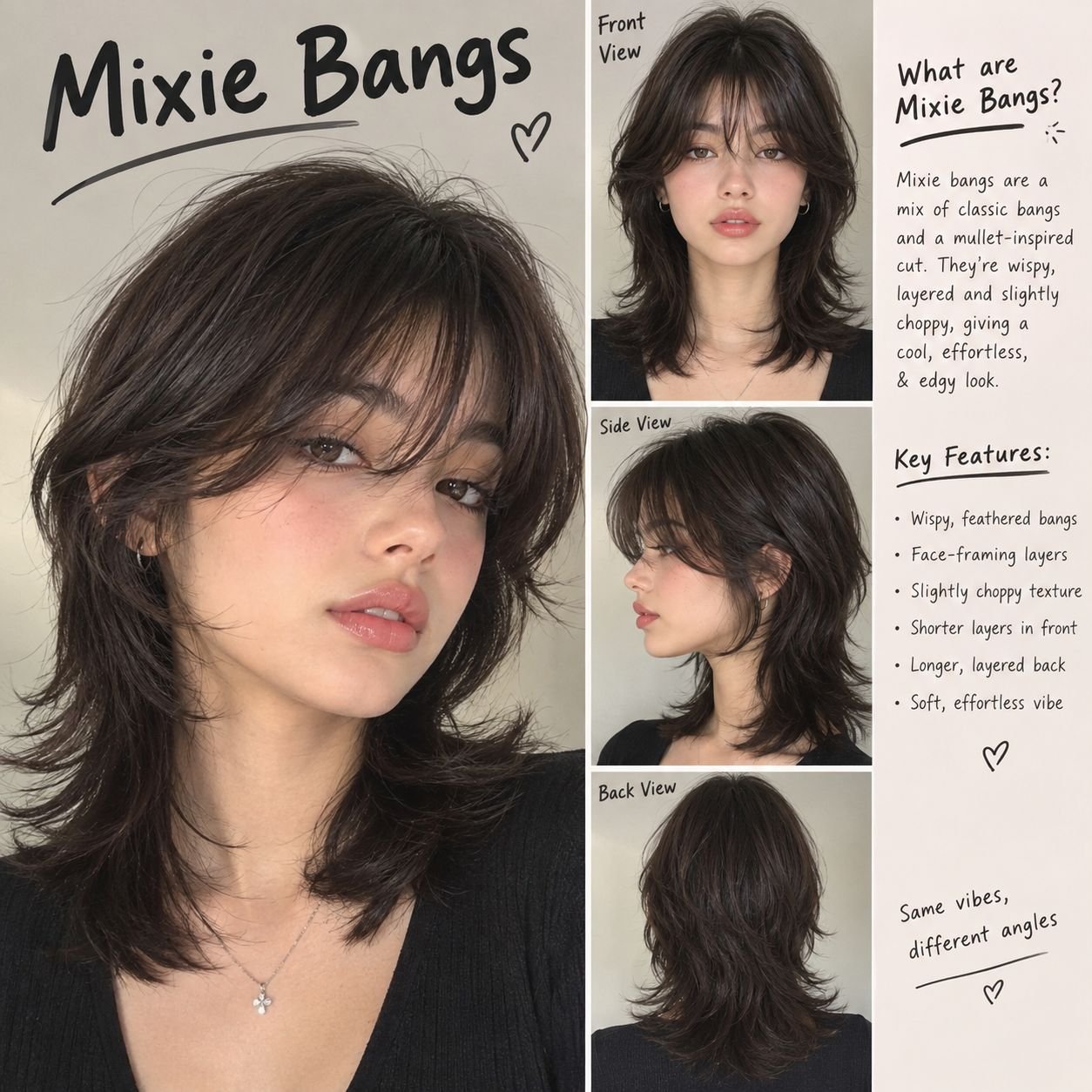

Mixie bangs are a stylish way to add personality, texture, and movement to a modern haircut. Combining the playful appearance of a pixie cut with the longer layers of a mullet, this fringe style offers a fresh look for people who enjoy short, expressive hairstyles. From soft, wispy bangs to bold, choppy fringes, there are several ways to customize the look. The right style depends on your face shape, hair length, natural texture, and daily routine. Whether you have a round, oval, square, or heart-shaped face, understanding the different options can help you choose flattering mixie bangs that suit your features and personal style.
Mixie bangs are also versatile enough to complement short crops, medium-length hair, and some longer, layered hairstyles. You can wear them messy and textured for an effortless appearance or style them neatly for a more polished finish. Before visiting a salon, it helps to understand how this fringe works, why it is popular, and which variations may suit your hair. This guide explores the essential details to help you choose, style, and maintain mixie bangs with confidence.
What Are Mixie Bangs?
Mixie bangs are textured bangs commonly worn with a mixie haircut, which combines the short, cropped structure of a pixie cut with the longer, layered back of a mullet. The fringe adds definition around the forehead and eyes while connecting the shorter front sections with the rest of the hairstyle.
Unlike traditional blunt bangs, mixie bangs often feature uneven ends, feathered layers, and a relaxed finish. They can be short and choppy, lightly swept to one side, or cut into wispy pieces that allow some forehead visibility. This flexibility makes them suitable for people who want a haircut that feels modern without looking overly structured.
The appearance of mixie bangs depends on how the stylist shapes the fringe. Shorter pieces can create a bold, edgy look, while longer strands provide a softer frame around the face. The hair’s natural texture also affects the result. Straight hair can emphasize the shape, wavy hair adds natural movement, and curly hair creates a fuller, more playful fringe.
Mixie bangs are not limited to one specific length or finish. They can be customized to suit different preferences, from understated and feminine to dramatic and alternative. However, the classic look works best when the bangs complement the overall mixie haircut rather than appearing disconnected from the crown and sides.
Why Are Mixie Bangs So Popular?
Mixie bangs are popular because they combine individuality with styling flexibility. The mixie haircut already has a distinctive silhouette, and adding textured bangs makes the style more expressive. It offers an alternative to traditional bobs, pixie cuts, and longer hairstyles for people who want something different.
Another reason for their appeal is the variety of looks available. Wispy mixie bangs can create a soft, relaxed appearance, while choppy or micro bangs provide a more dramatic finish. Side-swept versions introduce movement and can make the hairstyle feel less severe. These variations allow people to personalize the cut without losing its recognizable character.
Mixie bangs can also work with natural hair texture. Instead of requiring every strand to sit perfectly in place, many versions are designed to look slightly tousled. A small amount of texturizing spray or styling cream can help define the fringe and highlight its layers.
The haircut is particularly attractive to people who appreciate modern, fashion-forward styles. It can look playful, creative, and effortless while still being adaptable to everyday settings.
However, the style is not completely maintenance-free. Short bangs may need regular trims, and certain hair growth patterns can affect how the fringe falls. Its popularity comes from its distinctive appearance and adaptability, but choosing a version that fits your lifestyle is essential for a satisfying result.
Different Types of Mixie Bangs
There are several types of mixie bangs, and each creates a different effect. Choosing the right variation helps you match the fringe to your preferred style, face shape, and hair texture.
Wispy Mixie Bangs
Wispy mixie bangs feature lightweight strands that gently cover part of the forehead. They create a soft, airy appearance and work well for people who want texture without a thick fringe. This option can also be easier to blend into the surrounding layers as the hair grows.
Choppy Mixie Bangs
Choppy mixie bangs have uneven ends and clearly separated sections. They give the haircut a bold, edgy character and emphasize the layered structure of a mixie. A little texturizing paste can help define the individual pieces.
Side-Swept Mixie Bangs
Side-swept mixie bangs fall diagonally across the forehead. They create movement and can be a good option for people who prefer a less compact fringe. The length can vary depending on whether you want a subtle sweep or a more noticeable angle.
Micro Mixie Bangs
Micro mixie bangs sit well above the eyebrows, creating a striking and fashion-forward look. They draw attention to the eyes and forehead, so it is worth discussing the desired length carefully with your stylist before cutting.
Curly Mixie Bangs
Curly mixie bangs are shaped around the hair’s natural curl pattern. They provide volume and movement while maintaining the relaxed character of the mixie haircut. A stylist should account for curl shrinkage to avoid making the fringe shorter than intended.
Each variation can be customized. Bring reference photographs to your appointment and explain how much styling you are comfortable doing each morning.
Mixie Bangs for Women
Mixie bangs offer women a stylish way to express their personality through a modern, textured haircut. The combination of a short pixie-inspired front and longer mullet-inspired layers creates a distinctive silhouette that feels both playful and fashionable. Depending on the fringe length and layering technique, the look can be soft, feminine, edgy, or bold.
One of the best features of this hairstyle is its adaptability. Women who prefer a subtle appearance can choose soft, wispy bangs that blend naturally into the sides. Those who enjoy a more daring style can opt for choppy fringe, shorter layers, and a slightly messy finish. Side-swept mixie bangs are another excellent choice for creating movement without making the forehead the main focus.
Hair color can also enhance the final appearance. Natural shades such as brunette, black, and blonde highlight the haircut’s shape, while copper, burgundy, or contrasting highlights can emphasize the textured layers. You do not need a dramatic color change to make the hairstyle stand out, because the cut itself provides plenty of character.
For everyday styling, a lightweight texturizing spray or styling cream can help separate the fringe and create natural movement. Women with straight hair may prefer a little extra texture, while those with wavy or curly hair can work with their natural pattern.
Before getting the haircut, consider how much time you want to spend styling your hair. A well-customized mixie should complement your features and fit comfortably into your daily routine.
Mixie Bangs for Round Faces
Mixie bangs can look attractive on round faces when the fringe and surrounding layers are shaped to create balance. Round faces generally have softer contours, fuller cheeks, and a similar width and length. The right haircut can introduce angles, add height, and emphasize the eyes or cheekbones without hiding the face’s natural features.
Side-swept mixie bangs are a useful option because their diagonal shape introduces movement across the forehead. This can create a more elongated visual effect than a heavy, straight fringe. Choppy bangs are another possibility, especially when the stylist leaves some uneven pieces around the temples.
Volume at the crown can also help balance the overall silhouette. Short, textured layers create height, while slightly longer side sections can frame the cheeks. However, the goal is not to make a round face look completely different. It is to create a haircut that feels harmonious and suits your preferred appearance.
Here are some useful styling ideas for round faces:
- Choose side-swept bangs: They create a diagonal line and add visual movement.
- Add gentle crown volume: Lifted roots can make the hairstyle appear taller.
- Keep texture around the temples: These pieces help connect the fringe with the sides.
- Consider choppy ends: Uneven layers create a relaxed, modern appearance.
- Avoid choosing a fringe based on face shape alone: Your forehead, hairline, and natural growth pattern also matter.
If you prefer short bangs, you can still try a micro fringe with a round face. Ask your hairstylist to balance the fringe with the crown and side layers. A customized cut will generally look more natural than following rigid hairstyle rules.
Mixie Bangs for Oval Faces
Oval faces are often considered versatile for hairstyling because their proportions can accommodate many fringe lengths and shapes. Mixie bangs are a particularly interesting option because they highlight the eyes while adding texture and personality to the overall haircut.
If you have an oval face, you can experiment with wispy, choppy, side-swept, or micro mixie bangs. Each variation produces a different effect. Wispy bangs create a softer appearance, while choppy fringe emphasizes the haircut’s edgy character. Micro bangs can make the look more dramatic by drawing attention to the eyebrows and eyes.
You can also choose a fringe based on your hair texture. Straight hair works well with clearly defined, uneven ends, while wavy hair adds natural movement. Curly hair can create a fuller, more expressive fringe when cut to accommodate the curl pattern.
The surrounding layers are equally important. Shorter pieces around the crown give the haircut a classic pixie-inspired shape, while longer sections at the nape maintain the mullet influence. This contrast is what distinguishes a mixie from a conventional short crop.
For a softer everyday appearance, style the fringe loosely with your fingers and use a small amount of lightweight product. For a more polished finish, direct the bangs into position with a blow-dryer and a small brush.
Although oval faces offer plenty of styling possibilities, you should still consider your forehead height, hair density, and personal preferences. The most flattering mixie bangs are those that enhance your features without requiring an uncomfortable daily styling routine.
Mixie Bangs for Square Faces
Square faces are commonly characterized by a relatively broad forehead, prominent cheekbones, and a defined jawline. Mixie bangs can complement these features by introducing soft texture and movement around the forehead and temples.
Wispy mixie bangs are a good starting point if you prefer a gentle, understated appearance. Their lightweight structure avoids creating a solid horizontal line across the forehead. Feathered or side-swept bangs can also soften the overall silhouette while maintaining the modern character of the mixie haircut.
The length of the side sections makes a difference, too. Leaving a few slightly longer pieces around the temples and sides can help frame the face. Meanwhile, textured layers at the crown add movement and prevent the haircut from looking too uniform.
If you prefer a bolder appearance, choppy mixie bangs can work beautifully on square faces. The key is to balance the short fringe with the rest of the haircut. Uneven ends and separated strands can create an intentional, edgy finish without making the style look overly rigid.
For styling, use a lightweight cream or texturizing spray to define the fringe. Direct the hair slightly to the side if you want a softer effect, or leave it naturally tousled for a more relaxed look.
When discussing the haircut with your stylist, explain whether you want to emphasize your jawline or create a softer frame. A professional can adjust the fringe length, side layers, and crown volume to achieve the result you prefer.
Ultimately, square faces can suit many versions of mixie bangs. The best choice depends on how you want the haircut to frame your individual features.
Mixie Bangs for Heart-Shaped Faces
Heart-shaped faces typically feature a broader forehead, noticeable cheekbones, and a narrower chin. Mixie bangs can complement this shape by adding texture around the forehead and creating a balanced transition toward the lower face.
Wispy mixie bangs are a popular choice for a softer appearance. Their separated strands allow some forehead visibility while keeping the fringe lightweight. Side-swept bangs can also work well because they introduce an angled line rather than a strong horizontal edge.
The side layers are important when creating a balanced mixie. Slightly longer pieces near the temples and cheeks can connect the fringe with the rest of the haircut. Meanwhile, the textured back adds the signature mullet-inspired shape without making the front look disconnected.
If you enjoy bold hairstyles, micro mixie bangs can provide a striking alternative. This version highlights the upper part of the face and creates a more dramatic look. However, very short bangs are a personal style choice rather than a requirement for heart-shaped faces.
Your hair texture should also influence the decision. Straight hair can create a defined fringe, while wavy hair offers softness and movement. Curly hair can produce a fuller appearance, provided the stylist accounts for natural shrinkage.
For everyday styling, avoid using too much heavy product near the forehead. A lightweight styling cream can help maintain separation without flattening the bangs.
When visiting the salon, bring photographs of mixie hairstyles you like and explain how much forehead coverage you prefer. Your stylist can then adjust the length and texture to complement your features.
Mixie Bangs for Short Hair
Short hair is the most natural match for mixie bangs because the fringe connects directly with the cropped layers of a classic mixie haircut. The result combines a pixie-inspired front with a longer, textured back, creating a shape that feels modern and expressive.
One of the main advantages of this combination is that it does not require long hair to make an impact. Even a relatively short haircut can look distinctive when the bangs, crown, and nape have carefully planned proportions.
There are several ways to wear mixie bangs with short hair. Choppy bangs create an edgy, piecey finish, while wispy fringe offers a softer appearance. Side-swept bangs can make the haircut feel more relaxed, and micro bangs provide a bold alternative for people who enjoy statement hairstyles.
Short hair can also be easier to manage because it generally requires less washing and drying time than longer styles. However, the fringe may need regular shaping to maintain the intended look. Shorter layers can become noticeably different as the hair grows, so occasional salon visits may be helpful.
For styling, apply a small amount of texturizing spray to damp hair and allow it to air-dry if your natural texture permits. If you want extra volume, use a blow-dryer to lift the roots and direct the fringe. Finish by separating a few strands with your fingers.
When asking for this haircut, explain how short you want the sides and crown to be and how much length you want to preserve at the back. These details help your stylist create a balanced mixie rather than an ordinary pixie cut.
Mixie Bangs for Medium-Length Hair
Medium-length hair offers flexibility for people who want mixie bangs without committing to an extremely short haircut. The fringe can be combined with shorter layers around the crown while the remaining hair maintains more length.
This variation creates a softer interpretation of the traditional mixie. The shorter front sections provide the recognizable pixie-inspired appearance, while longer layers at the back introduce the mullet influence. Depending on how the hair is cut, the result may look more like a shaggy mixie or a grown-out hybrid style.
Wispy bangs are particularly suitable for a softer finish. They blend naturally with medium-length layers and can be styled forward or slightly to the side. Choppy bangs work well if you prefer more definition, while longer, side-swept fringe provides a less dramatic option.
Medium-length hair also allows you to experiment with different textures. Natural waves can emphasize the layered shape, while straight hair can highlight the contrast between the short crown and longer back. If your hair is thick, your stylist may remove some weight strategically to improve movement without making the ends look sparse.
For daily styling, use a lightweight product to define the fringe and keep the longer layers manageable. You can air-dry the hair for a relaxed finish or use a blow-dryer to direct the front sections.
Before making the change, discuss how much length you want to preserve. A medium-length mixie can be customized to look subtle or dramatic, making it a useful option for people who want to explore this hairstyle gradually.
Mixie Bangs for Long Hair
Mixie bangs can also be incorporated into long hair, although the result differs from the traditional short mixie haircut. Instead of cropping the entire front and crown, a stylist can introduce shorter, textured layers and a mixie-inspired fringe while preserving substantial length at the back.
This approach is suitable for people who enjoy the distinctive appearance of mixie bangs but are not ready to lose their long hair. It creates a contrast between the shorter pieces around the face and the longer lengths behind them.
Wispy mixie bangs are a useful option for long hair because they introduce texture without making the fringe appear too heavy. Side-swept bangs can blend into face-framing layers, while choppy fringe creates a stronger, more alternative appearance.
Long hair can also provide more styling options. You may wear it naturally loose, add waves to emphasize the layers, or tie the longer sections back while leaving the bangs around your face. These choices make the look adaptable to different occasions.
However, it is important to understand that a long hairstyle with mixie-inspired bangs is not necessarily a classic mixie. The traditional haircut has a noticeably shorter pixie-like crown and longer mullet-inspired back. Preserving long hair throughout may create a modified version rather than the original silhouette.
Before your appointment, show your stylist photographs that demonstrate both the fringe and the desired back length. Explain whether you want a subtle layered hairstyle or a more noticeable pixie-mullet effect.
With the right proportions, mixie bangs can add individuality and movement to long hair while allowing you to preserve the length you enjoy.
Conclusion
Mixie bangs are a stylish and versatile choice for anyone who wants to add texture, movement, and personality to their hairstyle. From wispy and side-swept fringes to bold, choppy cuts, there are many ways to customize this look for different face shapes, hair types, and lengths. Whether you have a round, oval, square, or heart-shaped face, choosing the right fringe can help highlight your features and create a balanced appearance. Mixie bangs also work with short, medium-length, and long hairstyles, allowing you to experiment with this modern trend according to your preferences.
Before choosing mixie bangs, consider your natural hair texture, daily styling routine, and preferred level of maintenance. Consult a professional hairstylist to find the right fringe length and layering technique for your features. With the right cut and simple styling methods, you can enjoy a fresh, confident look that reflects your personality. The best mixie bangs are those that complement your individual style while making you feel comfortable and confident every day.

