
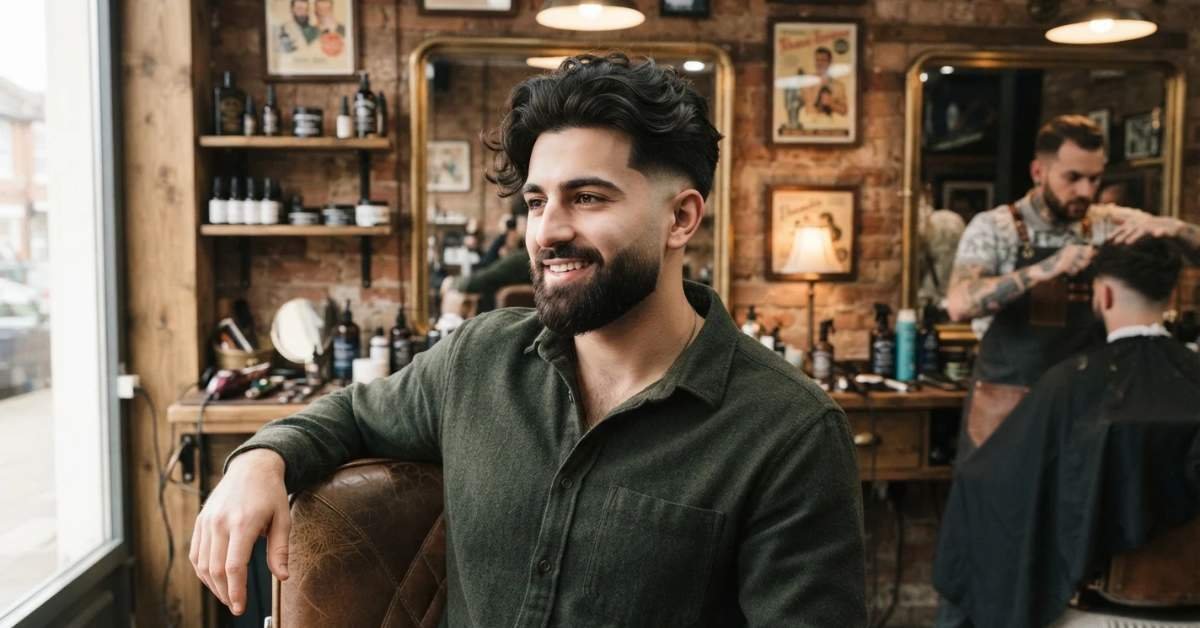

A low taper fade long haircut keeps real length on top while the sides and neckline shorten gradually, starting low near the ears and nape. It frames long hair with a clean outline and avoids a harsh shave. The result looks tidy enough for the office and relaxed enough for weekends.
It works on straight, wavy, curly, and thick hair, and it pairs with flow, slick backs, man buns, and ponytails. Expect a barber visit every three to five weeks, plus regular trims on top. This guide covers 20 styles, face shapes, products, barber instructions, upkeep, comparisons with similar cuts, and the mistakes that ruin the shape.
What Is a Low Taper Fade Long Haircut?
It is a disconnected or blended long hairstyle with a subtle taper at the sideburns, behind the ears, and along the nape. The top stays long, usually enough to tuck behind the ears or tie back.
Think of it as a polished frame around a relaxed center. The length keeps its personality, and the taper keeps it neat. Key traits include:
• Length on top from ear length to shoulder length
• A low starting point for the taper, just above the ear
• Soft blending that grows out slowly without a harsh line
• Flexible styling for formal and casual settings
What Is a Low Taper Fade?
A taper fade is a men’s cut where hair gets gradually shorter around the sideburns and neckline while the top stays long enough to style, as Man of Many explains. The word “low” means the shortening begins just above the ears and curves around the back of the neck.
A barber builds it with clippers and guard sizes such as #1, #2, and #3, then blends the steps with a scissor-over-comb or clipper-over-comb technique. A taper usually leaves some hair at the shortest point. A skin fade goes down to the bare skin. That is why a low taper feels softer and more forgiving than a high fade.
What Makes Long Hair Different?
Long hair has weight, and weight changes how a haircut sits. Hair falls, bends, and swings. A taper that looks sharp on a short crop must be planned differently when the top reaches your ears or shoulders.
Long hair also needs more moisture, detangling, and shape control. Growth takes months, so one bad cut costs real time. Choose a barber who understands length, not just clipper work.
Why Combine Long Hair With a Low Taper?
The pairing solves the two biggest problems of long hair: bulk and messy edges. You keep the length you worked for while the sides stay light.
• Cleaner neckline, which helps man buns and ponytails look neat
• A smoother grow-out than a high fade or undercut
• Easy to switch between loose, slicked, and tied styles
Who Should Try This Haircut?
Almost anyone can wear it. Barber JC Chavez of Church Barber in San Francisco told Prose that a low taper suits all hair types. It is a strong match for:
• Men growing out short hair who want a tidy transition
• Men with wavy, curly, or thick hair that needs side weight removed
• Professionals who want long hair that still looks groomed
• Beard wearers who want the sideburns to blend into facial hair
If you want a high contrast, bare skin look on the sides, a high fade or undercut fits better.
Top 20 Best Low Taper Fade Long Haircut Styles
Each style below keeps the taper low and the top long. Pick the one that matches your hair type, daily routine, and comfort level with styling.
Classic Low Taper Fade Long Hair
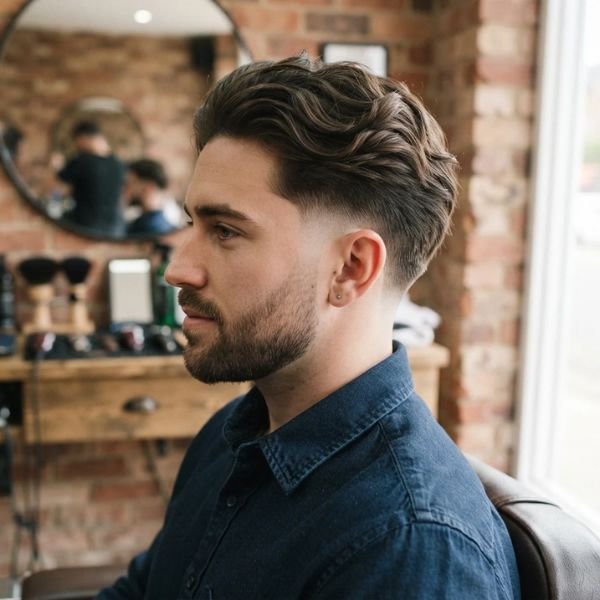
The base version. The top falls naturally to the ears or collar, with a low taper around the sides and neck. It needs little product and suits first timers.
Best for: men who want an easy, balanced look.
Low Taper Fade Long Hair with Middle Part
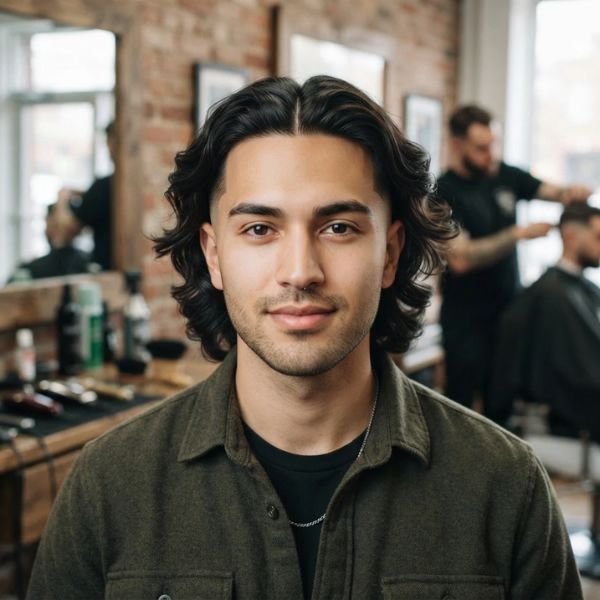
A center part splits the hair evenly and lets it fall on both sides. It has a 90s feel and gives a symmetrical frame. Straight and wavy hair work best.
Best for: oval and square faces.
Low Taper Fade Long Hair with Curtains
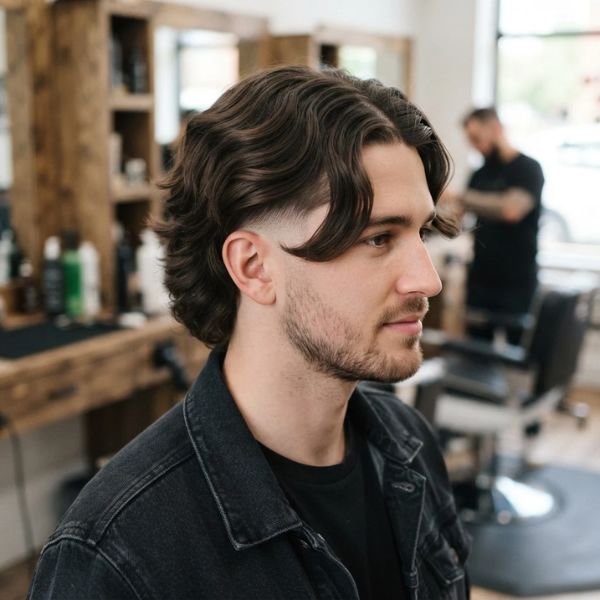
Curtain hair parts in the middle and sweeps outward over the forehead. The taper keeps the sides from puffing out. Use a light cream and a blow dryer for shape.
Best for: fine to medium hair.
Low Taper Fade Long Hair Slick Back
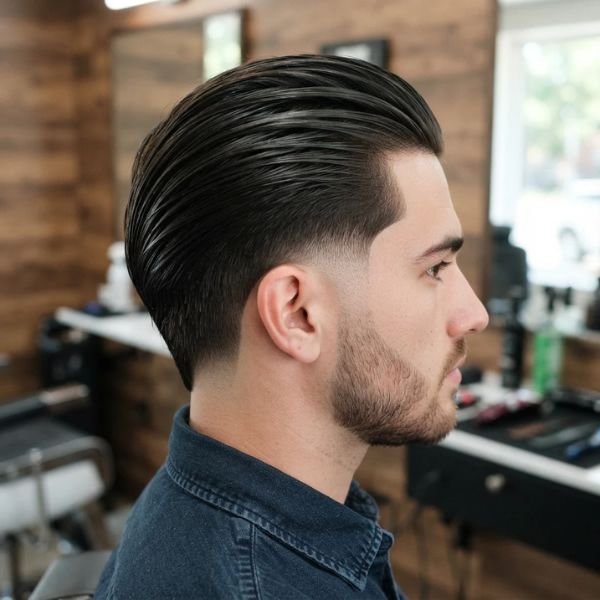
Hair is combed straight back with pomade or gel. The clean taper sharpens the edges around the ears. It reads formal and confident.
Best for: events and office wear.
Low Taper Fade Long Hair with Flow
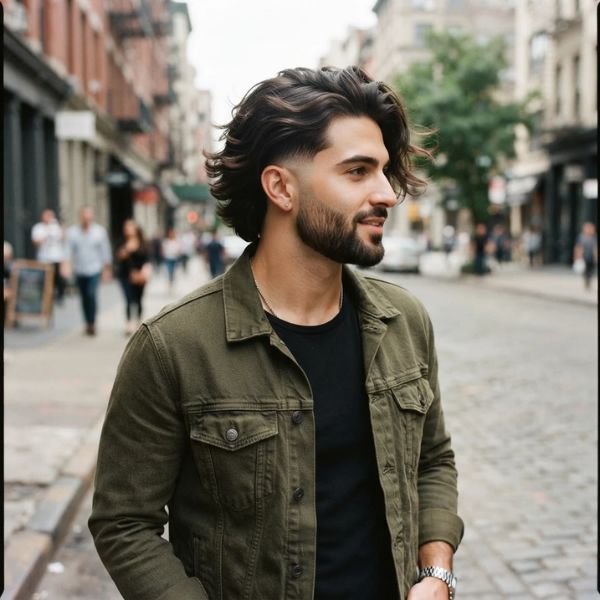
Flow means long, layered hair that moves with the head. Hair stylists describe this as a swept look that sits at the ears or below. Use sea salt spray for natural movement.
Best for: men who want a relaxed, surfer style.
Low Taper Fade Long Wavy Hair
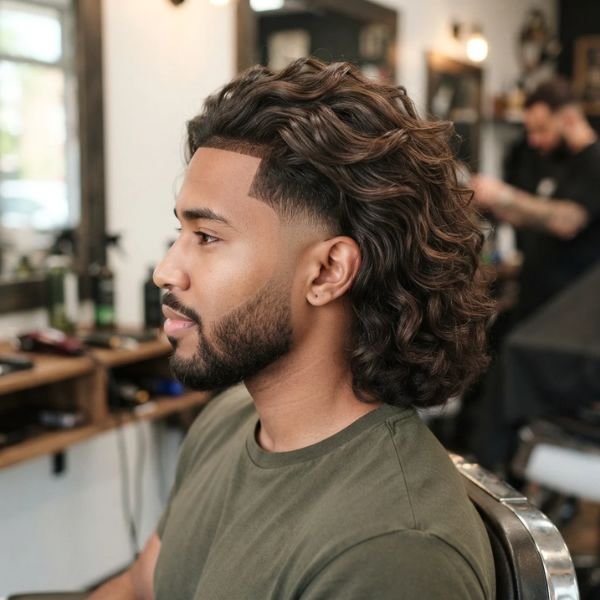
Natural waves add volume and texture. The taper removes bulk at the sides so the waves stay controlled. Skip heavy gel to keep the pattern soft.
Best for: wavy hair with medium density.
Low Taper Fade Long Curly Hair
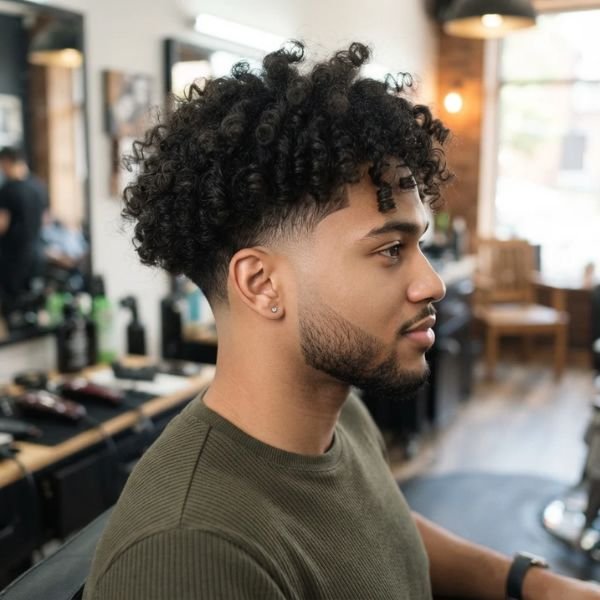
Curls shrink when dry, so keep the length generous. The taper stops the sides from widening. Apply leave in conditioner and a curl cream while the hair is damp.
Best for: type 3 curls and loose coils.
Low Taper Fade Long Straight Hair
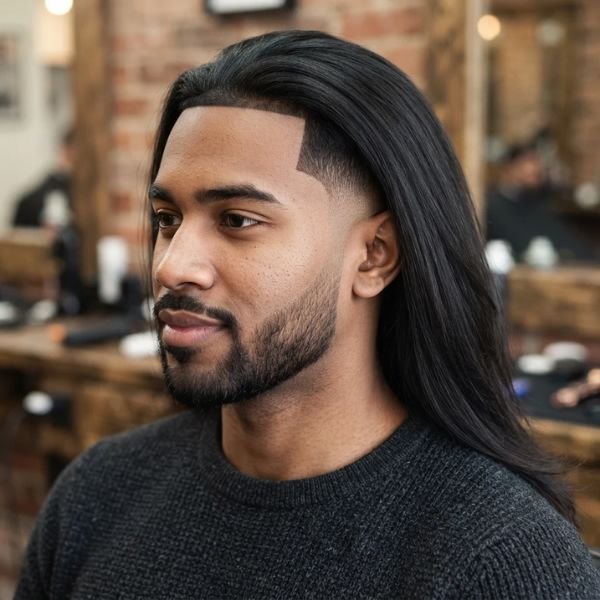
Straight hair shows every line, so the blend must be clean. A slight layer on top avoids a flat look. Add a pinch of texture powder for lift.
Best for: men who like a sleek finish.
Low Taper Fade Long Textured Hair
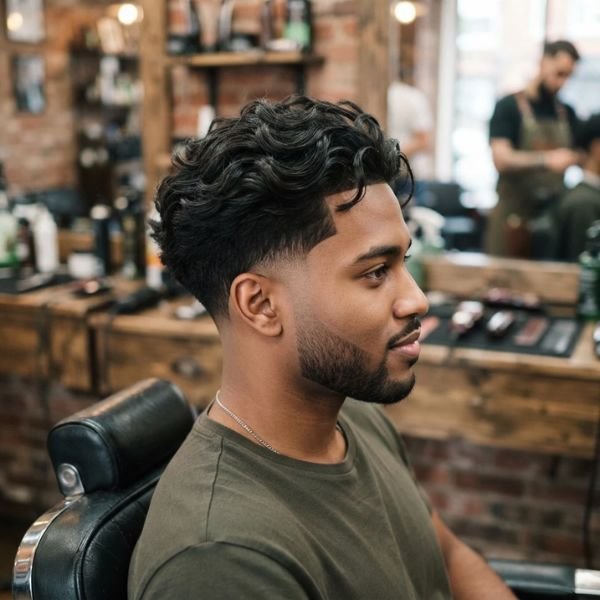
Choppy layers on top give an effortless, lived in shape. The taper keeps it from looking untidy. Matte clay does most of the work.
Best for: thick, medium to coarse hair.
Low Taper Fade Long Hair with Fringe
A long fringe falls over the forehead and can be swept to the side. It softens a strong forehead and adds a youthful edge. Trim it often to avoid eye contact issues.
Best for: round and long faces needing softness.
Low Taper Fade Long Hair with Quiff
The front is lifted up and back while the rest stays long. The taper makes the height look intentional. A blow dryer and strong hold paste are key.
Best for: men who want volume and presence.
Low Taper Fade Long Hair with Beard
The taper blends into the sideburns and continues into a trimmed beard. This keeps the face outline continuous. Use beard oil and a brush to keep it tidy.
Best for: men with a full or short boxed beard.
Low Taper Fade Long Hair Man Bun
Gather the hair on top into a bun. The taper removes loose side hair and stray neck strands. The look stays neat all day.
Best for: hair at least four to five inches long.
Low Taper Fade Long Hair Ponytail
A low or mid ponytail pairs well with a low taper because the neckline stays clean. Use a soft elastic to avoid breakage.
Best for: active men and gym days.
Low Taper Fade Long Hair with Layers
Layers remove weight and add shape without losing length. Forte Series notes that long layers on top bring natural movement while the taper sharpens the neck and ears. Ask for long, soft layers rather than short steps.
Best for: thick hair that feels heavy.
Low Taper Fade Long Hair with Messy Texture
A deliberately tousled finish with strands falling in different directions. Rough dry, then add paste with your fingers. It hides small imperfections between cuts.
Best for: casual, low effort styling.
Low Taper Fade Long Hair with Side Part
A deep side part gives asymmetry and a classic gentleman look. The taper adds structure to the shorter side. Comb it in while damp for the best hold.
Best for: formal settings and diamond faces.
Low Taper Fade Long Blonde Hair
Blonde color adds contrast against the tapered sides, especially with darker roots. Bleached hair is more fragile, so use a bond repair mask and purple shampoo.
Best for: men ready for color maintenance.
Low Taper Fade Long Thick Hair
Thick hair needs thinning and layering to avoid a bulky shape. The taper takes weight off the sides. Use a light cream so the hair does not stiffen.
Best for: dense hair that tends to puff up.
Modern Low Taper Fade Long Hair 2026
The 2026 take blends a soft taper with a textured, mullet leaning back and relaxed layers. It looks fashion forward without being extreme. A matte cream and a quick blow dry finish it.
Best for: men who want a current, trend aware look.
Best Hair Types for Low Taper Fade Long Hair
| Hair Type | Best Style Direction | Go To Product |
| Straight | Slick back, middle part, side part | Pomade or light paste |
| Wavy | Flow, curtains, messy texture | Sea salt spray or cream |
| Curly | Long curls with a clean taper | Curl cream and leave in conditioner |
| Thick | Layers, man bun, ponytail | Light cream or clay |
| Fine | Curtains, quiff with volume | Texture powder or mousse |
Best Face Shapes for Low Taper Fade Long Hair
Face shape decides how the length should fall. A low taper is a safe match for most shapes. Forte Series notes that a low taper suits oval, square, and diamond faces easily.
• Oval: nearly every style works, including slick back and middle part
• Square: soft flow or waves soften a strong jaw
• Round: add height with a quiff and keep sides slim
• Heart: a fringe or curtains balance a wider forehead
• Long: avoid too much height, choose fringe or layers
• Diamond: side part or textured flow keeps cheekbones in focus
How to Ask Your Barber for a Low Taper Fade Long Haircut
Clear instructions prevent regret. Man of Many suggests bringing a side profile and a back photo. Follow these steps:
1. Say you want a low taper, not a fade to skin.
2. Name the guard range, for example a #2 at the shortest point blending up to a #4.
3. Say the top should stay long and give the exact length you want to keep.
4. Ask for layers if your hair is thick or heavy.
5. Mention how you wear it: loose, tied, or slicked back.
6. Confirm the neckline shape: natural, rounded, or squared.
A simple script works well: “Low taper on the sides and back, keep the length on top, add soft layers, and I tie it back sometimes.”
How to Style Low Taper Fade Long Hair
Good styling takes about five minutes once you learn the routine.
1. Wash with a gentle shampoo and apply conditioner to the lengths.
2. Towel dry gently and apply a leave in product while the hair is damp.
3. Blow dry on medium heat using a round brush or your fingers.
4. Add a pea sized amount of styling product, warmed between your palms.
5. Shape the hair with a wide tooth comb, then set it with a light mist of spray.
Best Products for Low Taper Fade Long Hair
The right product depends on the finish you want. This list covers the essentials.
• Sea salt spray: adds grip and a natural, beachy bend
• Matte clay or paste: controls texture without shine
• Pomade: gives a polished finish for slick backs
• Curl cream or mousse: defines waves and curls
• Leave in conditioner and heat protectant: protect the length
• Beard oil: keeps facial hair soft if you wear a beard
Some hair stylists suggest pairing sea salt spray with styling powder for a natural finish, as seen in guides from Latest Hairstyles.
Low Taper Fade Long Hair Maintenance
The taper loses its shape before the length does. Plan your visits around the sides, not the top. Prose notes that a low taper can last longer than many other fades, which helps if you hate frequent trips.
| Task | How Often | Why It Matters |
| Barber cleanup of taper | Every 3 to 5 weeks | Keeps edges sharp |
| Trim ends or layers | Every 8 to 12 weeks | Prevents split ends |
| Deep conditioning | Once a week | Maintains softness |
| Shampoo | 2 to 4 times a week | Avoids dryness |
Low Taper Fade Long Hair vs Short Hair
Short hair needs more frequent cuts and less daily work. Long hair needs fewer cuts but more care. If you like grab and go simplicity, short wins. If you want styling options like buns and ponytails, long wins.
Low Taper Fade Long Hair vs Undercut
An undercut removes the sides sharply and leaves a clear disconnection from the top. A low taper blends gradually. Hair.com calls the dramatic contrast between long top and short sides a disconnected undercut.
Low Taper Fade Long Hair vs Middle Part
This is not a true rivalry, because a middle part is a styling choice and a low taper is a cutting technique. You can combine them. The taper supplies the clean sides, and the middle part supplies the face framing.
Low Taper Fade Long Hair vs Slick Back
Slick back is a way to style the top, while the taper shapes the sides. Together they create a formal, sharp look. Without the taper, a slick back can look heavy at the nape and ears.
Common Low Taper Fade Long Hair Mistakes
Most problems come from poor communication or rushed care. Avoid these:
• Asking for a “fade” and receiving a high skin fade by accident
• Letting the barber cut too much length from the top
• Skipping layers on thick hair and ending up with a bulky shape
• Using heavy gel that weighs long hair down
• Ignoring conditioner and heat protection
Final Thought
A low taper fade long haircut is one of the most practical ways to wear length in 2026. It keeps the sides clean, the neckline tidy, and the top free to move or stay tied back. Choose the style that fits your hair type and face shape, give your barber clear instructions, and keep a steady care routine.
Which of the 20 styles will you try first? Share your pick in the comments, and send this guide to a friend who is growing out his hair.
FAQ
What is a low taper fade long haircut?
It is a cut that keeps long hair on top while the sides and neckline shorten gradually from just above the ears.
How long should my hair be for a low taper fade?
Aim for at least three to four inches on top for styling, and more for buns or ponytails.
How often should I get a low taper fade touch up?
Every three to five weeks keeps the edges sharp, though some men stretch it a bit longer.
Does a low taper fade work on curly hair?
Yes. It removes side bulk while the curls on top keep their shape and length.
What is the difference between a low taper and a low fade?
A taper keeps some hair at the shortest point, while a low fade can go down to the skin.

