
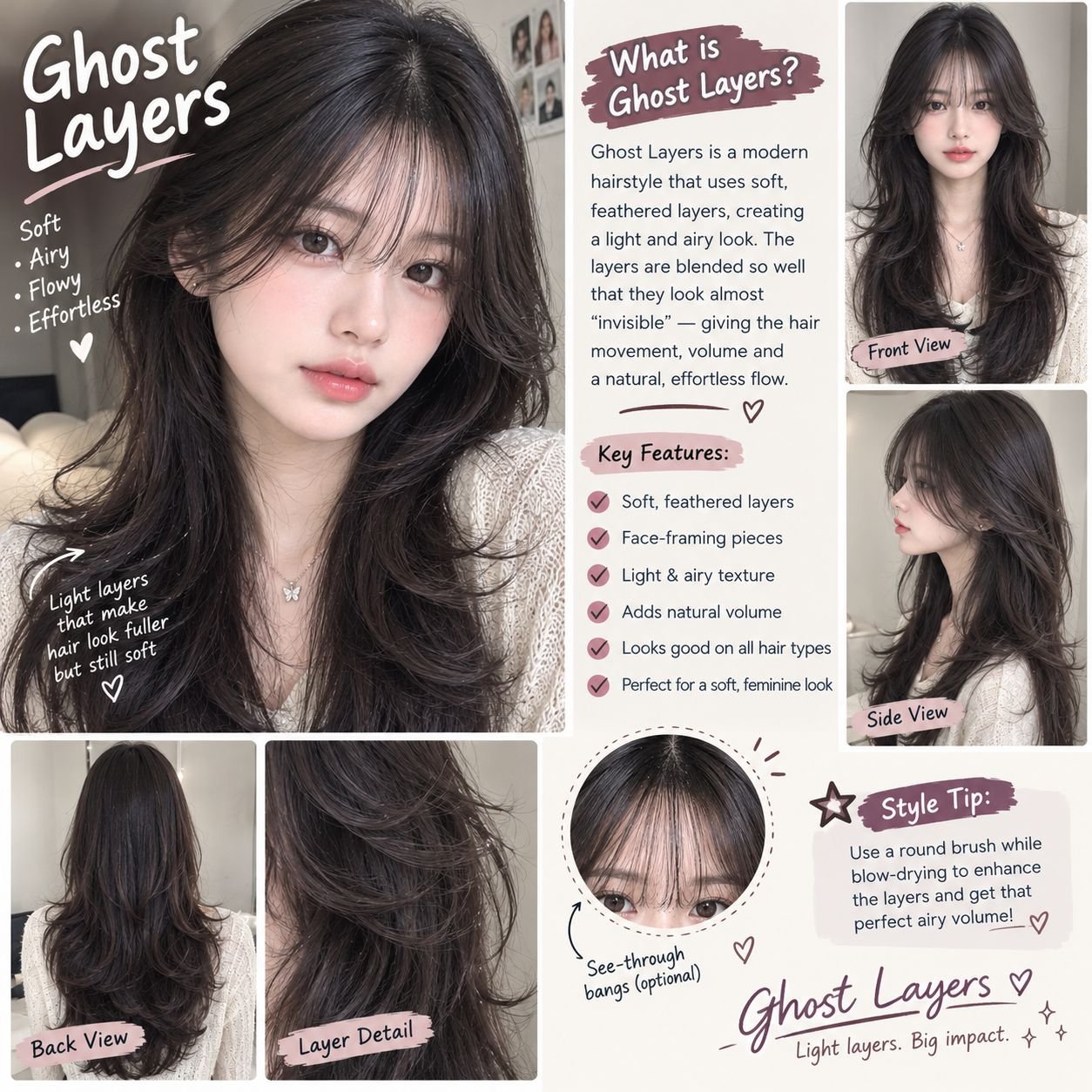

Ghost layers are a subtle haircutting technique that adds movement, softness, and natural volume without making the hair look heavily layered. Unlike traditional layers, which create visible differences in hair length, ghost layers are carefully blended beneath the top sections to maintain a fuller, more uniform appearance. This hairstyle is ideal for people who want to refresh their look without sacrificing length or dramatically changing their haircut. From short bobs to long, flowing hairstyles, ghost layers can be adapted to different hair textures, densities, and face shapes. Understanding their benefits, variations, and styling requirements can help you decide whether this modern, understated haircut suits your personal style and everyday hair-care routine.
What Are Ghost Layers?
Ghost layers are a haircutting technique that creates hidden layers underneath the surface of the hair. These shorter sections add movement and remove some excess weight while allowing the outer hair to maintain its natural shape. The result is a soft, flowing hairstyle that looks relatively uniform but feels lighter and more flexible.
Unlike traditional layered haircuts, ghost layers do not usually create obvious steps between different lengths. Instead, the stylist carefully blends shorter sections into longer strands. This makes the technique especially appealing to people who want more dimension without losing the appearance of thick, healthy ends.
How Do Ghost Layers Work?
The technique involves strategically cutting selected sections beneath the top layer of hair. A hairstylist considers the hair’s density, texture, length, and natural movement before deciding where the hidden layers should begin.
For example, someone with long, straight hair may find that their hairstyle looks flat or heavy. Adding subtle interior layers can help the hair move more freely while preserving its overall length. Similarly, people with thick hair may benefit from reducing excess bulk without creating a visibly choppy finish.
The main characteristics of ghost layers include:
- Hidden interior layers that blend naturally with the outer hair.
- A soft appearance with minimal visible separation between lengths.
- Improved movement without dramatically changing the haircut’s outline.
- Customizable results for different hair textures and styling preferences.
Ghost layers are not one fixed cutting method. Different hairstylists may use slightly different techniques depending on the desired result. The most important goal is to create movement while maintaining the fullness and shape the client wants.
Why Are Ghost Layers So Popular?
Ghost layers are popular because they offer a simple way to refresh a hairstyle without making a dramatic change. Many people love the appearance of long, full hair but find that their lengths feel heavy or lack movement. This haircut can provide a balance between a blunt style and a heavily layered look.
Another reason for their appeal is versatility. Ghost layers can complement many hair lengths and textures when the cutting technique is adjusted appropriately. They can also work with different styling routines, from smooth blowouts to natural waves.
Natural Volume and Movement
Ghost layers can make hair feel lighter and help it move more freely. By removing selected sections of interior weight, a stylist can reduce bulk and create a softer silhouette. The effect is often subtle, making the hairstyle suitable for people who prefer an understated appearance.
However, ghost layers do not guarantee dramatic root volume. Hair density, natural growth patterns, and styling methods all influence the final result.
A Modern and Low-Maintenance Look
Many people appreciate ghost layers because they can retain the appearance of a simple haircut while adding hidden dimension. The technique may also allow hair to fall more naturally without requiring elaborate styling every day.
Ghost layers are especially appealing to people who want to:
- Preserve their existing hair length.
- Add subtle texture without a choppy finish.
- Reduce excess weight in thick hair.
- Create movement in straight or slightly wavy hair.
- Maintain a polished appearance for everyday activities.
The best results come from choosing a version of ghost layers that suits your natural hair rather than expecting every hair type to respond identically.
Different Types of Ghost Layers
Ghost layers can be customized to create different levels of movement, volume, and texture. Although the main technique involves hidden interior layers, the final appearance depends on the hair’s length, density, and the stylist’s approach. Choosing the right variation helps you achieve a hairstyle that looks natural and suits your personal preferences.
Subtle Ghost Layers
Subtle ghost layers are ideal for people who want a small change without altering their overall haircut. The layers remain mostly hidden, allowing the hair to maintain a smooth, full appearance. This option works particularly well for people who prefer simple hairstyles that require little daily styling.
Voluminous Ghost Layers
Voluminous ghost layers focus on creating additional body and movement. They can help heavy hair feel lighter and give flat-looking hair a softer shape. A round-brush blowout or lightweight volumizing mousse can make the movement more noticeable.
Face-Framing Ghost Layers
Face-framing ghost layers introduce shorter sections around the front of the face while keeping most of the interior layering discreet. These sections can soften the appearance of the cheeks and jawline without requiring full bangs.
Long Ghost Layers
Long ghost layers are designed to preserve length while improving movement throughout the hair. They are particularly suitable for people who want flowing, long hair without the appearance of heavily layered ends.
When choosing a variation, consider how you normally wear your hair. If you prefer a sleek finish, subtle layering may be sufficient. If you want more movement, your stylist can customize the placement to create a more noticeable effect.
Ghost Layers for Women
Ghost layers are a versatile hairstyle for women who want a modern, natural-looking haircut without making a dramatic change. They work with many personal styles, from elegant and polished looks to relaxed, textured hairstyles.
One of the main advantages is that ghost layers can refresh an existing haircut while preserving much of its original length. Women who have spent months or years growing their hair may appreciate this approach because it offers movement without requiring a significant chop.
Elegant and Everyday Hairstyles
Ghost layers can complement several popular hairstyles, including long straight hair, soft waves, shoulder-length cuts, and sleek blowouts. The hidden layers provide internal movement while allowing the exterior to remain relatively smooth.
For an everyday look, you can let your hair air-dry and use a lightweight styling product if needed. For a more polished appearance, a round brush can create soft volume and a flowing finish.
Ghost Layers for Different Personal Styles
Women who prefer minimalist beauty routines may appreciate the understated nature of this haircut. It does not require an obviously layered silhouette to look attractive.
For a romantic appearance, soft waves can emphasize the movement of the hidden layers. For a professional look, straight or gently curved ends can maintain a clean outline. Face-framing pieces can also be incorporated for extra softness.
The key is customization. Your stylist should consider your hair density, natural texture, preferred length, and daily routine rather than copying a particular look without adapting it.
Ghost Layers for Short Hair
Ghost layers can work with short hair, especially bob-length hairstyles that need a little more movement. However, the technique requires careful placement because shorter hair offers less length to conceal the interior layers.
Ghost Layers for Short Bobs
A short bob can sometimes feel heavy around the sides or appear too uniform. Carefully placed ghost layers may soften the shape and help the hair move more naturally without creating an obviously choppy appearance.
This approach can be useful for people who want a subtle update to a classic bob. The stylist can preserve the outline while adjusting selected sections underneath.
Styling Short Ghost Layers
Short ghost layers can be styled in several ways:
- Use a round brush to create a soft, rounded finish.
- Blow-dry the hair in different directions for natural movement.
- Apply a small amount of lightweight styling cream to control flyaways.
- Let the hair air-dry if its natural texture already provides sufficient movement.
Very short pixie cuts may offer limited opportunities for truly hidden layers. In these cases, another texturizing technique may be more suitable.
Before choosing ghost layers for short hair, explain whether you want a smooth, rounded bob or a more textured finish. This helps your stylist determine how much interior layering is appropriate.
Ghost Layers for Medium-Length Hair
Medium-length hair is a practical choice for ghost layers because it offers enough length to blend shorter sections while remaining easy to manage. Hair that falls around the shoulders or collarbone can benefit from subtle movement without losing its recognizable shape.
Shoulder-Length Ghost Layers
Shoulder-length hair sometimes appears flat when all the strands fall at the same length. Ghost layers can introduce movement beneath the surface while maintaining a relatively full perimeter.
This is particularly useful for people who want a soft, modern hairstyle without committing to a heavily layered cut. The result can look polished when straight and more textured when styled with loose waves.
Collarbone-Length Ghost Layers
Collarbone-length hairstyles offer flexibility for different styling preferences. Ghost layers can help the hair move around the shoulders without making the ends appear excessively thin.
For everyday styling, apply heat protectant before blow-drying and use a brush to guide the hair into a gentle curve. If you prefer natural texture, a lightweight mousse may help define movement without adding excessive weight.
Medium-length ghost layers are also suitable for people transitioning from long hair to a shorter style. They provide a way to refresh the shape while maintaining enough length for ponytails, half-up hairstyles, and other simple looks.
Ghost Layers for Long Hair
Long hair is particularly suitable for ghost layers because the length allows shorter interior sections to blend beneath the outer strands. This creates movement without significantly changing the overall silhouette.
Adding Movement to Long Hair
Long hair can become heavy, especially when the strands are thick or naturally straight. Hidden layers can reduce some of that weight and help the hair flow more freely.
The technique can also make long hairstyles appear less rigid. When styled with loose waves, the interior layers may contribute to a softer, more dimensional finish.
Preserving Length and Fullness
One of the main reasons people choose ghost layers is the ability to maintain the appearance of long, full hair. Unlike a dramatic layered haircut, this technique does not necessarily require shorter visible sections around the head.
However, ghost layers still involve cutting hair internally. Removing too much weight can affect the fullness of the hairstyle, particularly near the ends. If maintaining thickness is your priority, ask your stylist to begin conservatively.
Long ghost layers can be worn straight, wavy, or in simple updos. They are especially appealing to people who want a refreshed hairstyle while continuing to grow their hair.
Ghost Layers for Fine Hair
Fine hair can benefit from ghost layers when the goal is to create movement without making the ends look sparse. Because fine strands have a smaller diameter, excessive layering or thinning can reduce the appearance of fullness.
Creating the Appearance of Fuller Hair
A carefully planned ghost layer haircut can add subtle movement while preserving a relatively solid outline. The stylist removes only selected sections, allowing the longer outer strands to maintain coverage.
This can help fine hair look less flat without introducing obvious, disconnected layers. The technique is particularly useful for people who like long hair but want a little more body.
Styling Tips for Fine Hair
The right styling routine can help emphasize ghost layers without weighing the hair down.
- Choose a lightweight shampoo and conditioner suited to your scalp and hair.
- Apply a small amount of volumizing mousse when additional body is desired.
- Use a heat protectant before using hot styling tools.
- Avoid excessive amounts of heavy oils or creams near the roots.
- Consider a gentle blowout if you want more lift and movement.
Ghost layers cannot increase the actual number or thickness of hair strands. Their purpose is to improve the haircut’s shape and movement. If your hair is already very sparse, ask your stylist to prioritize fullness and avoid aggressive interior cutting.
Ghost Layers for Thick Hair
Thick hair can benefit from ghost layers because the interior sections often carry considerable weight. When that weight is carefully reduced, the hair may feel lighter and become easier to style while retaining a full outer shape.
Reducing Bulk Without Losing Length
Traditional layers can sometimes create a more noticeable change in the outline of thick hair. Ghost layers offer another option for people who want less bulk without a dramatically stepped appearance.
A stylist can assess where the hair feels heaviest and introduce hidden layers in selected areas. This may improve movement and make the hairstyle feel less dense around the sides and back.
Managing Thick Ghost Layers
Thick hair may require more attention during styling because its density can influence how the layers fall. A smoothing cream may help control frizz, while a round brush can create a more polished finish.
If your hair is naturally wavy, allowing it to dry with its natural texture may reveal more movement. People with coarse or tightly curled hair should discuss how removing interior weight could affect volume and shape.
Ghost layers are not always the best choice for removing a large amount of bulk. If your hair feels extremely heavy, a stylist may recommend combining hidden layers with a more traditional layering technique.
Ghost Layers for Straight Hair
Straight hair provides a clear view of the haircut’s overall shape, making it an excellent option for people who want subtle, polished movement. Ghost layers can help straight hairstyles look less flat while preserving their smooth appearance.
Creating a Sleek Finish
For a sleek look, the stylist can maintain the outer length and blend the shorter sections beneath it. This allows the hair to retain a relatively uniform silhouette when worn straight.
Ghost layers may be particularly useful for long, straight hair that feels heavy or lacks movement. They can soften the appearance of the haircut without creating obvious separation between lengths.
Styling Straight Ghost Layers
You can use a paddle brush and blow-dryer to create a smooth finish. For a little more body, a round brush can lift selected sections while drying.
If you prefer using a flat iron, apply heat protectant and avoid unnecessary repeated passes. You can also leave the hair natural when you want a simple, low-effort look.
Keep in mind that straight hair can reveal uneven cutting more easily than textured hair. Choosing an experienced stylist and explaining your preference for subtle layers can help you achieve a balanced result.
Ghost Layers for Wavy Hair
Wavy hair naturally combines movement and texture, making ghost layers a useful option for people who want to enhance their existing pattern. Hidden layers can help the waves fall more freely without creating an overly choppy shape.
Enhancing Natural Waves
When wavy hair is heavy, the waves may appear stretched or less defined. Carefully placed ghost layers can reduce some interior weight and allow the natural texture to move more easily.
This can create a relaxed, flowing hairstyle that works well for everyday wear. The effect varies according to the wave pattern, hair density, and the amount of layering used.
Styling Wavy Ghost Layers
For natural-looking waves, apply a lightweight styling mousse or wave-enhancing product to damp hair. Scrunch gently with your hands and allow the hair to air-dry or use a diffuser on a suitable setting.
Avoid brushing the hair aggressively after it dries if you want to preserve the wave pattern. Instead, use your fingers or a wide-tooth comb when appropriate.
Wavy ghost layers can also be styled with a curling wand for a more defined finish. The main advantage is flexibility: you can keep the waves relaxed or emphasize them for a more polished hairstyle.
Ghost Layers for Curly Hair
Ghost layers can work with curly hair, but the technique requires a stylist who understands curl patterns, shrinkage, and natural volume. Curly hair often behaves differently when dry than when wet, so the placement of hidden layers needs careful consideration.
Supporting Natural Curl Definition
Curly hair can sometimes look bulky when all the strands fall at a similar length. Carefully positioned layers may help distribute weight and allow curls to move more naturally.
Ghost layers can preserve a relatively full exterior while adding internal shape. However, the outcome depends on curl tightness and density. Shorter sections may spring upward and become more visible than expected.
Caring for Curly Ghost Layers
A suitable curly-hair routine can help maintain definition and reduce frizz.
- Use a moisturizing conditioner appropriate for your hair.
- Detangle gently when the hair is wet and conditioned.
- Apply a curl cream or gel that suits your texture.
- Allow the curls to air-dry or use a diffuser.
- Avoid excessive brushing when the curls are dry.
Before getting ghost layers, explain how you usually wear your curls and whether you want to reduce bulk or preserve maximum volume. A stylist experienced with curly hair can adjust the technique to suit your natural pattern.
Ghost Layers for Round Faces
Ghost layers can complement round faces by introducing movement and creating a balanced hairstyle. People with round faces often have similar width and length proportions, with softer curves around the cheeks and jaw.
Choosing the Right Face-Framing Sections
Longer face-framing pieces can help draw attention vertically and create a flowing appearance around the cheeks. Ghost layers allow these sections to blend with the rest of the hair without making the haircut look strongly layered.
For long hair, subtle layers beginning below the cheekbones may be an option. For medium-length hair, pieces that fall toward the jaw can create a softer outline.
Styling Ideas for Round Faces
Loose waves, side parts, and smooth blowouts can all work with ghost layers. The best choice depends on your preferences and natural texture.
You do not need to avoid volume around the sides or follow strict rules based on face shape. Instead, consider which features you want to highlight and how you prefer your hair to frame your face.
A consultation with your hairstylist can help determine where the front sections should fall. The goal is a flattering, personalized haircut rather than changing the natural proportions of your face.
Ghost Layers for Oval Faces
Oval faces generally suit a wide variety of hairstyles, making ghost layers a flexible option. Their balanced proportions work well with short, medium, and long hair, allowing you to focus on the haircut’s texture and overall shape.
Soft and Natural Movement
Ghost layers can enhance the natural flow of the hair without creating too much visible structure. Long ghost layers are suitable for people who want a sleek, flowing appearance, while medium-length versions can create a softer, more casual look.
Face-framing pieces can also highlight the cheekbones and jawline without requiring bangs.
Styling Options for Oval Faces
If you prefer a polished hairstyle, wear your ghost layers straight with slightly curved ends. For a relaxed finish, add loose waves or let your natural texture show.
A middle part can create a symmetrical appearance, while a side part can introduce extra movement around the front. Both can work well depending on your personal style.
Because oval faces offer considerable flexibility, you can choose a ghost layer variation based primarily on your hair type, desired length, and daily routine.
Ghost Layers for Square Faces
Square faces often feature a defined jawline and a forehead of similar width. Ghost layers can complement this shape by adding softness and movement around the sides of the face while maintaining the hair’s natural fullness.
Softening the Overall Hairstyle
Longer face-framing layers can create a gentle transition around the jawline. Because most of the layering remains hidden, the hairstyle can maintain a clean exterior while still offering movement.
People with long hair may prefer subtle layers that begin below the chin. For medium-length hair, softly curved front sections can create a flowing appearance around the jaw and shoulders.
Styling Tips for Square Faces
Loose waves and rounded blowouts can emphasize softness, while straight styles create a sharper, more defined finish. Neither option is wrong; the best choice depends on the look you want.
If you like a polished appearance, ask your stylist to keep the ends relatively full and blend the interior layers carefully. If you prefer a more relaxed style, a small amount of face framing can add dimension.
Ghost layers are especially useful when you want a subtle change rather than a dramatic transformation. They allow you to experiment with movement while preserving much of your existing haircut.
Ghost Layers for Heart-Shaped Faces
Heart-shaped faces are commonly characterized by a wider forehead, prominent cheekbones, and a narrower chin. Ghost layers can complement this shape by introducing movement around the lower sections of the face.
Creating Balance With Face-Framing Layers
Longer pieces around the jawline can help create a balanced appearance by adding visual interest near the lower half of the face. These sections can blend into hidden layers throughout the hair, preserving a smooth and natural finish.
Medium-length and long ghost layers are particularly flexible because they provide enough length for face-framing pieces to fall around the cheeks and jaw.
Styling Ideas for Heart-Shaped Faces
Soft waves, curtain-style front pieces, and side-parted hairstyles can all complement ghost layers. If you prefer a sleek look, you can wear the hair straight while allowing the front sections to curve gently toward the face.
The amount of face framing should depend on your preferences and hair texture. Fine hair may benefit from longer, more conservative pieces to preserve fullness, while thicker hair may accommodate additional shaping.
Ultimately, ghost layers offer a subtle way to add movement without committing to a heavily layered hairstyle. Choose a variation that feels comfortable, suits your natural hair, and fits the amount of styling you want to do each day.
Conclusion
Ghost layers are a beautiful choice for anyone who wants to add natural movement, softness, and volume without losing the appearance of length. This versatile haircut can be customized for short, medium, and long hair, making it suitable for different textures, densities, and face shapes. Whether you have fine, thick, straight, wavy, or curly hair, the right layering technique can help create a balanced and effortless look. Ghost layers also offer flexibility for everyday styling, allowing you to enjoy a polished appearance without committing to dramatic layers.
Before choosing ghost layers, consider your hair type, preferred hairstyle, and daily maintenance routine. Share reference pictures with your hairstylist and explain whether you want to preserve fullness, reduce bulk, or add subtle movement. A professional can adjust the technique to suit your individual needs and achieve the best possible result. With the right cut and proper care, ghost layers can refresh your hairstyle while keeping it natural, soft, and stylish.

