
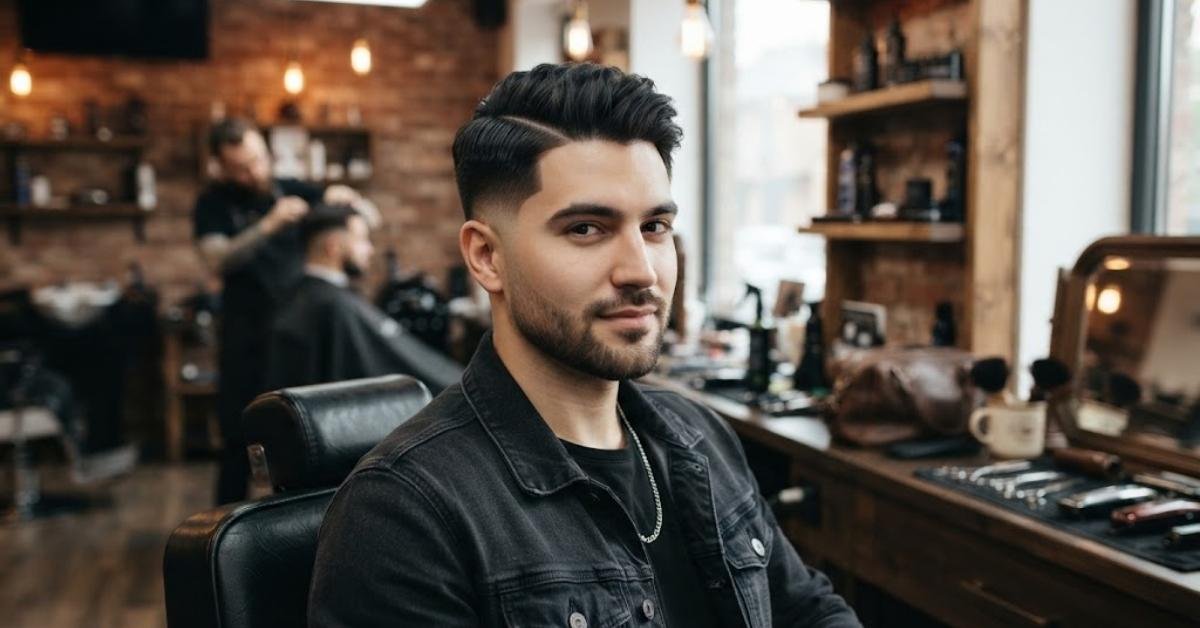

A low taper fade side part is a men’s haircut where the sides and back shorten gradually around the ears and neckline, while the top stays longer and combs into a clean part on one side. It looks sharp in an office, relaxed on weekends, and works on almost every hair type. The fade sits low, so the cut feels subtle and grows out cleanly.
This guide covers 21 style ideas for 2026, exact clipper guard numbers, what to tell your barber, face shape and hair type matches, styling steps, maintenance, and how it compares with a comb over, slick back, and quiff. Every tip follows standard barbering practice, so you can walk into the shop with confidence.
What Are Low Taper Fade Side Part Hairstyle?
This haircut combines two ideas: a low taper on the sides and a side part on top. The taper keeps the edges neat. The part gives the top its shape.
What Is a Low Taper Fade?
A low taper fade shortens hair gradually, starting just above the ear and around the nape. Unlike a skin fade, a taper usually stops at a short length instead of bare skin. That makes it softer and easier to live with.
Barbers sometimes call it a temple fade because it touches the sideburns and neckline. As Man of Many’s barber guide notes, the low version is the safest and most versatile taper, and it pairs well with side parts.
What Is a Side Part Hairstyle?
A side part divides the hair on one side of the head, usually where it naturally falls. The longer section sweeps across the forehead. It is a classic men’s style that has stayed relevant for over a century.
Parts come in two forms. A natural part follows your growth pattern. A hard part uses a thin shaved line to define the split.
Why This Haircut Is Popular in 2026
Men want cuts that look polished without daily effort. The low taper fade side part fits that need. Classic shapes with clean edges keep circulating on Instagram and TikTok barber content, and this cut is one of the easiest to copy.
• Versatile: it works at the office, at weddings, and in the gym.
• Low risk: the fade is subtle, so it suits first time fade clients.
• Texture friendly: it adapts to straight, wavy, and curly hair.
• Clean grow out: the low fade softens gradually instead of looking patchy.
• Easy to personalise: beards, line ups, and texture all fit.
Benefits of a Low Taper Fade Side Part
• Professional look: neat edges suit interviews and meetings.
• Low maintenance: a quick morning routine takes about five minutes.
• Flattering shape: the fade slims the sides and adds focus to the top.
• Flexible length: you can keep the top short or long.
• Confidence boost: a fresh cut sharpens your overall appearance.
Read More: Low Taper Fade Textured Fringe: 25 Modern Haircuts for Men
Top 21 Best Low Taper Fade Side Part Hairstyle
Pick the version that matches your hair type, lifestyle, and comfort level. Each idea below includes a quick barber note.
Classic Low Taper Fade Side Part
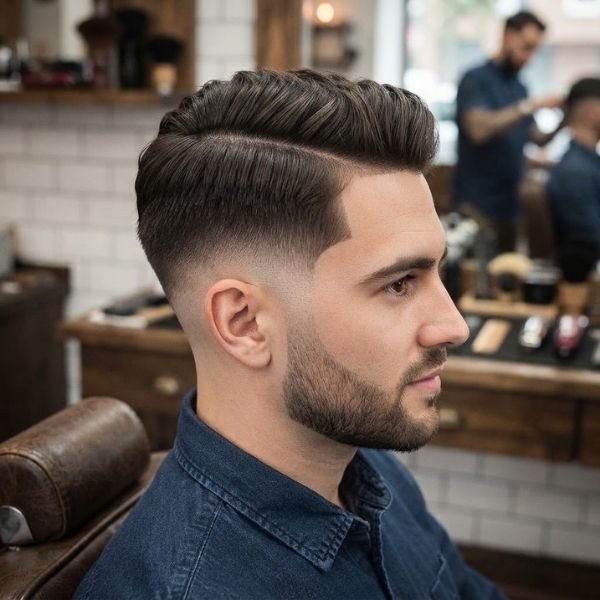
Sides taper to a #2 guard, and the top stays 3 to 4 inches long with a natural comb. Use a light pomade for soft shine. This is the safest choice for first timers.
Modern Low Taper Fade Side Part
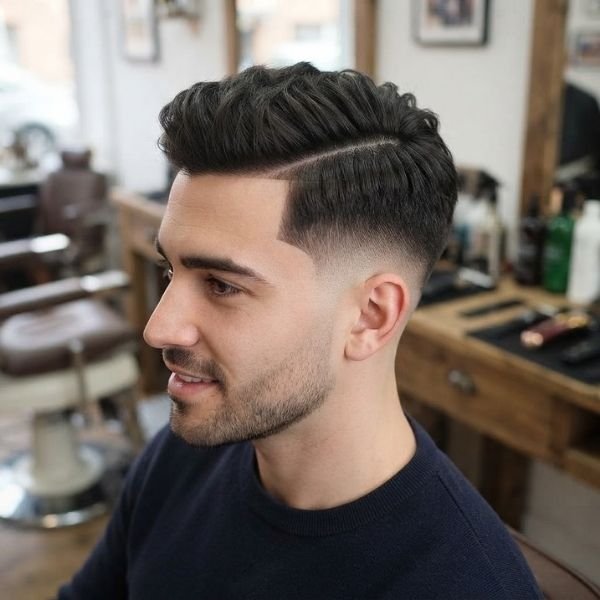
The part sits slightly off center and the top has light texture. Matte clay replaces shiny gel. It feels current without chasing trends.
Textured Low Taper Fade Side Part
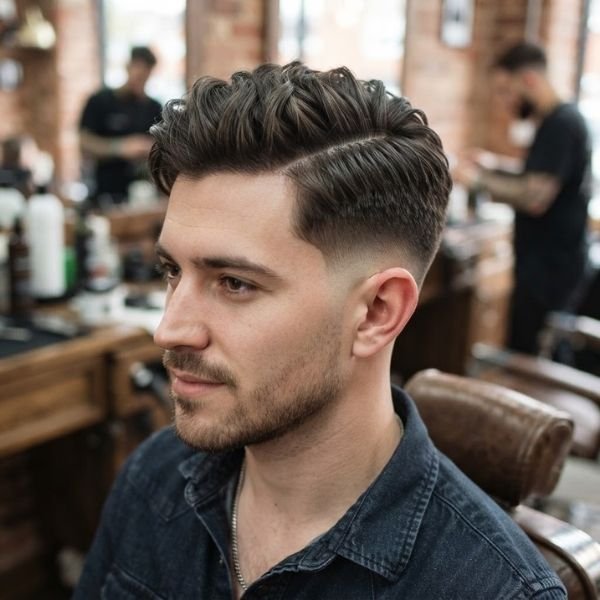
Point cutting or a razor adds movement on top. Style it with sea salt spray and a little clay. The part stays visible but looks relaxed.
Short Low Taper Fade Side Part
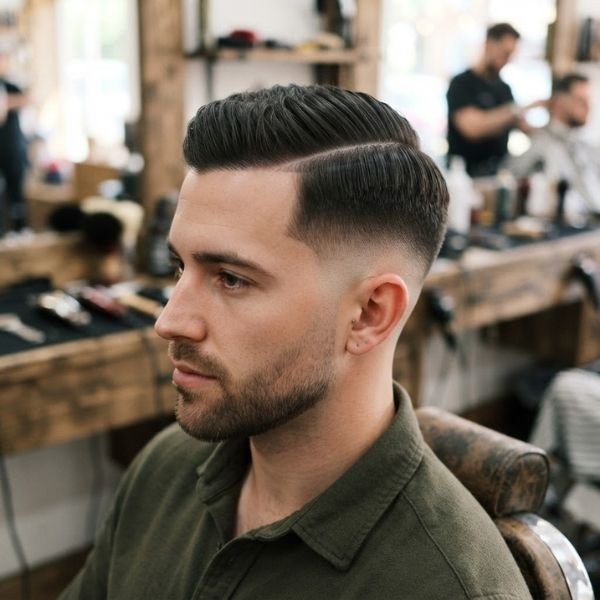
Keep the top around 1.5 to 2 inches. The part is easy to maintain and holds well in wind. It suits men who dislike fuss.
Side part low taper
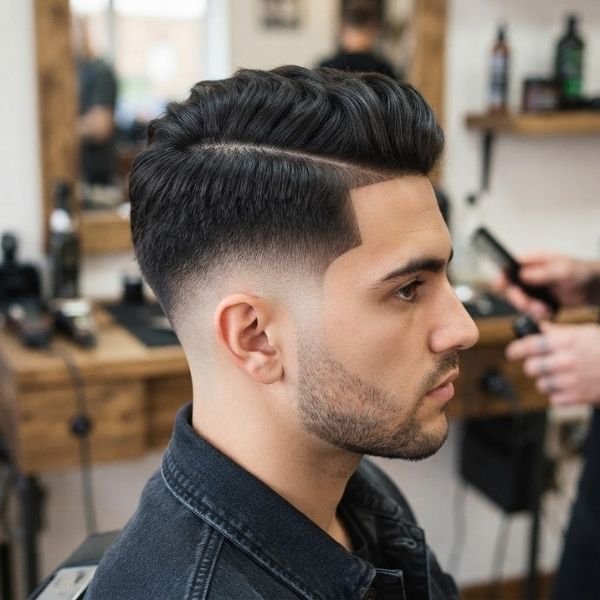
This is the core version: a clean taper, a defined part, and a medium top. Place the part on the side where your hair already grows away from the forehead.
Long Low Taper Fade Side Part
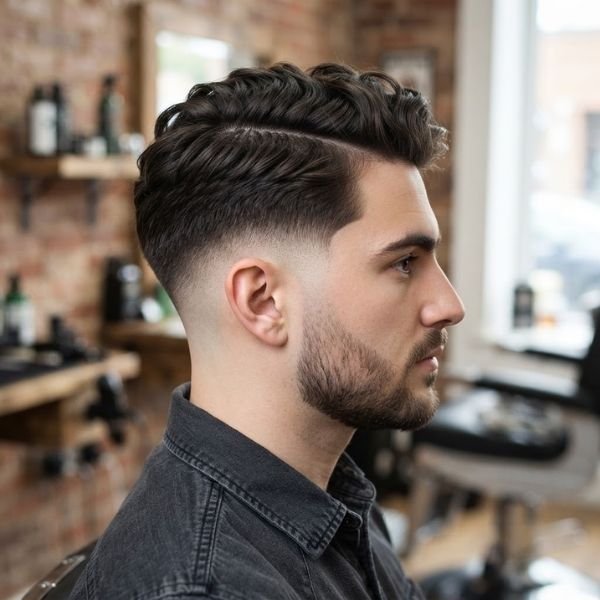
Leave 4 to 6 inches on top and sweep it across with a defined part. The low taper stops the sides from looking bulky. A blow dryer adds control.
Low Taper Fade Side Part with Hard Part
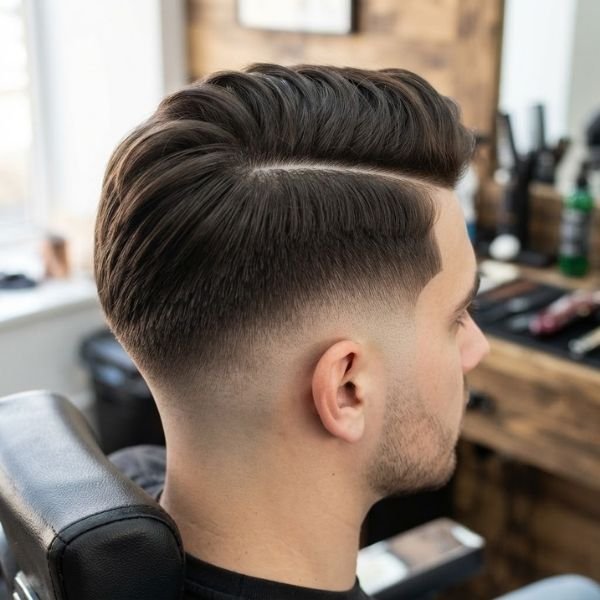
A barber shaves a thin line at the part using a trimmer or razor. The result is crisp and vintage. Expect to refresh the line every two weeks.
Low Taper Fade Side Part with Beard
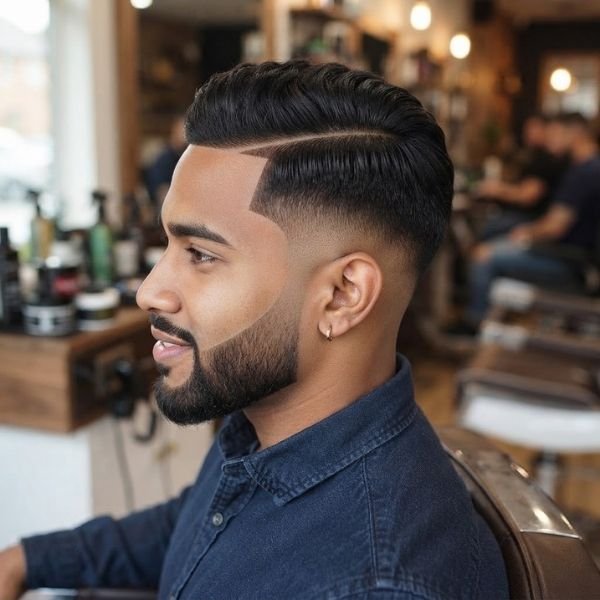
The taper blends into a short beard at the sideburn for one smooth flow. Keep the beard around a #2 or #3 guard. This pairing sharpens the jawline.
Low Taper Fade Side Part with Line Up
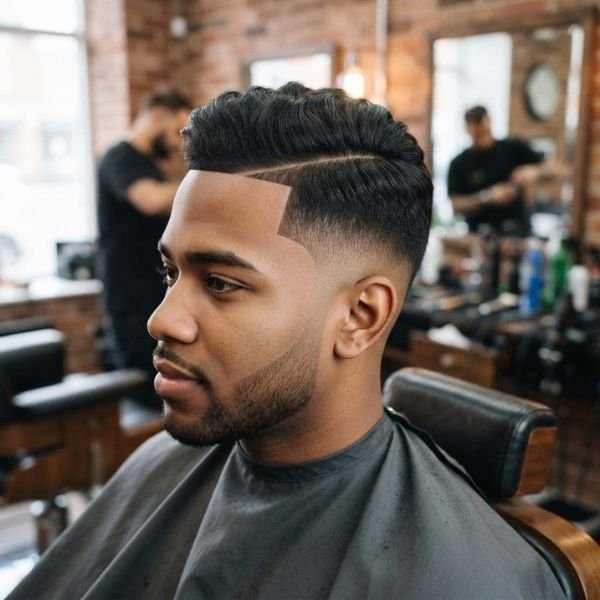
A line up cleans the hairline, temples, and sideburns with a trimmer. It frames the face and makes the part stand out. It fades quickly, so plan touch ups.
Straight Hair Low Taper Fade Side Part
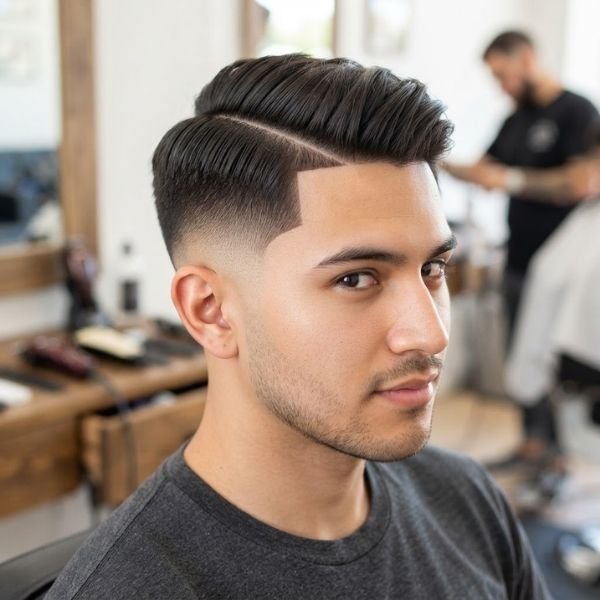
Straight hair holds a part easily. Ask for texture on top, since straight strands can fall flat. A light pomade keeps it neat.
Wavy Hair Low Taper Fade Side Part
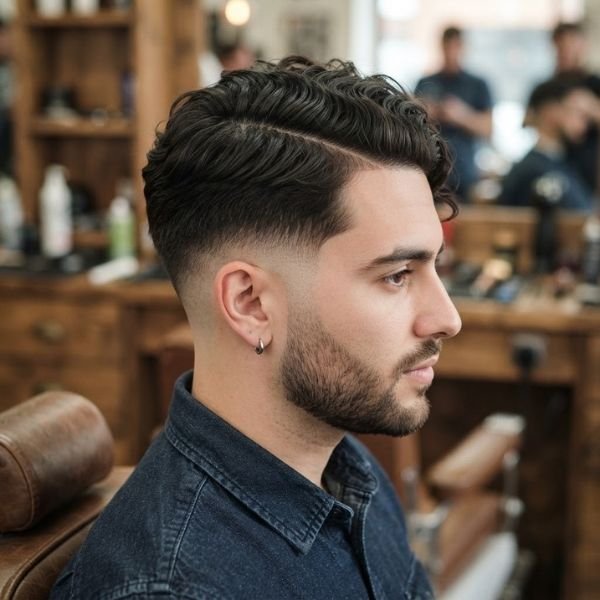
Waves add natural volume and movement. Keep the top 3 to 4 inches so the pattern shows. A light mousse or curl cream controls frizz.
Curly Hair Low Taper Fade Side Part
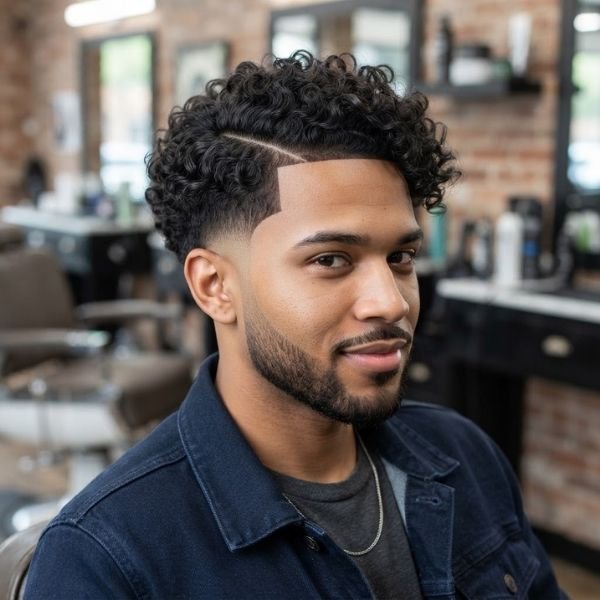
Curls need length, often 3 inches or more, to form a shape. Part the hair while damp. A leave in conditioner and a diffuser keep curls defined.
Thick Hair Low Taper Fade Side Part
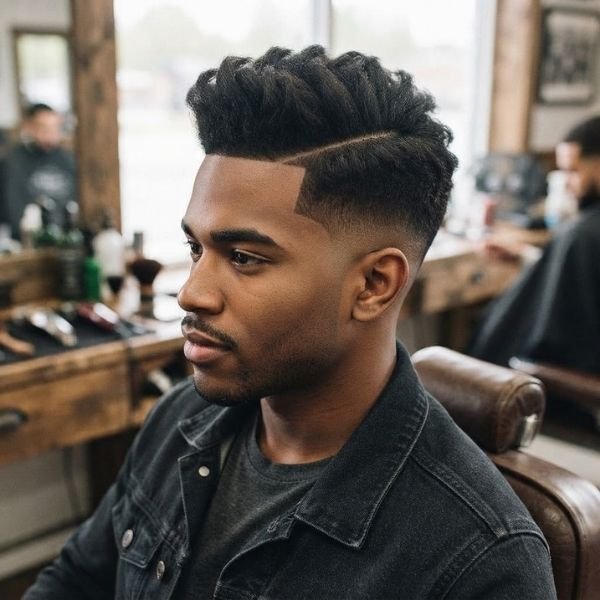
Thick hair benefits from thinning shears to reduce bulk. The taper removes weight at the sides. A strong hold clay keeps the part in place.
Thin Hair Low Taper Fade Side Part
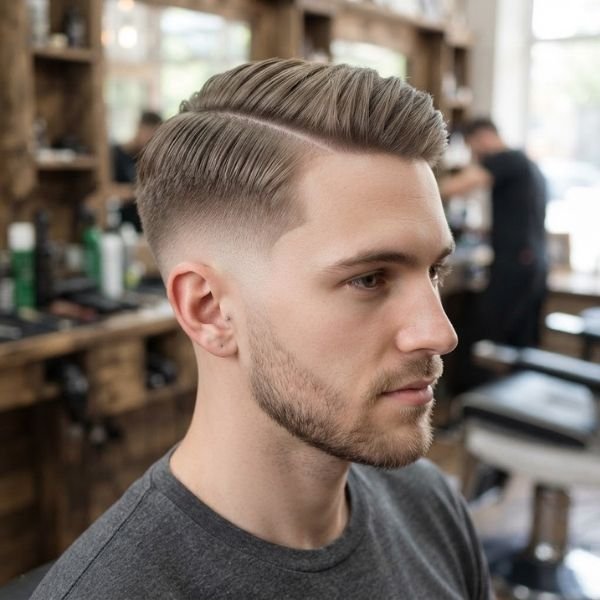
Keep the top at a medium length and add soft layers for fullness. Avoid heavy products that weigh hair down. Volumizing powder helps the part look dense.
Low Taper Fade Side Part with Volume
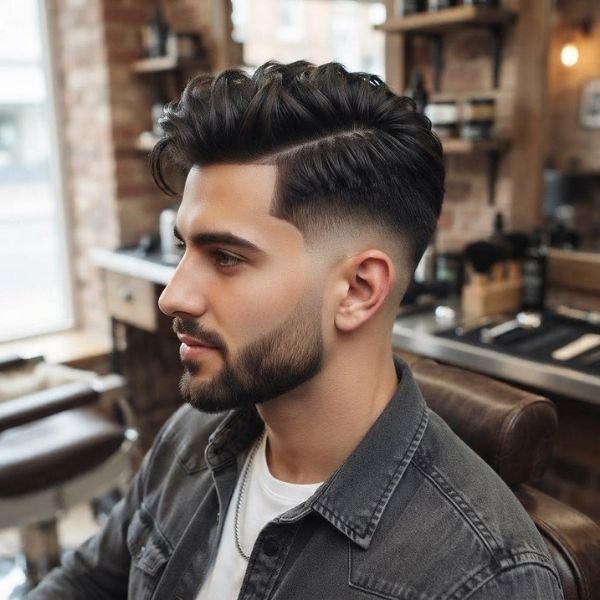
Blow dry the roots upward, then sweep the hair to the side. A round brush adds lift at the front. Finish with a flexible hold spray.
Professional Low Taper Fade Side Part
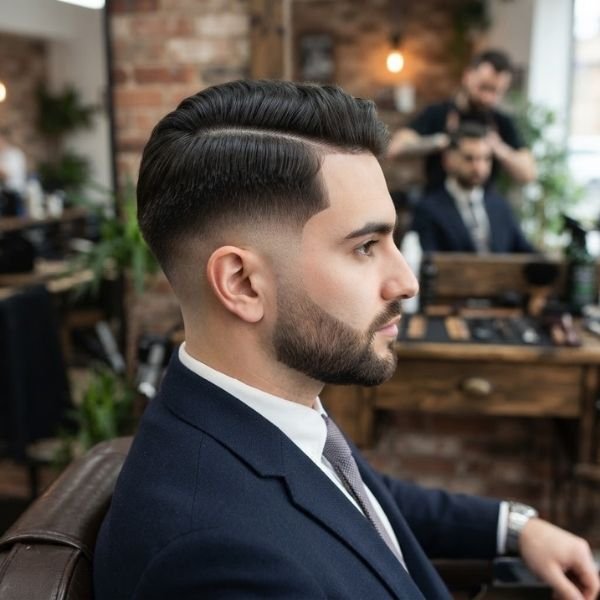
Choose a neat taper, a natural part, and a matte finish. It reads clean in meetings and interviews. Skip shiny products and extreme line ups.
Low Taper Fade Side Part for Teen Boys
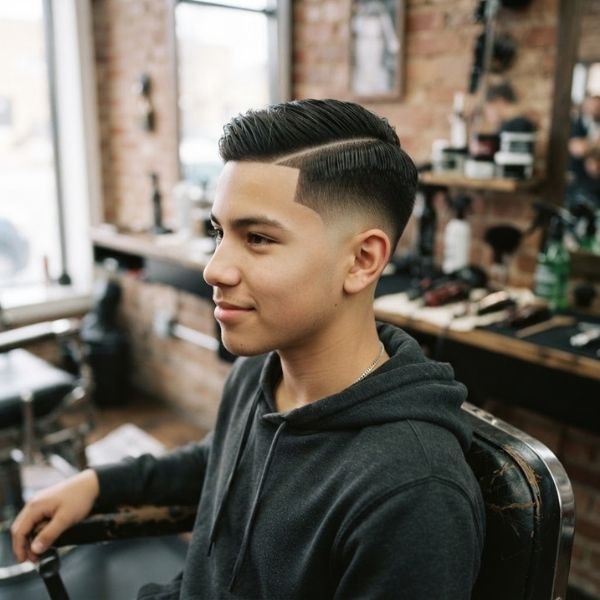
Short and simple works best: #2 to #3 guard on the sides and a 2 to 3 inch top. It is quick to style before school and grows out well.
Asian Low Taper Fade Side Part
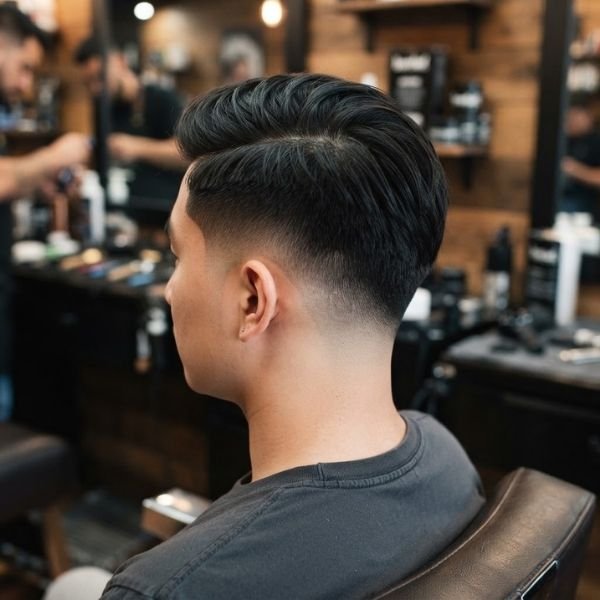
Many men with Asian hair have straight, dense strands, so the part may need a firm product and a blow dry to hold direction. Ask for texturizing on top to prevent heaviness.
Blonde Low Taper Fade Side Part
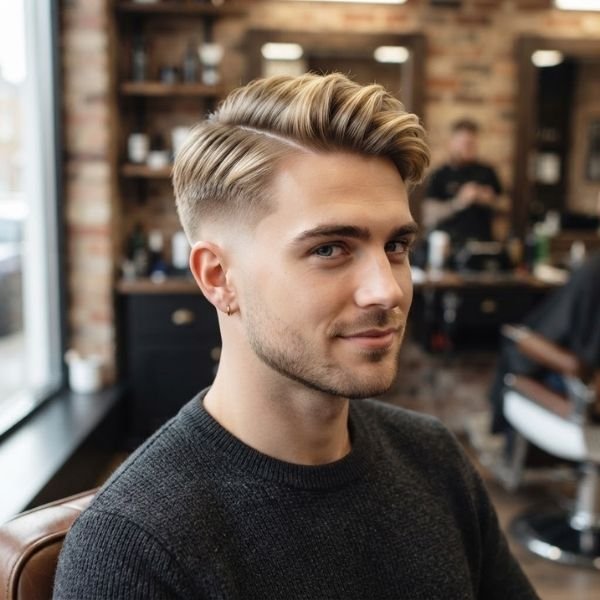
Blonde hair shows the fade softly, which creates a smooth gradient. Use purple shampoo weekly to control brassiness. Go easy on heat to protect bleached hair.
Layered Low Taper Fade Side Part
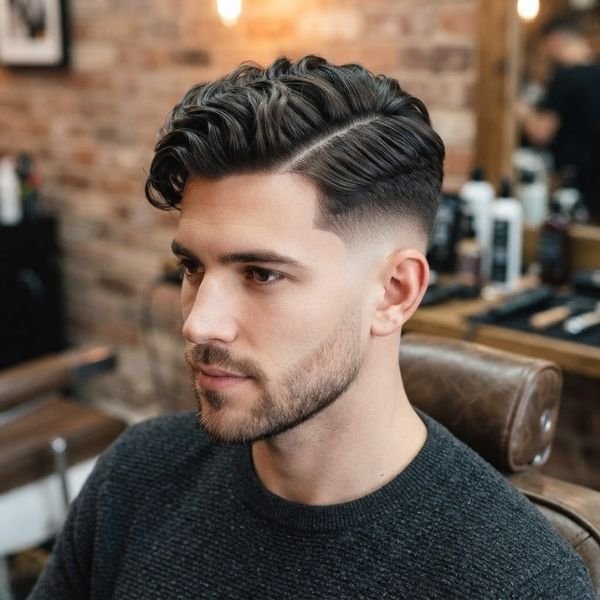
Layers help the top move as one shape. Ask for longer layers near the front and shorter ones at the crown. The part then looks full and relaxed.
Trending Low Taper Fade Side Part Hairstyle
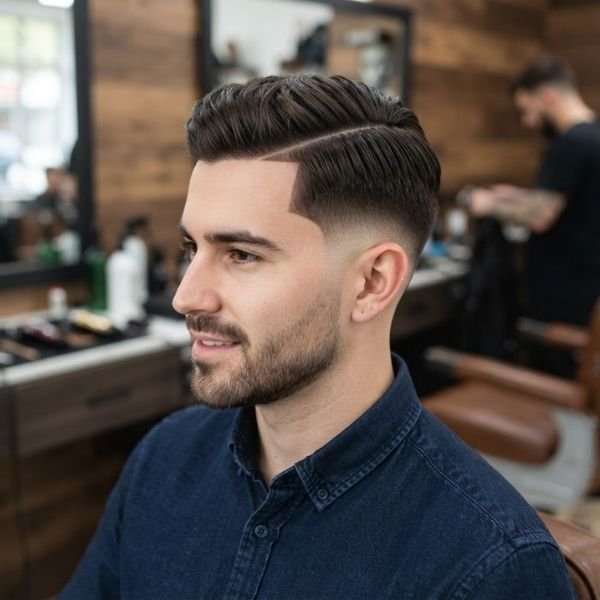
The current take pairs a softer taper with a loose, textured part and a natural finish. Think less gel and more movement. It is often described as a lived in side part.
How to Ask Your Barber for a Low Taper Fade Side Part
Clear instructions prevent most haircut disappointments. Bring one or two reference photos and use the details below.
What to tell your barber
• “Low taper fade, starting just above the ear and around the neckline.”
• “Keep the length on top and cut a side part on the left (or right).”
• “Natural part, or a hard part with a shaved line.”
• “Blend the sides into the top with scissors over comb.”
Read More: Mid Taper Fade Mullet: Best Modern Styles, Hair Types & Styling Ideas
Best clipper guard numbers
Barbers usually start the nape and sideburns at a #0.5 or #1, then blend upward through #2 and finish near #3 or #4. The top is cut with scissors, not clippers. Ask for a #2 finish if you want a tighter look, or #3 for a fuller one.
Recommended fade height
Keep the taper low, around the top of the ear or slightly below. It should stay under the temple. Going higher turns it into a mid taper, which looks bolder.
Ideal top length
Most men choose 2 to 4 inches. Short styles sit near 2 inches, while long versions reach 5 or 6 inches. Longer hair needs more product control.
Hard part or natural part
A natural part looks soft and needs no upkeep. A hard part looks sharper but needs a trim every two weeks. Pick based on how much time you want to spend.
Styling product recommendations
• Matte clay: strong hold, no shine, great for texture.
• Pomade: adds polish for classic and professional looks.
• Sea salt spray: gives grip and a lived in finish.
• Light cream: softens waves and curls.
Best Face Shapes
Oval Face
Almost any version works. Try a classic part with medium length.
Round Face
Add height at the front and keep the sides tight to make the face look longer.
Square Face
Textured tops soften strong jaw angles. A slightly longer top balances them.
Diamond Face
Keep the sides tidy and add fullness at the forehead to balance wide cheekbones.
Heart Face
A medium top with a soft side sweep balances a narrow chin.
Oblong Face
Avoid too much height. Keep the top flatter and the part lower.
Best Hair Types
Straight Hair
It holds a part cleanly. Add texture so it does not look flat.
Wavy Hair
It gives natural volume. Keep the top a little longer to show the wave.
Curly Hair
Leave extra length on top and style while damp for definition.
Thick Hair
Thin it out with shears so the part sits flat instead of puffing.
Thin Hair
Use short layers and light products to create the look of density.
Medium-Length Hair
This is the sweet spot. Around 3 to 4 inches gives enough weight to hold a part.
Pros and Cons
| Pros | Cons |
| Suits most face shapes and hair types | Needs a trim every 2 to 4 weeks |
| Subtle, office friendly fade | Hard part needs frequent upkeep |
| Easy daily styling | Thin hair may need volume products |
| Grows out cleanly | Needs a skilled barber for smooth blending |
| Works with beards and line ups | Short sides show a bad cut quickly |
How to Style a Low Taper Fade Slick Back Haircut
A slick back needs about 3 to 5 inches on top, combed back from the forehead. The low taper keeps the sides tight, so the shape looks sharp. Towel dry the hair, apply product, and comb it back from the front in one smooth motion.
Best Styling Products
• Water based pomade: high shine and easy to wash out.
• Hair wax: flexible hold with a natural finish.
• Light hold spray: locks the shape without stiffness.
How to Style a Low Taper Fade Side Part
Styling takes under five minutes once you know the routine. Start with slightly damp hair, because it responds better to a comb and a part line.
Best Styling Products
• Matte clay for texture and hold.
• Pomade for a classic, polished finish.
• Sea salt spray for volume on fine hair.
Styling Workflow
Wash your hair every two to three days. On other mornings, dampen it with water, add a pea sized amount of product, and set the part. Finish with a quick blast of cool air to lock the shape.
Step-by-Step Styling Guide
1. Towel dry your hair until it is slightly damp.
2. Blow dry the roots upward to build lift.
3. Find your natural part with a comb, or follow the line your barber cut.
4. Rub a pea sized amount of clay or pomade between your palms.
5. Work the product through from back to front.
6. Comb the top into place and sweep it across.
7. Set the style with a light hold spray if needed.
How to Maintain a Low Taper Fade Side Part
Maintenance keeps the fade clean and the part sharp. Follow these habits.
• Visit your barber every 2 to 4 weeks. Shorter sides lose shape fastest. The Fashionisto also stresses that low fades need only occasional touch ups.
• Clean the neckline between visits with a trimmer.
• Wash gently with a mild shampoo and condition regularly.
• Avoid product buildup, which dulls the finish.
• Moisturise your scalp to prevent dryness and flakes.
Low Taper Fade Side Part vs Comb Over
A comb over uses a longer top that is sharply swept to one side, often over a harder fade or undercut. A side part is looser and more natural.
• Side part: soft, flexible, and easy to restyle.
• Comb over: strict, polished, and more formal.
Low Taper Fade Side Part vs Slick Back
A slick back sweeps all hair backward with product, while a side part leaves a visible split. Slick backs need more hold and shine. Side parts feel lighter and work with less product.
• Side part: casual to professional, short styling time.
• Slick back: dressy and bold, longer styling time.
Low Taper Fade Side Part vs Quiff
A quiff lifts the front hair upward and back, creating height and a rockabilly feel. A side part keeps the hair flatter and cleaner. Quiffs need more blow drying and strong product.
• Side part: neat and understated.
• Quiff: voluminous and expressive.
Read More: Low Taper Fade Straight Hair: 31 Best Hairstyles for Men in 2026
Celebrity Inspiration
Public figures often show how versatile this look can be. Use them as references, not exact copies.
• David Beckham: the former England football captain has worn many tidy side parted styles with tapered sides.
• Henry Cavill: the actor, known as Superman in Man of Steel, often wears a classic side part with short sides.
• Ryan Gosling: the actor from La La Land has appeared with neat, swept parts on red carpets.
• Michael B. Jordan: the Creed and Black Panther actor has shown that tapered sides pair well with textured tops.
Common Mistakes to Avoid
• Asking for a fade without naming the height.
• Cutting the top too short to hold a part.
• Using too much product, which looks greasy.
• Skipping regular trims.
• Choosing a hard part without planning upkeep.
• Ignoring hair texture and face shape.
• Going to an unskilled barber for the blend.
Conclusion
The low taper fade side part stays popular because it is clean, flexible, and easy to style. Choose a version that fits your hair type, face shape, and schedule. Bring photos, name the fade height and top length, and book regular trims. With the right barber and a simple routine, this haircut will look sharp all year.
FAQ’s
What is a low taper fade side part?
It is a haircut with short, gradually faded sides and a longer top parted on one side.
How long should the top be?
Most men keep 2 to 4 inches. Go longer for a sweeping look.
Which guard numbers should I ask for?
Start at #0.5 or #1 at the nape, then blend up to #2 or #3.
How often should I get a trim?
Every 2 to 4 weeks keeps the fade and part sharp.
Does this haircut work for curly hair?
Yes. Keep extra length on top and style while damp.
Is a low taper fade professional?
Yes. Its subtle edges suit offices and interviews.


3 thoughts on “21 Best Low Taper Fade Side Part Hairstyle Ideas for Men (2026)”