
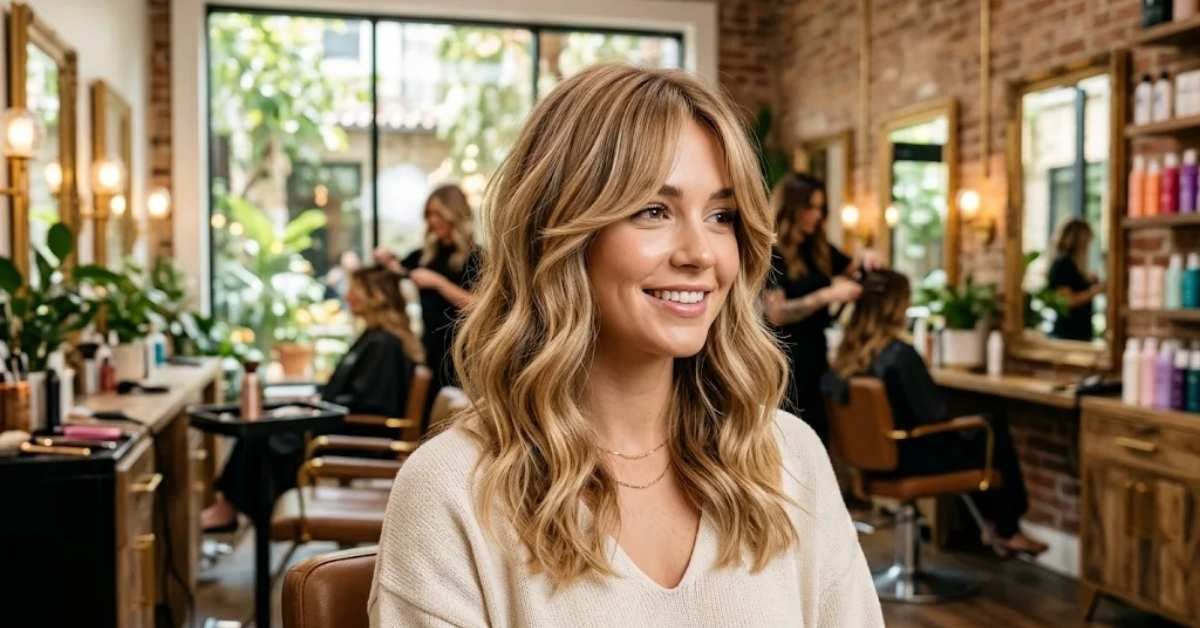

Soft curtain bangs are a center-parted fringe cut longer and wispier than classic curtain bangs, so the hair falls to each side and blends into your face-framing layers. They work on fine, wavy, thick, and textured hair when the cut is matched to your density, face shape, and growth pattern.
Fine hair needs a fuller panel so the fringe does not look sparse. Thick hair needs internal weight removal so it does not puff. Wavy hair needs extra length so the bangs do not spring up. This guide covers 25 styles, a face shape chart, the exact words to use with your stylist, and honest advice on when to skip the fringe.
Soft Curtain Bangs on Fine and Thin Hair
Fine hair has a different problem from thick hair. The fringe can look see-through if the stylist takes too little hair from the front. A good thin hair cut pulls a wider triangle forward, then softens the ends so the wispy fringe still reads as light.
1. Barely-There Whisper Fringe on Fine Straight Hair

This is the lightest version. The fringe sits just above the brow and thins toward the ends, so a little skin shows through. On fine straight hair, it adds movement without a hard line. Skip heavy creams, because they flatten the strands and make them clump.
2. Brow-Grazing Soft Frame for Oval Faces

Oval faces carry almost any length, so this cut keeps the brow line visible. The bangs graze the eyebrows at the center and sweep outward. Because the face is already balanced, the shape can stay airy and simple. A light texturizing spray gives grip without weight.
3. Feathered Fringe with Air-Dry Styling

Feathered ends make air drying realistic. The stylist cuts the fringe with a slight curve so it falls away from the center on its own. Rough dry it with your fingers and a cool blast to set the part. Expect a loose, lived-in finish instead of a salon bend.
4. Layered Bob with Soft Curtain Fringe on Fine Hair
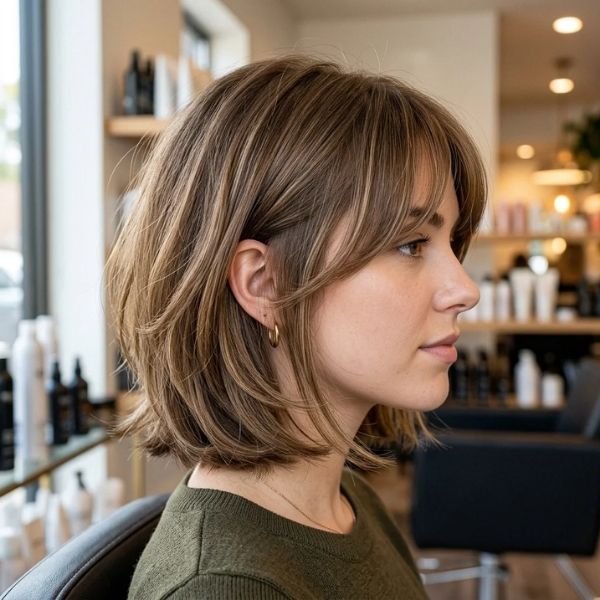
A chin-length bob can look flat on fine hair. Soft layers plus a curtain fringe create the look of fullness around the face. The fringe should connect to the shortest layer so there is no gap. It suits thin hair that needs shape more than length.
5. Blunt Lob with Wispy Fringe Contrast

A blunt lob keeps density at the ends, which makes fine hair look thicker. Pairing it with a wispy fringe creates a deliberate contrast between sharp and soft. Keep the bangs long enough to tuck behind the ears. Straight hair shows this contrast best.
6. Grow-Out Soft Curtain Bangs at Six Weeks

Around the six-week mark, many people find the bangs reach the cheekbones and start to part on their own. That is a favorite stage for a reason. The salon booking platform StyleSeat notes that growing them out usually means a trim between six and eight weeks, while keeping the curtain look means visits every eight to ten weeks.
7. Split Center Part with Asymmetric Fall
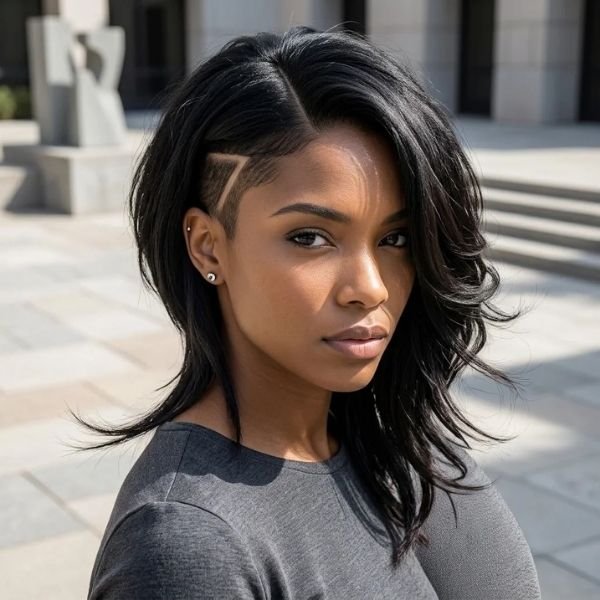
Not every part sits dead center. This version follows your natural part and lets one side fall a little longer. The asymmetry adds volume where hair is thinnest. Ask your stylist to cut with the hair dry so the fall matches how it really grows.
8. Soft Curtain Bangs vs. Wispy Bangs

People mix these two up all the time. Soft curtain bangs are parted and swept to both sides with graduated length. Wispy bangs are thin and sheer, and they can sit straight across or follow a part. The table below shows the main differences.
| Feature | Soft curtain bangs | Wispy bangs |
| Part | Center or slightly off center | Optional, often straight across |
| Length | Brow to cheekbone, longer at the sides | Brow or just above, same length |
| Density | Medium, blended into layers | Sheer, thin, see-through |
| Styling | Round brush bend, sweeps outward | Flat iron or finger comb, lies flat |
In short, curtain describes the shape and wispy describes the thickness. You can combine them, and many stylists do. That blend is what this guide means by the term.
Soft Curtain Bangs on Wavy and Textured Hair
Waves shrink as they dry, so a fringe that looks right wet can jump up an inch. Stylists often cut wavy bangs longer and dry before the final trim. That keeps the natural movement while avoiding the dreaded spring.
9. Loose Wave Soft Curtain Bangs with Natural Movement

Loose waves let the fringe curl away from the face without extra work. The bangs begin at the brow and bend outward at the cheekbone. A little curl cream on damp hair keeps frizz down. Scrunch, then leave it alone while it dries.
10. Round Face Framing with Below-Cheekbone Length

Bangs that end below the cheekbones draw the eye down and add length to a round face. Soft ends avoid a heavy line across the forehead. Keep the visual weight low, near the jaw, instead of at the brow. The result looks open and face-framing, not boxed in.
11. Diffused Wave with a Soft Fringe Panel
Diffusing means drying hair with a bowl-shaped attachment on the dryer so curls and waves keep their shape. Use it on the fringe too, on low heat. The panel dries into a soft S shape instead of a frizzy puff. Finish with a light flexible hold gel.
12. Honey Blonde and Warm Tone Framing
Warm honey tones around the face brighten the complexion and make waves look dimensional. Colorists often place the lightest pieces right in the fringe so the movement shows. Ask for a soft, blended root so the grow-out stays clean. Use color-safe shampoo to protect the shine.
13. Wolf Cut Integration with Soft Curtain Fringe
The wolf cut is a shaggy style that mixes shag and mullet layers, with short layers on top and length left in the back. A soft curtain fringe slides neatly into those top layers. The two together look textured and a little rebellious. This pairing suits wavy hair, which hides the choppy lines.
14. Point-Cut Fringe That Merges into Face-Framing Layers
Point cutting means snipping into the ends vertically with the tips of the scissors. It breaks up the edge so there is no blunt line. Here it helps the fringe melt into the face-framing layers with no visible step. Waves hide the technique, so the result looks natural.
15. Heart Face Soft Curtain Bang: Balancing the Forehead
A heart-shaped face is wider at the forehead and narrower at the chin. A soft fringe covers part of the forehead and sweeps wide to balance that top half. Let the ends land near the cheekbones to add width lower down. Wavy texture helps because it adds volume at the bottom.
Soft Curtain Bangs on Thick and Dense Hair
Thick hair can make a fringe look heavy and puffy. The fix is not a shorter cut. It is a smarter one that removes weight from the inside and keeps the length a bit longer, so the bangs can blend into the face-framing pieces.
16. Thinned Thick-Hair Curtain Bang with Internal Density Removal
Internal density removal means the stylist takes bulk out from within the section, not only at the tips. The outer layer stays intact, so the fringe looks full but moves. L’Oréal Paris also suggests asking a stylist to thin the ends if your strands are very thick. Always request this step by name.
17. Square Face and Soft Curtain Bangs: Softening the Jaw
A square face has a strong forehead and jaw. Wispy, feathered edges that end near the jawline blur those angles. Avoid straight, sharp lines across the forehead. Side-swept pieces with a gentle curve give the best balance.
18. Deep Brunette and Dark Warmth at the Fringe
Dark hair shows every line, so a clean, glossy cut matters. Warm chocolate or soft caramel tones near the fringe add depth. A gloss treatment keeps the shine up. This color also makes the wispy ends look softer.
19. Coarse High-Density Hair: A Modified Approach
Coarse hair can stand up and look stiff. Stylists often use texturizing shears to make the ends wispy instead of blunt. A longer fringe also helps because the weight pulls it down. Cut a slightly smaller section than you would for fine hair.
20. Hush Cut Pairing: Seamless Face-Framing on Thick Hair
The hush cut is a soft, feathery layered cut with long wispy bangs that gained fame through K-beauty trends. It is built to remove weight without losing length. On thick hair, that is exactly what a fringe needs. The layers and bangs flow as one shape.
Length and Framing Variations
Length changes the whole mood. A few millimeters decides whether the fringe opens the eyes or hides them, so use this section to compare your options.
21. Eyebrow-Level Soft Curtain Bangs
The shortest version, this one hits right at the brow. It opens up the eyes and shows off cheekbones. It also needs the most upkeep, because it grows into your eyes quickly. Choose it if you like a cropped, bold look.
22. Cheekbone-Length Soft Curtain Bangs
This is the classic middle ground. The longest pieces reach the cheekbones, which highlights them without covering the eyes. Most faces suit this length. It is also the easiest one to grow out.
23. Below-Cheekbone Curtain Bangs for Oblong Faces
An oblong face is longer than it is wide. A fringe that sweeps below the cheekbones adds visual width at the sides, and a center that sits near the brow cuts the look of height. Keep the volume at the sides. Avoid very flat, straight styling.
24. Graduated Curtain Bang: Shorter Center, Longer Outer Corners
Here the center is cut shorter and the outer corners longer, creating a gentle arch. The shape looks like a theater curtain pulled open. It frames the eyes and blends smoothly into long layers. A round brush bend keeps the arch open.
25. Soft Curtain Bangs on a Long Bob: The Classic Pairing
A long bob with soft curtain bangs is the safest, most flattering pairing. The fringe adds softness while the bob stays sleek. It suits straight, wavy, and fine hair alike. It is also a good first step if you are nervous about a big change.
Face Shape Guide for Soft Curtain Bangs
| Face shape | Best bang length | Best shape | Why it works |
| Oval | Brow to cheekbone | Any center-parted sweep | Already balanced, so most styles fit |
| Round | Below the cheekbones | Long, soft, blended | Adds length and avoids a wide line |
| Square | Cheekbone to jaw | Feathered, wispy ends | Softens strong angles |
| Heart | Cheekbone | Wide sweep, soft ends | Balances a wider forehead |
| Oblong | Below the cheekbones | Fuller at the sides | Adds width, shortens the look |
What to Tell Your Stylist
Clear words prevent most bad bang days. Bring two or three photos, ideally on hair like yours, and say what you do not want too. These points cover the important details.
1. Say “soft curtain bangs, center part, tapered ends.” This sets the shape.
2. Name the finish length, such as brow, cheekbone, or jaw, and point to it on your face.
3. Ask them to cut with the hair dry, or to check dry, so waves and cowlicks show up.
4. Request that the fringe blend into your face-framing layers with no blunt line.
5. If your hair is thick, ask for internal weight removal. If it is fine, ask for a wider section.
6. Share how you style hair at home, including whether you blow dry, air dry, or straighten.
Following this list takes two minutes and saves weeks of regret. A good stylist will also tell you if your photo is realistic for your hair type. Treat that as useful feedback, not a rejection.
Maintenance and Styling
This style is easier than blunt bangs, but they still need a routine. A little care each morning keeps the shape. Here is a simple five-step method.
1. Start with damp bangs only. Wet the front section if the rest of your hair is dry.
2. Apply a pea-sized amount of lightweight mousse or cream.
3. Blow dry with a medium round brush, rolling the fringe up and away from the center.
4. Hold the bend for a few seconds, then cool it with a cold-air blast.
5. Finish with a light mist of flexible hold spray.
Trims matter just as much. L’Oréal Paris suggests visiting the salon about every six to eight weeks to keep the length and shape. Some stylists prefer four to six weeks for a sharper look. Many salons offer free fringe trims, so ask when you book.
Fringe also gets oily faster than the rest of your hair, because it touches your forehead. Wash it separately between full washes. Use powder-based dry shampoo for fine hair and a spray version for thicker hair.
When Soft Curtain Bangs Are Not the Right Choice
No cut works for everyone, and honest advice builds trust. Think twice about this fringe in these situations.
• You have a strong cowlick at the front hairline, which can force the fringe to split in the wrong place.
• You want a zero-effort style. These bangs look best with at least a little daily styling.
• You wear your hair pulled back all day. Short front pieces will keep slipping out of ponytails.
• Your hair is very sparse at the front. A thinner hairline needs a doctor’s or stylist’s advice first.
• You are unsure. Try face-framing layers first, since they grow out gently.
If one of these fits you, there are still options. Face-framing layers give a similar softness with far less commitment. You can also ask for a longer test fringe and cut it shorter later.
FAQ
What Are Soft Curtain Bangs?
They are long, wispy bangs parted in the middle and swept to each side, blending into your face-framing layers.
Do Soft Curtain Bangs Work on Fine Hair?
Yes. Ask your stylist to take a wider section of hair forward so the fringe looks full, not sparse.
How Often Do Soft Curtain Bangs Need Trimming?
Most people need a trim every six to eight weeks, or every four to six weeks for a sharper edge.
Can Soft Curtain Bangs Work on Curly Hair?
Yes. Cut them longer and ideally dry, because curls spring up once they dry.
What Is the Difference Between Curtain Bangs and Soft Curtain Bangs?
Soft curtain bangs are thinner, longer, and more blended than classic curtain bangs, so they look wispier.
How Do I Style Soft Curtain Bangs at Home?
Blow dry damp bangs with a round brush, roll them away from the center, and set with a flexible hold spray.
Conclusion
This cut succeeds when it matches your hair, not only a photo. Fine hair needs a fuller panel. Wavy hair needs extra length. Thick hair needs weight taken out from within. Use the face shape chart and the stylist script above, and pick one of the 25 styles as your starting point.
Which style will you try first? Share it in the comments, and pass this guide to a friend who is considering a new fringe.

