


A choppy razor-cut pixies is a short haircut with feathered, uneven ends made by dragging a razor through the hair. The result looks soft, piece-y, and a little rebellious. It adds movement without adding bulk.
This guide covers 30 styles sorted by cut type, hair type, face shape, and length. You will also find a stylist script, upkeep timelines, and a clear look at who should skip this cut. Use it to walk into your next appointment with confidence.
Classic Choppy Razor-Cut Pixies
These are the base styles. Every other variation in this guide builds on them.
1. The Classic Razor-Cut Pixie
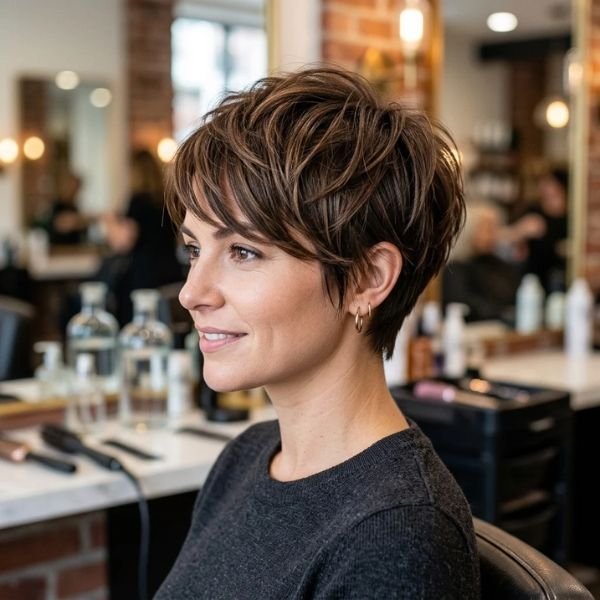
Short sides, a slightly longer top, and feathered ends all over. The razor removes blunt edges, so the hair lies in soft, separated pieces. It suits most people with straight to slightly wavy hair.
2. Razor Pixie for Round Faces

Keep height at the crown and taper the sides close to the head. A side-swept fringe adds an angle that breaks up roundness. Avoid fullness at the cheeks.
3. Razored Pixie for Fine Hair

Razor texture can make fine hair look fuller because the ends are not blunt and heavy. Keep the layers short and the blade fresh. Over-thinning fine hair can leave it looking see-through, so ask for light texture only.
4. Piece-y Tousled Razor Pixie
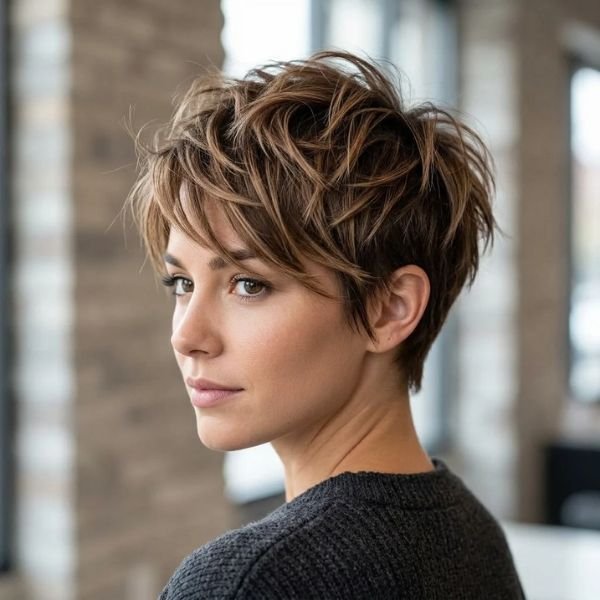
This version leans messy on purpose. Rake a pea-sized amount of matte paste through dry hair and twist the ends. It works well for people who like a lived-in finish.
5. Grown-Out Low-Maintenance Razor Pixie

Razored ends grow out more gracefully than blunt ones. The shape softens instead of looking overgrown. You can often stretch visits a little longer with this version.
6. The Choppy, Not Blunt, Request
Say this to your stylist: “I want choppy, feathered ends, not a blunt line.” It tells them you want razor or point-cut texture instead of a clean, heavy edge. Bring a photo to confirm what choppy means to you.
7. Razor Cut Versus Scissor Cut Pixie
A razor creates tapered, wispy ends. Scissors create cleaner, more controlled lines. Razor suits an edgy, lived-in look. Scissors suit a polished, structured one. Many stylists combine both for balance.
Choppy Razor Pixies by Hair Type
Hair texture and density decide how well a razor behaves, so match the cut to your strands.
8. Undercut Razored Pixie
Shave or clip the nape or one side short and leave the top longer and razor-cut. The contrast looks bold. It also removes bulk from thick hair at the back.
9. Razor Pixie for Square Faces
Soft, feathered ends and a side-swept fringe soften a strong jawline. Skip sharp, geometric angles around the face. Wispy pieces near the temples help.
10. Razored Pixie for Thick Hair
Razor work removes weight and stops thick hair from puffing out. Ask for longer pieces on top and tapering at the sides. A skilled hand matters here, since too much taking out can create odd, shelf-like layers.
11. Spiky Textured Razor Pixie
Short, upright pieces made with a razor and set with a strong-hold clay. It works best on straight, dense hair. Expect to restyle it each morning.
12. Edgy Pixie Upkeep Between Cuts
Short hair shows growth fast, especially around the sideburns and nape. Many stylists suggest a visit every four to six weeks. Between visits, use a light paste and avoid heavy products that flatten the texture.
13. Asking for Razored Layers on Top
Ask for razored layers on top and shorter, tapered sides. This keeps the crown lifted and the outline clean. Point to where you want the longest piece to fall.
14. Choppy Pixie Versus Bixie
A bixie is a pixie and bob hybrid, longer and softer around the ears and nape. A choppy pixie stays short and cropped. Choose a bixie if you want more length to tuck or style.
15. Feathered Razor-Cut Pixie
Light, airy ends that move when you walk. This one is gentle, so it suits people new to short hair. Style it with a texture spray and fingers only.
Choppy Razor Pixies by Face Shape and Length
Face shape is a guide, not a rule. Use it to decide where to put volume and where to keep things close.
16. Razor Pixie for Heart Faces
Add a longer, side-swept fringe to balance a wider forehead and a narrow chin. Keep the sides soft rather than tight. This draws attention to the eyes.
17. Razored Pixie for Curly Hair
This can work, but proceed carefully. A razor can rough up the cuticle on tight curls and cause frizz. Many stylists prefer a dry cut with scissors for curls, with only light razor work if any. Find a stylist who cuts curls often.
18. Side-Swept Razor Pixie with Bangs
A long, razored fringe falls across the forehead in separate pieces. It softens the face and suits many shapes. Trim the fringe more often than the rest, since it gets in your eyes first.
19. Wash-and-Go Razor Pixie
Good razor work lets the hair fall into place with little effort. Towel dry, add a bit of cream, and leave it. This is the best pick if your morning routine is short.
20. The Long-Fringe Choppy Pixie Request
Ask for a “long, razored fringe with short sides.” Say how long you want it, such as cheekbone or eyebrow length. Clear measurements prevent the fringe from ending up too short.
21. Choppy Pixie Versus Shaggy Pixie
A shaggy pixie has more length and layers, giving a rock-and-roll feel. A choppy pixie is shorter and cleaner at the edges. If you want a grown-out look from day one, go shaggy.
22. Disconnected Razor-Cut Pixie
A longer, razored top sits over much shorter sides, with no gradual blend between them. The contrast is the point. It makes a strong statement, so it pairs well with confident styling.
23. Razor Pixie for Long Faces
Skip too much height on top. Add width with a fringe and soft volume at the sides. A fringe shortens the look of a long face.
24. Razored Pixie for Wavy Hair
Waves and razor texture work well together. The cut encourages the natural bend and keeps the ends from stacking. Scrunch in a light cream and air dry.
25. Messy Bedhead Razor Pixie
Made for the person who likes a slept-in look. Use sea salt spray, rough dry with your fingers, and finish with a dab of paste. Imperfection is the aim.
26. Silver Razor-Cut Pixie Upkeep
Silver and gray hair often has a coarser, drier feel, so razor texture should be light. Use a purple shampoo now and then to cut yellow tones. A shine serum helps the ends catch light.
27. Razored Nape Request
Ask for a “soft, razored nape, tapered but not shaved.” This keeps the back neat without a harsh line. It also grows out more evenly.
28. Choppy Pixie Versus a Buzz-Adjacent Crop
A buzz-adjacent crop is clipper-short all over with little styling. A choppy pixie keeps enough length on top to move and shape. If you want to style your hair at all, choose the pixie.
29. Two-Length Razored Pixie
One length on top, a shorter one at the sides and back. It is simple, clean, and easy for a stylist to repeat. It is a good starter cut if you are unsure.
30. Razor-Cut Pixie for Diamond Faces
Diamond faces have broad cheekbones and narrower foreheads and chins. A fringe adds width at the forehead, and soft texture around the ears balances the cheekbones. Avoid very flat sides.
How to Choose a Choppy Pixie for Your Face Shape
Start with these quick rules:
- Round: Height on top, tapered sides, angled fringe.
- Square: Wispy ends and a side-swept fringe to soften the jaw.
- Heart: Longer fringe and softer sides.
- Long: Fringe and side volume instead of extra height.
- Diamond: Fringe plus soft texture near the cheekbones.
- Oval: Most variations work, so pick by hair type and lifestyle.
Hair type matters as much as face shape. Fine hair gains fullness from light texture. Thick hair needs weight removed carefully. Curly hair needs a specialist.
What to Tell Your Stylist
Clear words prevent disappointment. Bring two or three photos from different angles and say what you like in each.
Use this checklist:
- Say “razor-cut” or “razored texture” and ask if your hair suits it.
- State the length you want on top, at the sides, and at the nape.
- Ask for a fringe length in inches or by feature, such as eyebrow or cheekbone.
- Mention how long you want to spend styling each day.
- Ask how often you will need a trim.
A good stylist will also tell you if the cut does not suit your hair. Listen to that advice.
Maintenance and Styling
A choppy razor-cut pixies is quick to style, but it needs regular shaping.
Trim schedule: Plan on a visit every four to six weeks to keep the sideburns, nape, and fringe tidy. Pixies show regrowth faster than longer cuts.
Daily styling steps:
- Wash with a gentle shampoo and apply conditioner to the ends only.
- Towel dry and blow dry with your fingers, lifting at the roots.
- Apply a pea-sized amount of matte paste or clay.
- Twist and separate the ends for definition.
- Finish with a light-hold spray if needed.
Product tips:
- Fine hair: texture spray or powder for lift.
- Thick hair: cream or pomade for control.
- Wavy hair: lightweight cream and a diffuser.
Do not overload the hair with product. Too much weighs the ends down and hides the razor texture.
When a Razor-Cut Pixie Is Not the Right Choice
A razor-cut pixie is not for everyone. Consider another style if:
- You have tight curls or coily hair and no access to a curl-trained stylist.
- Your hair is heavily bleached or damaged, since a razor can make weak ends look thinner.
- You do not want to visit a salon every month.
- You have a strong cowlick at the front hairline that fights the fringe.
- You are not ready for short hair. A bixie or textured bob is a gentler first step.
Honest self-assessment saves money and regret.
FAQ
What Is a Razor-Cut Pixie?
It is a short pixie haircut where a razor creates feathered, tapered ends instead of blunt ones. The result is a soft, textured, piece-y finish.
Is a Razor Cut Good for Fine Hair?
Yes, when done lightly. It adds movement and the look of fullness, but heavy thinning can make fine hair look sparse.
Does a Razor-Cut Pixie Cause Split Ends?
Not by itself. Damage usually comes from a dull blade, heat, or waiting too long between trims. A fresh blade and regular trims keep ends healthy.
How Often Does a Choppy Pixie Need Trimming?
Every four to six weeks for most people. This keeps the shape sharp, especially at the nape and sides.
Can Curly Hair Get a Razor-Cut Pixie?
It is possible but risky. Curly hair can frizz under a razor, so choose a stylist experienced with curls and ask for light texture.
How Do You Style a Choppy Razor Pixie?
Towel dry, rough dry with your fingers, then work in a small amount of matte paste. Twist the ends for definition.
Conclusion
A choppy razor-cut pixies gives short hair attitude, movement, and a soft finish. The best version depends on your hair type, face shape, and how much time you want to spend styling.
Pick two or three styles from this list, bring photos, and use the stylist script above. Book regular trims, keep products light, and be honest about your hair’s limits. Do that, and your next pixie will look edgy, textured, and entirely your own.

