


Freeform dreads are locs that form on their own, with no twisting, interlocking, or combing guiding the process. Your hair mats and knots naturally, so every loc ends up with its own width, length, and shape. That is why the style works at every stage, from fuzzy buds to waist-length ropes, and why it pairs well with fades, buns, headwraps, and color.
This guide covers 25 styles grouped by stage and cut, how freeform differs from traditional locs, a simple starting and care routine, and the cases where this method is not the best fit. Use it to pick a look, plan your first months, and set realistic expectations before you start.
Starting and Early-Stage Freeform Dreads
Early freeform locs look soft, puffy, and uneven, and that is completely normal. Hair moves through the budding and teenage stages at its own pace, so these styles keep the early months neat without forcing the process.
1. The Budding Stage
At the budding stage, hair starts to knot into small clumps at the roots. The locs look unfinished and some strands may unravel after a wash.
Wash gently with a residue-free shampoo and do not pull clumps apart. Each loc will settle into its own shape over time.
2. Freeform on a High-Top Shape
A high-top keeps length on top and trims the sides, so young locs rise in a rounded block. It suits short to medium hair and shows off natural volume.
Skip the brush and let the crown clump freely. Shape only the edges.
3. Coily Freeform with Defined Roots
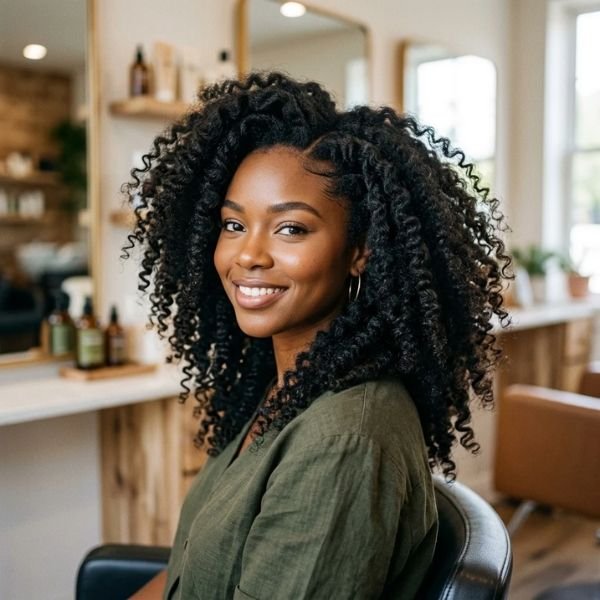
Tight coils tend to form small, springy locs that look defined right at the scalp. Coarse, curly hair usually locks more readily than fine, straight hair.
Light finger separation at the root keeps one coil from fusing into the next.
4. Separated Freeform to Prevent Merging

Neighboring clumps can merge into one thick mass. Gentle finger separation at the root every few weeks keeps each loc distinct.
Do it on damp hair and stop if a clump resists. Forcing it can cause breakage. Note that occasional shaping like this makes the style closer to semi-freeform, as explained here.
5. Freeform with a Headwrap

A headwrap covers the awkward in-between phase and cuts down on frizz. It also doubles as night protection when you choose a satin or silk-lined fabric.
Tie it loosely so it never tugs on tender roots.
6. Short Freeform Buds
Short buds look like tiny knots or curls sitting close to the scalp. They suit anyone who wants a low-profile start with a clean, tidy cut.
Expect them to grow thicker and heavier as they mature.
7. Freeform Starting from a Twist-Out
A twist-out defines your curl pattern so strands clump in groups. After a few cycles, you stop redoing the twists and let those groups lock.
This route softens the move from a loose afro to organic locs.
Freeform Dreads with Fades and Cuts
Fades add structure around wild, organic locs. The contrast looks sharp at work and keeps heavy hair off your neck and ears.
8. Freeform with a Low Taper
A low taper shortens hair gradually around the ears and nape. It frames the locs without cutting any length on top.
Visit your barber every three to four weeks to keep the edge crisp.
9. Freeform with a High Fade
A high fade blends skin-level sides up toward the crown, so the locs on top stand out boldly. It is clean and high contrast.
Tell your barber to cut around the locs and leave the top untouched.
10. Freeform Mohawk with Faded Sides
Locs run in a strip down the center while both sides are faded. The strip can hang loose or stand upright.
It works best on medium to long locs with enough weight to hold the shape.
11. Tapered Freeform with a Loc Beard
A loc beard is facial hair that is allowed to lock the same way as the hair on your head. Tapered sides balance the extra texture.
Treat beard locs like head locs: keep them clean and leave them alone while they form.
12. Freeform with a Line-Up
A line-up, also called an edge-up, is a sharp outline cut along the hairline and temples. Freeform locs sit slightly messy, so a precise line-up gives them a polished frame.
Ask the barber not to trim locs that sit right at the hairline.
13. Freeform with Shaved Sides
Shaved sides remove bulk around the ears and make thick locs easier to wear in hot weather. The shave is uniform, unlike a gradual fade.
Plan a quick clipper touch-up every few weeks.
14. Mature Freeform with a Natural Taper
Mature locs are thick, strong, and fully formed. A natural taper trims the sides to follow your hairline without a hard fade.
The result looks soft, grown out, and low upkeep.
Styling Mature Freeform Dreads
Once locs are thick and sturdy, you can lift, tie, and accessorize them. Wait until they are mature before wearing heavy or tight styles, because young locs break more easily.
15. High Freeform Loc Bun
Gather the locs at the crown and wrap them into a bun or knot. Use a soft scrunchie or fabric band instead of a tight elastic.
Change the bun position now and then so the same roots are not under constant tension.
16. Half-Up Freeform Style
Pull the top section back and leave the rest hanging. It keeps locs out of your face and shows off the natural variety in thickness.
Loop one long loc around the gathered section to hide the tie.
17. Freeform Locs with Cuffs and Beads
A loc cuff is a small metal tube or ring that slides over a loc as decoration. Beads work the same way and add color or texture.
Choose lightweight pieces with wide openings so they slide on without force. Remove anything that snags.
18. Freeform Ponytail
A low ponytail at the nape is comfortable for daily wear and workouts. A high one gives a more dramatic, lifted look.
Keep the tie loose and move it around to protect your hair.
19. Pulled-Back Freeform with a Headband
A wide, soft headband pushes locs back and holds your hairline in place. It is quick, practical, and easy to style on bad hair days.
Skip narrow elastic bands that dig into the scalp.
20. Freeform Locs Worn Loose and Long
Letting locs hang shows off their natural movement and uneven shapes. This is the classic organic look.
Long locs get heavy, so tie them up on some days to give your roots a break.
Freeform Loc Variations and Length
Freeform locs vary more than any other loc type. These variations cover length, color, and thickness.
21. Waist-Length Freeform Locs
Waist-length locs take years to grow and show real commitment. Their weight pulls on the roots, so updos help spread the load.
Trim only frayed or damaged ends and keep the length moisturized.
22. Freeform with Color on the Ends
Dyed tips in copper, honey, or blonde give locs a sun-touched finish. Lightening only the ends limits damage near the roots.
Ask a loctician (a stylist who specializes in locs) before bleaching, and hydrate after.
23. Freeform with Congo Locs
Congo locs are thick locs with rounded, puffy ends. Naturally forming hair can create them when clumps combine into larger sections.
They look bold and sculptural, and they need extra drying time after washing.
24. Thin Freeform Locs
Thin locs form from smaller clumps and tend to lock faster than large ones. They move easily and fall light on the scalp.
Be careful with heavy products and tight styles, since thin locs are more fragile.
25. Freeform Locs with a Twisted Front
Here only the front hairline section is twisted for definition, while the rest stays natural. It frames the face neatly.
Strictly speaking, this is semi-freeform, but many wearers still count it as part of the freeform family.
How Freeform Dreads Differ from Traditional Locs
Freeform dreads form through natural matting. Traditional locs are started with a method such as coils, twists, or interlocking, then maintained with retwisting. The terms “dreads” and “locs” are often used interchangeably, though some wearers treat them differently.
Both have deep cultural roots. Dreadlocks are closely tied to Rastafari, a spiritual movement from Jamaica, and to reggae legend Bob Marley, who made the style globally recognizable. Actress Lisa Bonet, best known for The Cosby Show, is often cited as an inspiration for the carefree freeform look.
| Feature | Freeform dreads | Traditional locs |
| Formation | Hair mats and knots naturally | Started with twists, coils, braids, or interlocking |
| Appearance | Varied widths, lengths, and shapes | Even, uniform parts and sizes |
| Maintenance | Washing, moisturizing, light separating | Regular retwisting or interlocking |
| Time to form | Often slower and less predictable | Usually faster and more controlled |
| Salon visits | Few to none | Regular visits or skilled DIY |
How to Start and Maintain Freeform Dreads
Starting freeform dreads mostly means doing less. These steps give your hair the best chance to lock cleanly.
1. Start with clean hair. Wash with a residue-free shampoo so no wax or film coats the strands.
2. Stop combing and brushing. Let the hair tangle and form natural knots, as this guide explains.
3. Separate gently when needed. Use your fingers on damp hair to keep neighboring clumps apart.
4. Keep washing. Early on, wash lightly and carefully. Once locs mature, every two to four weeks is a common routine.
5. Rinse and dry fully. Trapped moisture can leave locs smelling musty, so squeeze out water and air dry well.
6. Moisturize lightly. Natural oils like jojoba or olive are better than heavy waxes or creams.
7. Protect at night. Use a satin scarf or bonnet to reduce frizz and breakage.
Many guides put loc formation at 6 to 12 months with other methods. Freeform often takes longer, and fully mature locs can take years. Hair texture, loc size, and washing habits all affect the timeline.
Freeform is low maintenance, not no maintenance. These habits help most:
• Use residue-free products only, since heavy products cause buildup.
• Avoid pulling, picking, or over-handling young locs.
• Trim split or frayed ends occasionally.
• See a loctician if locs thin, snap, or fuse in ways you did not want.
When Freeform Dreads Are Not the Right Choice
Freeform locs reward patience, but they do not suit everyone. Consider another method in these cases:
• You want even, uniform locs with exact parts and sizes.
• You need a neat look quickly for a strict dress code or event.
• You dislike the awkward stage and cannot wait through it.
• Your hair is very fine or straight, which can lock slowly and unpredictably.
• You may want to undo the style soon, since removing locs usually means cutting them.
If you have scalp issues like heavy flaking or irritation, check with a doctor or loctician first. A different starting method such as comb coils or twists may give you more control.
FAQ
Are Freeform Dreads Dirty?
No. Freeform dreads can be washed regularly and stay clean. They only look or smell dirty when they are not washed or when product buildup is ignored.
How Long Do Freeform Dreads Take to Form?
Many sources say 6 to 12 months for early locking. Freeform often runs longer, and full maturity can take years.
Can You Maintain Freeform Dreads at All?
Yes. Wash with residue-free shampoo, moisturize lightly, separate gently, and trim ends. You do not need retwisting.
What Is the Difference Between Freeform and Traditional Locs?
Freeform locs form naturally without parting or twisting. Traditional locs are started in set sections and retwisted for a uniform look.
Will Freeform Dreads Ruin My Hair?
Not when cared for properly. Risks come from heavy products, tight styles, and weight, and removal usually requires cutting.
Can You Get a Fade with Freeform Dreads?
Yes. Low tapers, high fades, and shaved sides all work. Pick a barber who is comfortable cutting around locs.
Conclusion
Freeform dreads give you a loc journey shaped by your own texture, not a template. Start with simple early styles, add fades or updos as your locs mature, and keep your routine light and clean.
Be patient with the awkward stage, avoid heavy products, and ask a loctician when you are unsure. Which of these 25 styles will you try first? Share it in the comments.

